


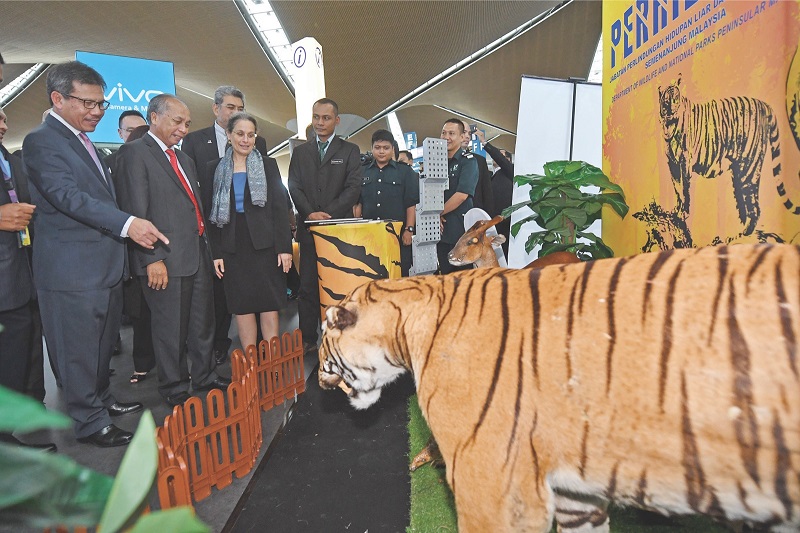
SEPANG, Nov 16 — Malaysia’s increased efforts to curb the spectre of human and wildlife smuggling can only be successful if the government, private sector and NGOs work together.
United States ambassador to Malaysia Kamala Shirin Lakhdhir praised ongoing efforts to increase the number of investigations, prosecutions and convictions from last year to this year.
“This is a huge worldwide global problem, estimated to be US$150 billion. Given Malaysia’s (geographical) location it is a frequent transit point for both migrant labour and also refugees,” she said following the launch of Malaysia Aviation Group’s Anti-Human Trafficking and Anti-Wildlife Trafficking Roadshow at KLIA yesterday.
Malaysia’s efforts have paid off, as the US Trafficking In Person Report (USTIP) 2016 published in June found the country in Tier Two for the first time.
Tier Two is defined by countries whose government do not meet the United States’ Victims of Trafficking and Violence Protection Act 2000’s minimum standards but are trying significantly to meet those standards.
Kamala said the roadshow is one good example of the importance in collaboration between the government, NGOs and private industry in combating human and wildlife trafficking.
“Governments by themselves cannot succeed against trafficking, they need the help of civil society and the private sector. It will be a big challenge for Malaysia, with the government hard at work trying to stem this kind of activities here,” she said.
As to whether Malaysia might be able to reach USTIP’s Tier One, Kamala said trafficking patterns cannot be predicted so easily, making it a long struggle ahead.
Officiated by Deputy Home Affairs Minister Datuk Masir Kujat, the three-day exhibition which runs until tomorrow is being run with the support of Malaysia Airports Holdings Berhad, the ministry’s Council for Anti-Trafficking in Persons & Anti-Smuggling of Migrants (MAPO) migrant rights NGO Tenaganita, wildlife trade monitoring network TRAFFIC, among others.
In his speech Masir said it is crucial for the government to work side by side with industry players and NGOs in raising both public awareness and contributing to the fight.
“We are grateful these large organisations are using their influences to educate and spread awareness on these critical issues,” he said.
Malaysia Airlines Berhad’s executive council Nik Azli Abu Zahar said they are also co-operating with MAPO to train and empower their staff, particularly the cabin crew.
“Criminals rely heavily on air transportation to smuggle victims from one place to another. The cabin crew can be our eyes in the skies and on ground to report suspicious activities,” he said.


