


MAY 17 — Ba’Kelalan State Assemblyman Baru Bian late yesterday said he was disappointed with Prime Minister Datuk Seri Anwar Ibrahim’s reported statement earlier in the day on the withdrawal of the appeal in the ‘Allah’ case.
He said it must be noted that the source of all the problems which culminated in the filing of the case is the 1986 administrative directive by the home ministry banning the use of certain words by non-Muslims.
While we may agree with the Ba’ Kelalan assemblyman on the above, it must be stated what Justice Nor Bee said of the administrative directive, referred to in the judgment as “impugned Directive.”
Having considered the impugned Directive at length, the learned judge said:
“It is my view that the impugned Directive is inconsistent with the Cabinet’s policy decision.”
The Cabinet’s policy decision refers to the decision made by the Cabinet on May 19, 1986.
The Home Minister had contended that the impugned Directive was undang-undang dan polisi kerajaan — the law and the policy of the government. The minister had averred that consistent with the law and the policy of the government, all Christian publications were not permitted to use the words “Allah”, “Kaabah”, “Solat” and “Baitullah.”
The minister had further contended that his ministry, having the charge of regulating, printing and publication, was made responsible to execute and enforce the law and the policy government.
To this contention, Justice Nor Bee said:
“The process that had taken place as can be distilled from the [facts] is that when the PM passed over to the Ministry of Home Affairs the Cabinet’s policy decision, what followed next was the issuance of the impugned Directive by the Bahagian Kawalan Penerbitan of the Ministry of Home Affairs.
“In other words, the Ministry of Home Affairs was executing the Cabinet’s policy decision by making and issuing the impugned Directive.
“In the circumstances, the impugned Directive then must mirror the Cabinet’s policy decision. The question is whether it did?
“Upon painstakingly perusing through all evidence adduced in this proceeding, I entertained serious doubt whether the Cabinet’s policy decision was incorporated in the impugned Directive as there appears to be marked discrepancies between the Cabinet’s policy decision and the impugned Directive.”
The learned judge continued:
“In my view, on a true and proper construction of the [facts], the Cabinet’s policy decision did not impose a total ban on the four words ‘Allah’, ‘Kaabah’, Baitullah and ‘Solat’. The impugned Directive did. The Cabinet could not, in my view, have imposed a total prohibition....”
Accordingly, the impugned Directive was inconsistent with the Cabinet’s policy decision. The learned judge ruled that the applicant Jill Ireland was entitled to the declaration sought that the impugned Directive is invalid.
There were two other declarations that the applicant sought from the court.
The first was a declaration that pursuant to Articles 1, 3, 8 and 12 of the Federal Constitution (FC), it was her constitutional rights to import the eight CDs, which were confiscated from her by the Home Ministry officers, in the exercise of her right to practise her religion and her right to education.
The second was a declaration that pursuant to Article 8 of the FC, she is guaranteed equality of all persons before the law and is protected from discrimination against citizen, on the grounds of religion in the administration of the law, namely the Printing Presses and Publications Act 1984 (Act 301) and the Customs Act (Act 235).
On the first, the learned judge referred to the work of eminent constitutional scholar Prof Dr Shad Saleem Faruqi who wrote in his book Document of Destiny: The Constitution of the Federation of Malaya that the constitutional rights in Articles 10, 11 and 12 of the FC are not extinguished despite the adoption of Islam as the religion of the Federation.
She then referred to the observation of the Court of Appeal in Ketua Pegawai Penguatkuasa Agama & Ors v Maqsood Ahmad & Ors and another appeal [2021] 1 MLJ 120 that the “right to freedom of religion is sacrosanct, and distinct from other fundamental liberties.”
The learned judge consequently ruled that there was no power to restrict religious freedom provided in Article 11 of the FC other than the restrictions set out in clauses (4) and (5).
Clause (4) provides that State legislatures may through State laws control or restrict the propagation of any doctrine or belief to persons professing Islam.
Clause (5) provides that the religious rights conferred by Article 11 do not authorise any act contrary to any general law relating to public order, public health or morality.
Accordingly, there must be a general law that regulates public order, public health or morality. Act 301 though is not that law.
On the second declaration, the learned judge ruled the discrimination against the applicant was apparent from the outset. The Cabinet’s policy decision that had allowed the use of the four words subject to the specific conditions, was converted into an absolute prohibition for reasons best known to the Home Minister.
The applicant was therefore granted the two declarations sought.
It must therefore be noted that, and as conceded by the learned judge herself, a general law can regulate public order, public health or morality. Act 301 is not that law though.
But that, respectfully, is the view of a single judge.
My point is also this: the government should allow the appeal to complete its course, instead of withdrawing it.
In its narrowest form, an appeal allows the parties to an earlier decision to have the matter decided anew. It is an obvious way in which the decision may be reviewed for errors in law.
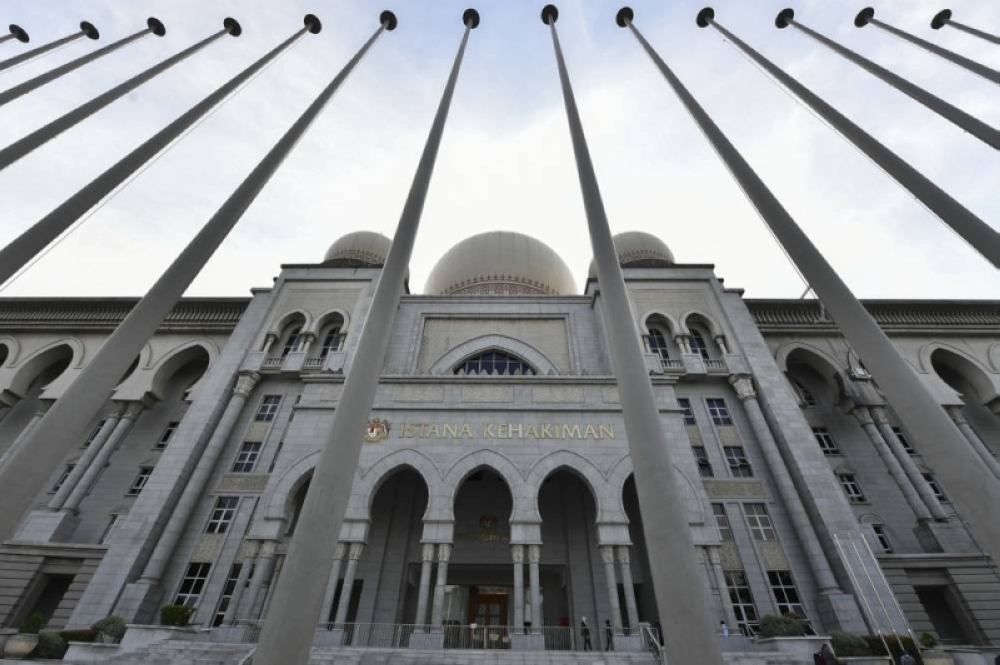
The court hearing an appeal will correct errors by, or affirm the decision of, the lower court judge. This lends the appellate court decision a binding precedent on the lower courts.
An appeal is also the most obvious way in which individual judges are accountable for their decisions. That is why it is said that an appeal serves two distinct (but overlapping) functions, one private and one public. These were first noted by the Roman legal scholar Justinian.
The private function is to provide accountability to the individual litigants. The public function is that enabling errors to be corrected maintains and enhances the confidence of citizens in the justice system.
Another aspect of the public function is that the appeal court can provide guidance for future cases and thus facilitate certainty.
In these ways, appeals further the rule of law.
*This is the personal opinion of the writer or publication and does not necessarily represent the views of Malay Mail.


