










SEPT 4 — The wars in Ukraine and the Middle East are not only brutal reminders of geopolitics in flux; they also highlight a profound shift in the very character of warfare.
Autonomous systems — powered by artificial intelligence, robotics, and algorithmic decision-making — are rapidly moving from the periphery to the centre of modern combat. Their impact is not abstract, but concrete and immediate, reshaping naval warfare, aerial defence, and even the strategic imagination of states.
Consider Ukraine’s unprecedented use of sea-based drones.
Once dismissed as experimental, these platforms have systematically targeted and crippled Russia’s Black Sea Fleet. In doing so, Ukraine achieved what many military analysts deemed impossible: reopening maritime lanes critical for its grain exports and trade survival.
This was not a feat of sheer numbers or conventional naval superiority but the creative application of autonomy and precision at relatively low cost. The balance of power at sea, once thought to be anchored in hulking destroyers and submarines, has been destabilised by inexpensive, unmanned craft.
The lesson does not stop at the shoreline. Ukrainian intelligence’s Operation Spider Web pushed the boundaries of warfare even further.
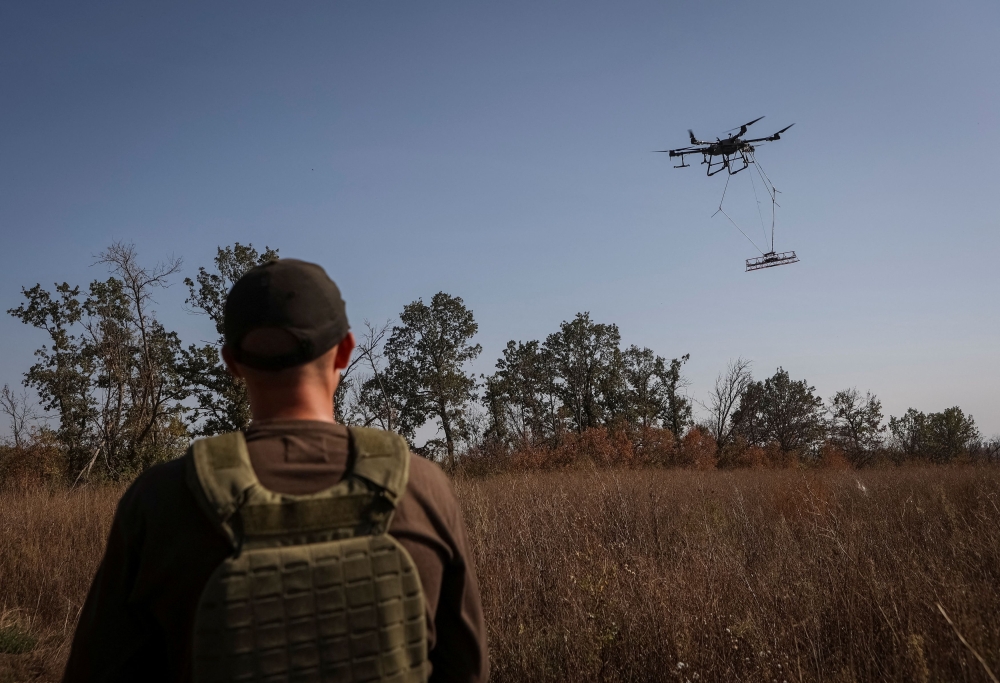
Employing long-range drones, Kyiv managed to strike deep into Russian territory, destroying strategic bombers stationed far from the frontlines. These were not symbolic pinpricks.
They revealed how drone swarms, guided by AI-enhanced navigation and autonomy, can bypass layered defences and neutralise assets once assumed invulnerable.
For Moscow, it was a chilling demonstration of vulnerability. For the rest of the world, it underscored that distance and deterrence are being redefined by algorithms and autonomous reach.
Meanwhile, the Middle East offers another proving ground.
Conflicts there have already seen the widespread use of armed drones by both state and non-state actors. What distinguishes the present moment, however, is the integration of AI, autonomy, and long-range precision.
Systems once requiring human pilots now operate with minimal oversight, conducting reconnaissance, strike missions, and even synchronised operations with uncanny efficiency. In such theatres, the line between conventional and asymmetric warfare blurs, complicating calculations for even the most technologically advanced militaries.
These developments raise fundamental questions. Who controls escalation when autonomous systems operate with minimal human input?
How can international law keep pace with technologies that diffuse rapidly, lowering the barriers of entry for both weaker states and non-state actors? And for regions like Southeast Asia, what lessons should be drawn as maritime disputes and security dilemmas intensify?
Indonesia and Asean cannot afford complacency. As a maritime fulcrum in the Indo-Pacific, Asean’s sea lanes could one day be contested not by carrier groups alone but by swarms of autonomous platforms launched from small craft or hidden bases.
The Ukrainian experience shows that even great powers are not immune to disruption. Southeast Asia must therefore think ahead — investing not only in conventional defence but also in counter-autonomy measures, AI-driven situational awareness, and regional mechanisms for governing the use of such technologies.
At its core, autonomy in warfare is both liberating and destabilising. It allows weaker actors to punch above their weight, undermining traditional hierarchies of military power. Yet it also threatens to erode human oversight, raising the risks of accidental escalation and strategic miscalculation. The future battlefield will be algorithmic as much as physical, shaped by invisible code as much as by steel and fire.
For Asean, the lesson is urgent and clear: autonomy is not a distant concern. It is already altering the balance of war in Ukraine and the Middle East. To safeguard its own peace, the region must prepare now, not later, for an age where drones and AI define both the threats we face and the opportunities for collective security.
* Phar Kim Beng, PhD is the Professor of Asean Studies at International Islamic University of Malaysia and Director of Institute of International and Asean Studies (IINTAS). Lutfy Hamzah is a research fellow at IITAS.
** This is the personal opinion of the writer or publication and does not necessarily represent the views of Malay Mail.