


DECEMBER 17 — Long before metal nails became standard on building sites, Asian artisans were already shaping entire structures from interlocking wooden joints, a tradition that has since become a defining pillar of the region’s construction heritage and architectural identity. Malaysia has tanggam, and Japan has kigumi; and although they emerged from different cultural histories, both showcase how master carpenters built strong, enduring wooden structures with no nails required. Widely recognised for their ingenuity, these systems continue to attract global research interest as examples of how Asian builders developed practical yet sophisticated engineering long before modern tools came into play. Their survival speaks to a deep-rooted regional tradition founded on creativity, meticulous craftsmanship, finely honed interlocking joints and an abiding respect for natural materials.
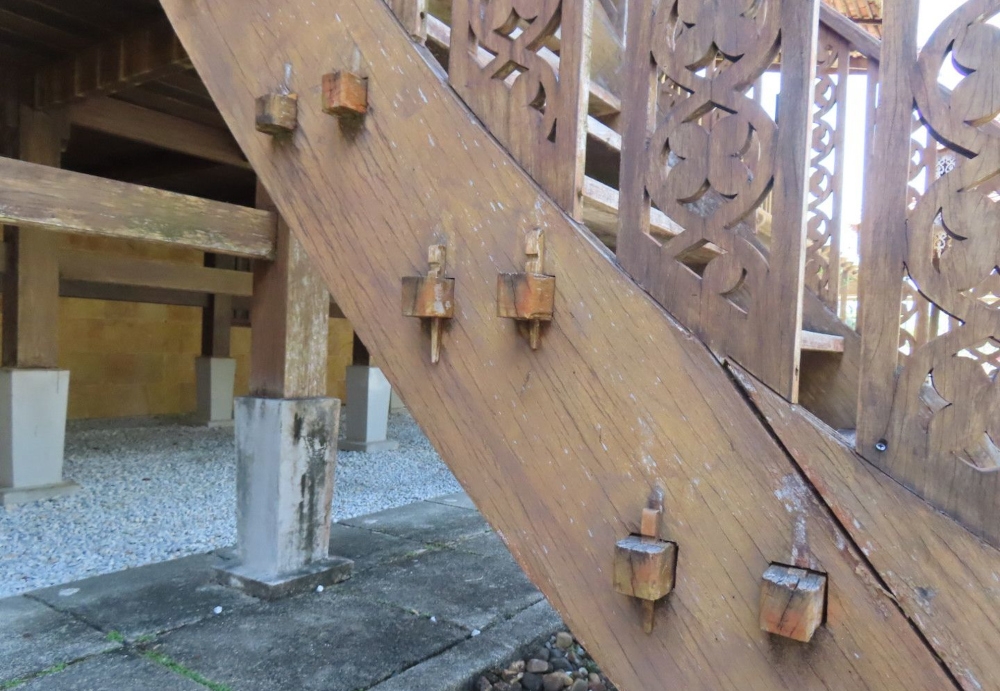
Yet each technique tells a different story of its landscape and people. In Malaysia, tanggam formed the backbone of traditional Malay houses, design to suit the country’s tropical climate. These houses were often built on stilts to improve ventilation, and the tanggam joints allowed the structure to adapt to heat, humidity and shifting ground. Because the joints can be locked and unlocked without metal fasteners, many traditional houses could be dismantled, moved and reassembled. This technique reflects an early understanding of modular building. What makes tanggam especially unique is its reliance on the carpenter’s experience. Carpenters learn to “read” wood through its grain, weight and moisture, and many measurements follow human proportions, making the process intuitive and grounded in daily life.
Kigumi, meanwhile, developed along a different path in Japan, shaped by centuries of living with earthquakes. The simplicity of the finished structure hides a complex internal network of interlocking parts, reflecting a cultural belief that true mastery lies in what is unseen. Kigumi’s ability to join multiple small pieces into long, strong beams, and to tighten under movement, has helped Japan’s ancient temples withstand repeated seismic shocks. This engineering brilliance is a testament to how craftsmanship and environmental challenges shaped one another over generations.
Today, however, the future of these traditions is moving in two very different directions. Japan retains a strong ecosystem for preserving its traditional joinery, supported by apprenticeship programmes, heritage associations and active woodworking communities. Kigumi is not confined to historic temples or restoration work; it continues to appear in modern architecture, from public pavilions and museums to minimalist homes and experimental timber structures. Many contemporary Japanese architects use kigumi as a framework for sustainable design, taking advantage of its strength, flexibility and low-carbon qualities. Because it remains present in both old and new buildings, the craft stays visible, relevant and deeply valued. As a result, kigumi has become not only a symbol of tradition, but also a global reference for precision in timber construction — a technique admired internationally for its structural logic and refined craftsmanship.
Malaysia’s tanggam, however, stands at a more fragile crossroads. Rising material costs, a shrinking pool of skilled carpenters and evolving building regulations, have made it harder for traditional methods like tanggam to survive in contemporary projects. Quality timber suitable for joinery is now used less frequently in mainstream construction, which naturally reduces demand for the technique. At the same time, fewer craftsmen are trained in traditional carpentry, making it difficult to incorporate tanggam even when architects or homeowners are interested. Modern building standards, designed around current safety and efficiency requirements, also tend to favour industrial materials, leaving traditional timber joinery with fewer opportunities to be applied.
If this situation continues, Malaysia risks losing not just a building method, but a significant expression of its architectural identity, and its rightful place within Asia’s shared timber-building heritage. The disappearance of tanggam would also signal something deeper: it reflects a fading interest among younger generations, many of whom no longer see traditional carpentry as a viable or valued career path. As that interest falls, so does the sense of pride connected to a technique that once helped shape Malaysia’s architectural identity. Over time, this loss of continuity weakens Malaysia’s ability to preserve a technique that once shaped the design logic, material culture and construction practices of the Malay world.
Ultimately, the fate of tanggam depends on the choices we make now. Preserving it will require deliberate support from cultural authorities, educators, industry players and communities who recognise that this craft is not merely an old technique but a vital link to our history and a valuable model for sustainable building. This includes developing formal training pathways, strengthening apprenticeships, and creating incentives for young carpenters to specialise in traditional joinery. Whether these traditions survive into the next century depends on the decisions we make today.
Wood has carried these stories for centuries. Now it is our turn to carry them forward.
* Sr Dr Nurshuhada Zainon is a Senior Lecturer at the Faculty of Built Environment, Universiti Malaya. She recently led a Tanggam-Kigumi research project funded by Universiti Malaya and the Sumitomo Foundation, together with Mohd Hafizal Mohd Isa, Nur Marhdiyah Aziz, Nur Rasyiqah Abu Hassan and Siti Aishah Abd Wahab. The team can be reached at [email protected].
** This is the personal opinion of the writer or publication and does not necessarily represent the views of Malay Mail.


