

















SEATTLE, Oct 23 — This summer, after spending a little too much time in communion with his Xbox, my 8-year-old son told me he’d like to be a professional video game player when he grows up. My 12-year-old daughter watches YouTube videos of people who record themselves playing video games, devouring them one after another like a box of chocolates.
So in August, when the opportunity arose, I did something that may earn me the title of Best Dad Ever or World’s Worst Parent, depending on whether you’ve reached puberty.
I took my kids to video game little league.
If you haven’t noticed, video games are now sports (“e-sports” is the favoured term). No, they’re not sports in the cardiovascular, tendon-tearing sense. Still, competitive game-playing requires dedication, cheetah-like reflexes, teamwork, tactical smarts and phenomenal concentration.
Elite e-sport stars make millions of dollars a year at tournaments and are watched by tens of thousands in the stands (and millions more online). In early August at KeyArena in Seattle, five young men who call themselves Evil Geniuses defeated a Chinese team on the multiplayer battle game Dota 2 and won US$6.6 million (RM28 million).
So it’s only natural that organisers of competitive video gaming are coming after our children. “Why can’t gamers go to practise?” said Brett Morris, president of Super League Gaming, a new after-school game league that started its first season this month.
In August, the game league invited me to a preview. Since the league is aimed at players age 7 to 14, I thought it would be more informative if I brought along someone in the target demo, not to mention appear less creepy to other parents wondering about the middle-aged guy with the notepad.
“Uh, yeah?” was how my daughter responded when I asked if she wanted to go, adding that little bit of inflection that let me know her answer should have been self-evident.
To anyone leaping to parental judgment, a defence: My kids are responsible, sensitive and empathetic when they’re not strafing enemies with imaginary gunfire or arrows. They read books, look people in the eyes when talking to them, hang out with friends, do well in school and run cross-country. They cry during the sad parts of movies.
We packed a laptop and headed to practice (my son, to his dismay, couldn’t attend because of another commitment).
Here’s how the league works: For US$80, your child gets admission to a weekly hour-and-a-half game practice that starts at 4:30 p.m. The practices take place in the auditoriums of local movie theatres around the country, including those owned by Regal Cinemas, AMC, Cinemark and iPic Theatres.
Kids get a team jersey and a lanyard with a laminated player pass bearing three league rules: no bullying, play nice, have fun.
A leader board shows individual and team rankings, along with national league leaders. At the end of the six-week season, a US$5,000 college scholarship will be awarded to the top player.
On a Saturday afternoon in late August, my daughter and I turned up at the Regal Meridian 16 Theatre in downtown Seattle for practice. We were greeted in the lobby by Morris, a trim 45-year-old who wore jeans and a Super League Gaming T-shirt.
The league was founded in Los Angeles by John Miller and David Steigelfest, a couple of dads who love video games almost as much as their children do and wanted their children to be able to experience the social benefits of playing in person together.
“We said to ourselves, ‘There’s nothing better than seeing your kid have fun,'” said Morris, who has two daughters, 9 and 13. “That’s why your kid plays Little League.”
To get youngsters to show up at the preview, one of 28 staged around the country, Super League Gaming hired YouTube celebrities to attend. This tactic proved only slightly less effective than handing out free Xboxes.
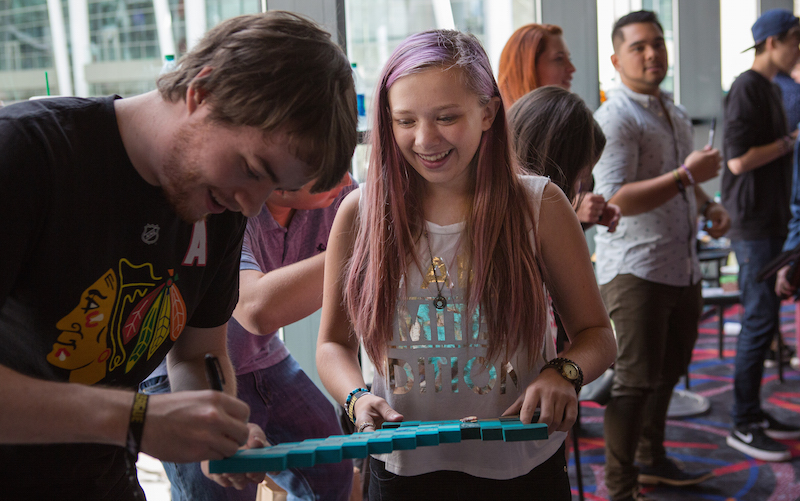
More than 100 waited to take selfies with Jordan Maron, better known by his nom de YouTube, CaptainSparklez, and Parker Coppins, who goes by ParkerGames. A few dozen continued to the auditorium to begin playing Minecraft.
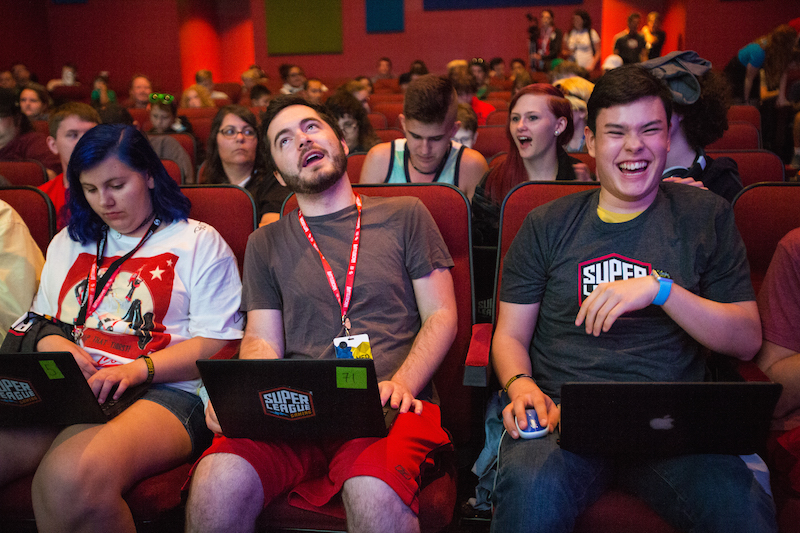
My daughter flipped open her laptop, connected to the Wi-Fi and began hacking away at other Minecraft avatars with a pixillated sword (the game’s crude graphics result in entirely bloodless deaths). A low rumble of giggles and cheering emanated from players, their faces glowing from laptop screens in the darkened auditorium.
“It’s everything I wanted as a kid,” Coppins said, after taking a seat between my daughter and me. “Seeing kids come into these events, I think this is one of those things where you think, ‘You’re not alone anymore.'”
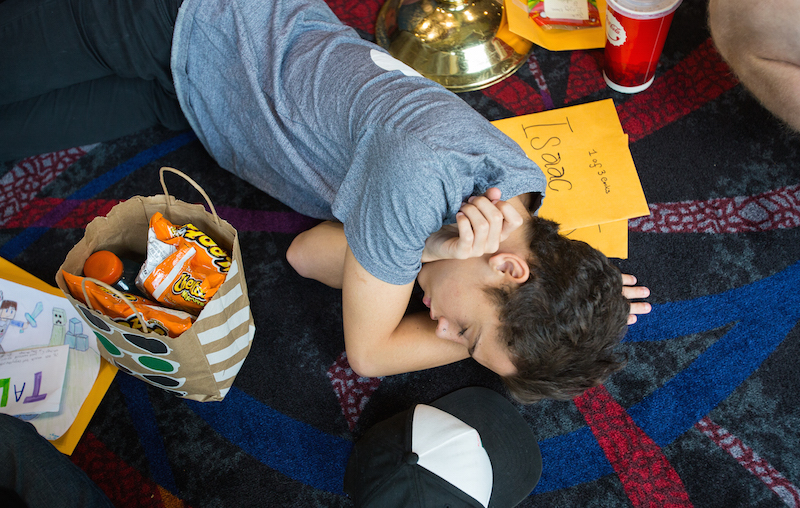
One of them was Cameron Delfin, 14, who beamed with pride at being one of the last players standing. “I made it to the death match!” he said.
His father, Robert Delfin, said he had no qualms about bringing his son to video game little league. “I hear parents say, ‘I can’t believe you let him do what he’s doing,'” said Delfin, a freelance photographer. “I say, ‘My kid’s an A-plus student.'”
E-sports little league doesn’t end at middle school. When players advance into their teens, they can enroll in the High School StarLeague, which organises matches among students from nearly 2,000 schools nationwide. More than 350 matches are held each weekend for one game, League of Legends.
Some parents may wonder how video game little league is going to help with all the homework, SAT preparation and the household chores.
To counter the notion that video games get in the way of academics, the league plans to award US$35,000 in college scholarships to winning teams in this year’s finals.
Tomber Su, the chief executive of the high school league, added that one of its online surveys found that many of its players had a grade-point average from 3.2 to 3.4.
“I think you’d be hard-pressed to find a school system whose sports matched that,” said Su, who thought for a moment before adding, “Maybe chess club.” — The New York Times