




SINGAPORE, June 25 — Singapore will not stop the green lane arrangement that it may have with other countries amidst reports of a so-called second wave of Covid-19 infections happening there as long as the situation is under control.
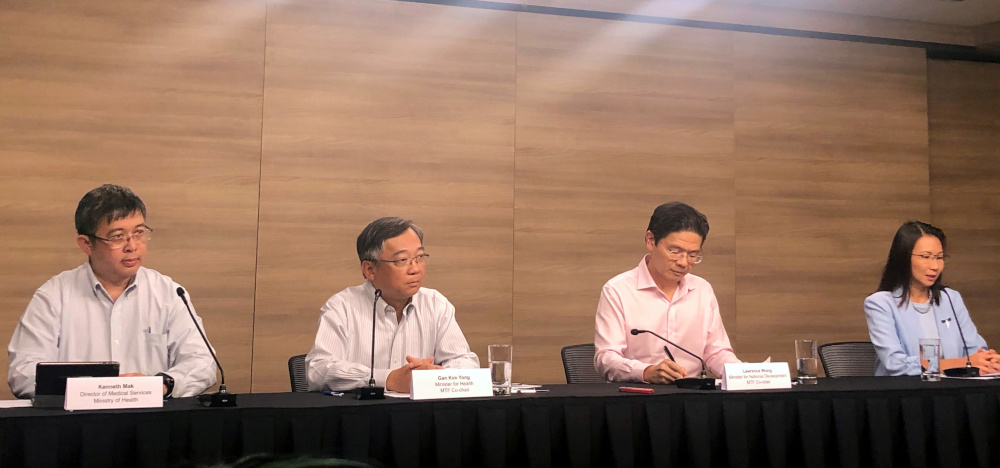
“We continue to assess the situation of all countries around us. It is a dynamic situation. We recognise that what happens today, the situation can change,” said National Development Minister Lawrence Wong at a Multi Ministry Taskforce on Covid-19 virtual press conference here today.
“The situation continues to evolve but as long the broad situation in that country is under control it doesn’t mean that we need immediately put a stop to the travel green lane arrangement,” said Wong who is also the co-chair of the taskforce.
Wong noted that the arrangement comes with its own safety protocols.
“Our broad assessment is if the situation in that country is broadly under control (where) the flare-up of cases is not overwhelming their hospital system and (it) is able to do effective contact tracing to contain the cases and to prevent further spread.
“Then it is not something would stop us from continuing the fast or green lane arrangement that we workout with these countries,” said Wong.
Singapore had its first green lane arrangement with China and is in the midst of doing the same with few others, including Australia, New Zealand, South Korea as well as Malaysia.
The countries are assessed to be at equivalent or at a lower risk of community transmission than Singapore, for which essential travel in limited numbers and with safeguards, could be conducted safely.
Updating on the progress of clearance of migrant worker dormitories, Wong said as of June 23, about 120,000 workers have either recovered or have been tested to be free from the virus.
Some 80,000 of them are able to resume work while the rest are pending movement to appropriate accommodations before they start work, said the minister.
“By the end of July, we expect that around 250,000 migrant workers, or 80 per cent of workers staying in the dormitories, would have recovered or cleared through our testing protocols,” said Wong.
The republic has about 320,000 foreign workers.
The task force also announced that Singapore will continue to expand its community testing efforts to include all individuals, aged 13 years and above, diagnosed with acute respiratory infection (ARI), starting from July 1, 2020. — Bernama


