


KUALA LUMPUR, April 12 — Even the humble tofu, often seen as a cheaper alternative to meat, is beginning to feel the pinch following weeks of sharp diesel price hikes.
In some parts of the capital, prices of tofu and soya products have climbed by nearly 10 per cent since April 7, forcing traders to pass on higher costs to consumers.
Kamol Cheng Thean, a vegetable and soy products trader at Pasar Harian Selayang, said prices of dry, fresh, fried and five-spiced tofu have increased by 10 sen per piece, while pressed tofu has gone up by 20 sen per piece.

Soya bean drinks are also selling 50 sen higher per kilogram now, said the 55-year-old trader.
“Before this, one piece of tofu was about 50 sen but now I have to sell it for 60 sen.
“The supplier did not say if the prices will increase further but if the fuel prices go up, the tofu price will also go up,” Kamol told Malay Mail when met at his shop today.
Malaysia is a net importer of soybeans, primarily from the United States, used to produce tofu and soya bean drinks as well as animal feed for the poultry industry.
However, higher fertiliser costs due to reduced production, shipping disruptions at the Strait of Hormuz, and rising packaging costs have pushed soybean prices higher.
Locally, diesel prices in Peninsular Malaysia have surged from RM2.99 per litre in mid-February to a record RM6.72 per litre last week.
Cheaper greens but few takers
Despite recent fertiliser price increases and the absence of price controls, vegetables are still being sold at relatively affordable rates at Pasar Harian Selayang, one of the capital’s largest vegetable supply hubs.
Spinach (bayam) and water spinach (kangkung) are sold at around RM2.50 per kg, while cabbage and sawi (mustard greens) are priced at about RM3 and RM4 per kg respectively.
However, Pasar Harian Selayang Traders’ Association vice-chairman Sum Sing, 70, said prices of small cucumbers have risen from RM3 per kg last week to RM5 per kg recently, while large cucumbers are now selling at RM4 per kg.
Vegetable vendor Uma Pathy Marutapa said the rise in prices was linked to reduced cucumber harvests caused by recent dry spells and heatwaves, which may have led to premature flower dropping.
Uma added that some suppliers have hinted at potential price increases if diesel prices rise further.
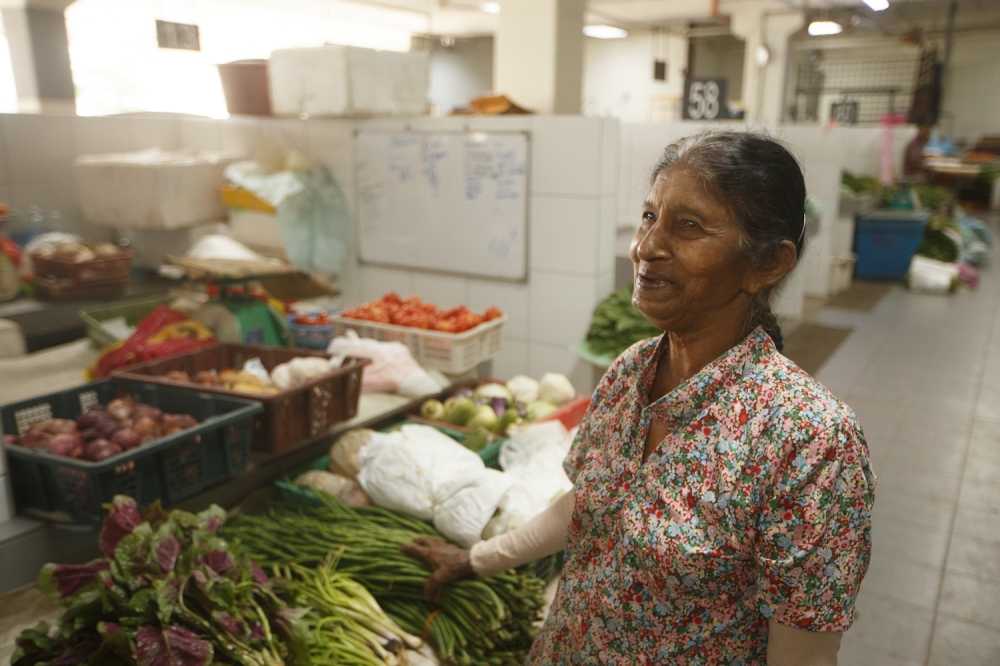
However, she said she was more concerned about a sharp drop in customer footfall in the vegetable section, adding that vendors had better business when they were located beside the seafood section on the ground floor.
“I only make a profit of 50 sen per kg for each vegetable and the prices fluctuate all the time.
“But the real problem is fewer customers walk up to our section because they find it easier to buy vegetables from foreigners selling them by the roadside outside the market,” she said.
But the situation is not much better for those trading outside the market.
A Burmese vegetable seller, who only wanted to be known as Cho, said his stall survives mainly by supplying vegetables to restaurants and eateries, as fewer people now visit the market to buy groceries.
Baskets of fresh vegetables lay idle outside Cho’s shop, located opposite Pasar Harian Selayang, despite him selling tomatoes and water spinach (kangkung) for as low as RM1.50 per kg.
“Families prefer to buy from supermarkets like NSK Grocer rather than coming to wet markets.
“So even if I sell at a cheaper price right by the roadside, there are very few takers,” he said.


