


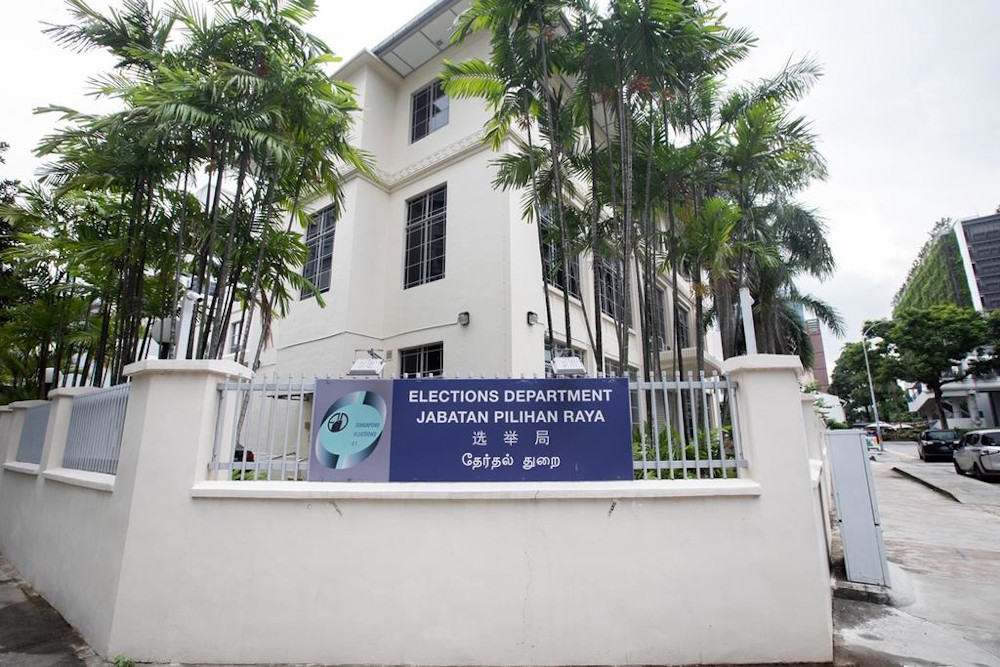


SINGAPORE, June 8 — Political parties and candidates in the upcoming General Election (GE) are strongly encouraged to plan for modes of campaigning that minimises large group gatherings, the Elections Department (ELD) said today.
Addressing the media in a virtual briefing, the department unveiled more rules to ensure safe elections amid a pandemic, as well as changes to online advertising laws aimed at increasing transparency and accountability during the GE, which must be called by April 2021.
Among other things, the ELD set out safe practices for nomination proceedings and on Polling Day, and unveiled changes to rules for printed election posters and banners and new disclosure requirements for paid internet election advertising.
However, the guidelines concerning how political parties are able to campaign, which in the past involved physical rallies, walkabouts and house visits, will only be shared with the public closer to the date of the elections, said the ELD, a department under the Prime Minister’s Office.
The date of the polls is still unknown.
“As these activities involve large group gatherings, the guidelines will depend on the Covid-19 situation at the time,” it said. “If prevailing health advisories restrict large group activities, ELD will ensure that voters have access to the campaigning messages of all political parties and candidates. This may include additional TV broadcast time for candidates and political parties,” the department added.
Online campaigning activities can continue, like in past elections, so long as it follows the existing guidelines for such activities, said the ELD.
New measures
At polling centres
“Time-band” for voting: To spread out voters across the polling hours, voters from the same household will be given the same recommended two-hour time-band to cast their ballot, which will be indicated on their poll card. However, voters may still cast their vote at any time when the polling stations are open, ELD said. The voting period is unchanged.
Arrangements for senior voters: Those aged 65 and above will be allotted an earlier time-band, between 8am and noon, and may be accompanied by one household member. Priority queues will be provided for seniors who choose to vote at other times of the day other than their allotted time-bands.
Checking queues: Voters can check the queue situation at their assigned polling station at VoteQ.gowhere.gov.sg before they set off to vote. This will spread out the voters further and avoid bunching at the start of each two-hour time-band, said the department.
More polling centres: The number of polling centres will be increased from 880 to 1,100, hence reducing the number of voters per polling station, from an average of 3,000 to 2,400. ELD will also tap 20 per cent more election officials who have received the necessary training for conducting the polls.
Safe distancing: All voters must abide by the 1m safe distancing rule at all times. Election officials and polling agents will also be seated 1m apart from each other.
Temperature screening: All voters will be screened at the start of the queue to detect people with fever or respiratory symptoms. Temperatures of all candidates and polling agents will also be taken, and those with symptoms will be refused entry. ELD said it will make a decision later on whether voters who are unwell, but turn up at the polling centre anyway, will be allowed to vote or not.
Contact tracing: Polling agents and candidates are to use the SafeEntry app to enter and exit the polling station. Voters are not required to do so — voter e-registration records can be used for contact tracing purposes if necessary.
Hygiene practices: Voters have to wear masks when they leave their homes, and will need to lower their masks during e-registration for identification. Before receiving their ballot paper, they are to sanitise their hands and don disposable gloves. Election officials will don protective gear, and cleaners will be deployed to clean common touch-points such as the polling booth and the self-inking pens at least once every half hour.
Contactless voting: Each voter will self-scan their NRIC for e-registration purposes. Each voter is estimated to spend under five minutes within the polling station.
Voters under isolation for Covid-19: The recently passed Parliamentary Elections (Covid-19 Special Arrangements) Act allows voters serving stay-home notices (SHNs) at designated facilities such as hotels to vote at special polling stations. A decision will be made later, after the Writ of Election is issued, for those who are on quarantine orders, are serving SHNs at home, or have a medical certificate for acute respiratory symptoms.
Overseas voters: Whether elections will take place in overseas polling stations will depend on the health advisories in the other countries. The ELD will decide nearer to Polling Day.
At nomination centres
Digital services for candidates: Candidates and their election agents are encouraged to use ELD’s online services to prepare the necessary documents, rather than collecting and submitting the forms in person. The system will be available once the Writ of Election is issued.
Unwell candidates: Candidates who are unwell and certified by a medical practitioner to be unfit for attending the nomination proceedings in person may authorise a representative, who has the power of attorney to submit the nomination papers on Nomination Day and also raise objections to the papers of other candidates. Seconders, proposers and assentors who are unwell will not be allowed to enter the nomination centre and must be replaced.
Safety measures: Similar to the measures taken at polling centres. Candidates who are found to have symptoms such as fever will be directed to a separate area for nomination and will be allowed to inspect the papers of other candidates in this area. Once the unwell candidate has filed his papers, the tables and chairs will be cleaned.
Campaigning rules depend on prevailing situation
Monday’s briefing follows recent calls by several Opposition parties to clarify campaigning rules given the Covid-19 situation, which is likely to affect mass gatherings such as political rallies. Last month, the Workers’ Party said parties risk “squandering resources and expenditures” due to the uncertainty.
Addressing these concerns, the ELD said it aims to provide campaigning guidelines as early as possible but was unable to do so by today.
The department explained: “If the election is going to be held next month and the prevailing health advisory allows for (gatherings of) five persons, then I think we will not allow supporters at the nomination center.
“But if the election is going to be held, say in April next year, and (if MOH) allows gathering of up to 250 people like before, then we will allow supporters of up to 250. It really depends on the (health situation), and by this example I hope you appreciate why it is difficult for us to share the guidelines at this point in time.”
When asked if ELD will give a timeline for when these rules may be released, it said political parties and candidates will be given “enough time to prepare their physical campaigning strategies”.
ELD reiterated its call for them to make preparations for e-campaigning, given the long-term Covid-19 outlook.
“Certainly it will not be later than the day of the Writ,” said the ELD in response to several questions from the media as to when the guidelines will be issued.
ELD added that today’s announcements on election advertising, for example, are unveiled to help candidates and parties prepare for the GE ahead of time, since these rules are applicable regardless of the outbreak situation.
Said the ELD: “Because we don’t know when the election will be held, we are still working through the various scenarios. When we are ready, we will share these both with the media and with the candidates and political parties.” — TODAY


