


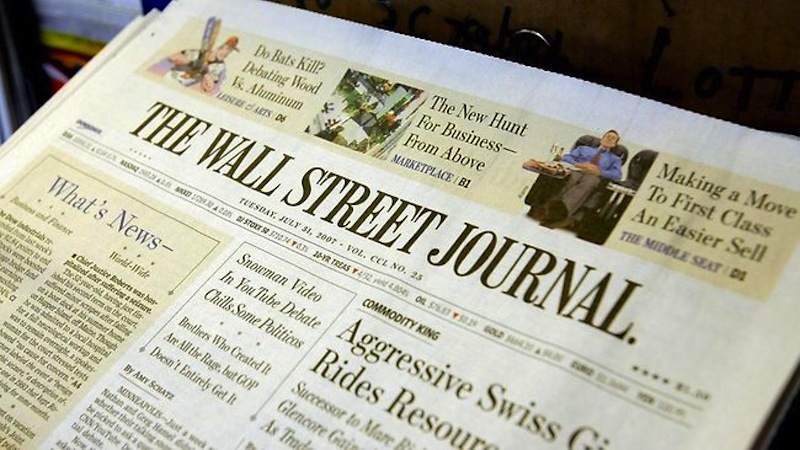
KUALA LUMPUR, Oct 29 ― The confirmation from Wall Street Journal (WSJ)'s publisher on whether it will invoke a US law that protects free speech is necessary as Prime Minister Datuk Seri Najib Razak will be seeking both vindication and damages if he sues the firm, his lawyer said today.
Lawyer Datuk Mohd Hafarizam Harun pointed out that in any matter, he would always seek to get the other party to pay for defaming his client, besides clearing their name.
“So when I act for my client, whether my client will use the money for him or give it to charity, that's his prerogative.
“But when I act for my client, I'll definitely go for vindication and damages that I can get for my client,” he told reporters when met at the court complex here.
“So cannot say that if you are suing for vindication, why do you need to use the SPEECH Act, because you can always get it vindicated and not enforced. I don't think any lawyer will advise their client 'let's just clear your name but don't get the money’... you must do both,” he added.
To illustrate his point, Hafarizam said that opposition leaders Lim Guan Eng and Datuk Seri Anwar Ibrahim's lawsuits against local daily Utusan Malaysia's publisher are not just about vindication, but also for the damages.
Hafarizam was asked why he has to wait for WSJ publisher Dow Jones & Co to confirm whether it will use the Securing the Protection of our Enduring and Established Constitutional Heritage (SPEECH) Act to prevent the enforcement of decisions of non-US courts in defamation suits, when any lawsuit against it would be about clearing Najib's name instead of being a matter of money.
Hafarizam said he did not give any deadline for Dow Jones & Co to reply to his law firm's second letter on the SPEECH Act, and is currently still waiting for its confirmation on whether it will use the law.
“If they say they will not, then I will go and seek further instructions from my client, whether it's time now to proceed or not,” he said regarding possible suits against the WSJ publisher.
In mid-August, Najib’s legal team sent a letter to Dow Jones, giving the firm 14 days to state if it intends to use the SPEECH Act to fight the prime minister’s defamation lawsuit, should the latter choose to file it.
Hafarizam explained at the time that his client will not take the futile move of suing WSJ in Malaysia if the publication chooses to invoke the law as the SPEECH Act essentially stipulates that judgments against the publication here that are deemed inconsistent with US free speech laws will render the punishments unenforceable in the US.
He also said the only way his client can circumvent the SPEECH Act ― if invoked ― is to prove that media freedom and judicial independence in Malaysia are on par with the US.
Dow Jones replied within the given deadline but did not directly answer the question, merely saying that it would not waive any of its defences.
Najib threatened to sue WSJ after it published two articles on the 1Malaysia Development Berhad (1MDB) controversy ― one news article and another opinion piece ― in early July.
In the news piece on July 2, WSJ, citing documents from Malaysian investigators scrutinising 1MDB’s financials, said a money trail showed that almost US$700 million (RM2.6 billion) had been channelled into what appeared to be the prime minister’s accounts.
The report said, however, that the source of the funds was unknown although it noted that it was the first time that Najib had been linked to the probe on the troubled state investor.
Following the July 2 report and a subsequent July 6 opinion piece on the same matter, Najib’s lawyers wrote in to the daily’s publisher, Dow Jones, demanding an explanation.
Dow Jones responded within the 14-day deadline given by the prime minister’s lawyers, saying in their reply letter that the request for clarification was unnecessary as the two articles ― the July 2 news report titled “Malaysia leader’s accounts probed” and the opinion piece onJuly 6 titled “Scandal in Malaysia” — spoke for themselves and were based on available facts.


