


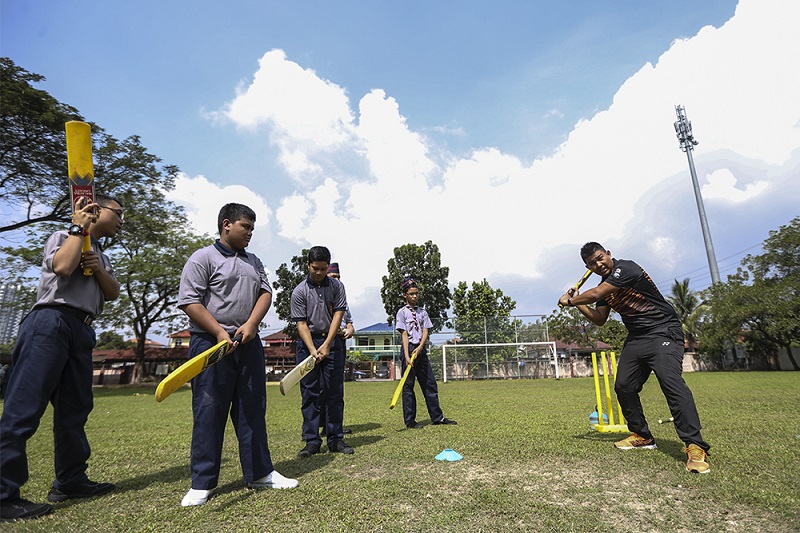
KUALA LUMPUR, March 10 — When it comes to sporting ability, national athletes and intellectually challenged-kids may be on the opposite ends of the spectrum.
Malaysia’s national cricket squads and the students of SMK Batu Muda in Sentul are meeting somewhere in the middle.
They have set up a first-of-its-kind partnership in collaboration with Special Olympics Malaysia.
A selection of Malaysia’s national cricket players will train children with varied disabilities such as autism and cerebral palsy.
For the students, 15 boys and 15 girls, it is an opportunity to develop behavioural skills in a sport previously alien to them.
They might also go on to represent Malaysia cricket at a national level as they vie for the opportunity to compete in the Special Olympics World Summer Games.
The national players meanwhile, three or four each from the men’s and women’s squads, break from their rigorous training schedules to develop their mental side of the game ― patience and importance of duty ― by picking up the mantle as part-time coaches.
Malaysia Cricket Association vice-president Nordin Abdullah heaped praise on the teams for embracing the programme.
He reminded them that competing at the top level of the game was not merely about success on the pitch.
“It is getting our national players involved in the community, not just about winning gold medals,” Nordin said, referencing to the Malaysia men’s team triumph at last year’s SEA Games in August.
“They need to take what they’ve achieved for the country and bring it to the community in a way that will make a difference to kids’ lives.”
Cricket doesn’t share the popularity of football and badminton in Malaysia, an aspect totally lost on the SMK Batu Muda youngsters, who were visibly thrilled at the prospect of learning to smash, catch and throw for the first time.
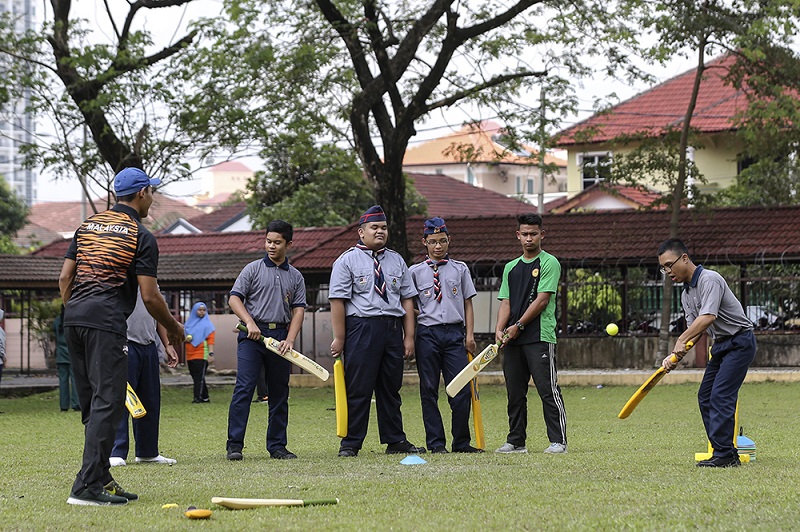
Some taking part already have the skills necessary to play, including 17-year-old Nur Iman Izzad Md Noor:
“I play golf so I hit the cricket ball, like I do in golf,” he said, whacking the ball over the wall and onto the road.
Nordin recalled an impromptu game that broke out between the kids and national players after a photoshoot session two weeks ago.
“There was one kid who was especially good at catching. I know one or two of national guys who drop some catches in the field — I think they can learn something.”
SMK Batu Muda has 80 secondary school students, aged 12 and up, with learning disabilities.
They selected 30 children to take part in the eight-week training programme, which began on Thursday, based on those who expressed an interest in cricket and reports from teachers based on their abilities.
The schedule will culminate with a tournament at Kinrara Oval next month where a prize-giving and award ceremony will take place.
The partnership between school and Malaysia Cricket was equally unique for Special Olympics Malaysia.
The Special Olympics engage with schools for a total of 14 sports in Malaysia, including football, badminton and kayaking.
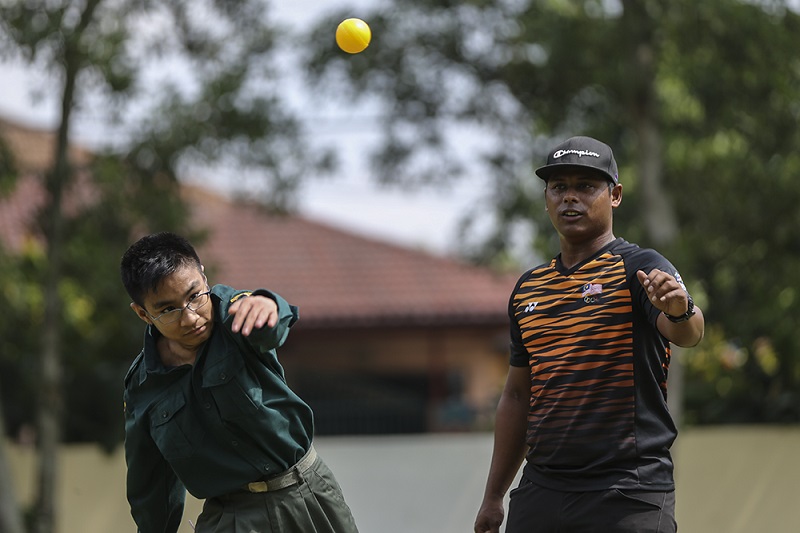
Special Olympics interim managing committee chairman Nur Azida Daud said watching the kids take to cricket has been heart-warming.
“We’re grateful and excited to be working with Malaysia Cricket. To see the students playing cricket with the national team is quite rare. It’s very meaningful to everyone.”
The type of cricket being taught to the students is the same format that will be played at Special Olympics World Summer Games in Abu Dhabi 2019.
Softer balls are being used for training meaning there is no need for protective equipment as well as kids not being afraid.
Nordin is excited to see the newcomers learn the discipline the sport instils.
“For the mentally disabled kids, it creates familiarity. To have this regimented behaviour in a fun environment will improve their attention and overall behaviour.
“They’re treated in a way that is inclusive, not exclusive.
“With that inclusion comes social interaction, which is key to their development. If they have social interaction, they are part of society.”


