


MAY 4 — The omission of the Maldives from the Mauritius-hosted Ninth Indian Ocean Conference is not a minor diplomatic oversight.
It is a signal — subtle yet unmistakable — that the Indian Ocean is entering a more fragmented and competitive phase of geopolitical re-alignment.
When the brilliant Subrahmanyam Jaishankar, the Indian Minister of External Affairs, appeared as a key speaker, the optics conveyed a confident India projecting leadership across the region.
Yet leadership in the Indian Ocean cannot be reduced to visibility alone. It is measured by the ability to hold together a diverse constellation of island and littoral states whose interests, sensitivities, and strategic calculations are constantly evolving.
Exclusion, even if unintended, risks undermining that delicate equilibrium.
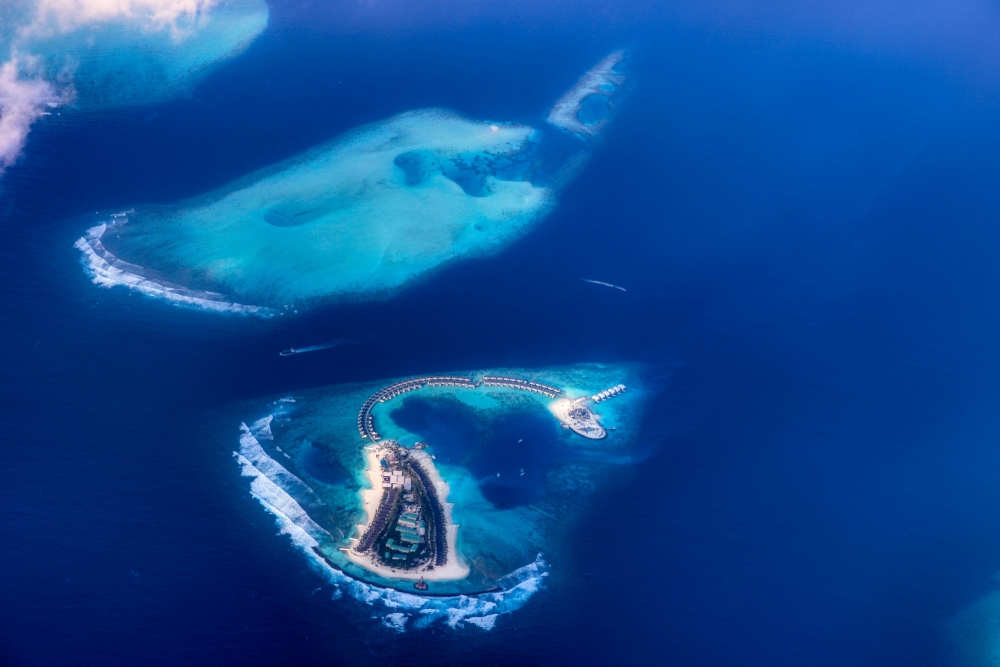
India now faces a genuine dilemma between Mauritius and the Maldives — two island states that are small in geography but immense in strategic value.
Mauritius has long stood as one of India’s most dependable partners, bound by deep civilisational links, economic cooperation, and political trust. It has functioned as a reliable interlocutor for India’s outreach into the western Indian Ocean and even Africa.
The Maldives, by contrast, sits astride critical sea lanes that connect the energy lifelines of the Gulf to the industrial economies of East Asia. Its location alone ensures that no major maritime strategy can ignore it.
To privilege one while appearing to sideline the other is not a sustainable option.
New Delhi understands that it cannot openly take sides in any perceived diplomatic rift between these two states.
Doing so would risk alienating one while emboldening the other, thereby weakening the broader arc of influence that India has carefully cultivated across the Indian Ocean over decades.
Yet neither can India afford strategic silence. In geopolitics, silence is rarely neutral; it is often interpreted as hesitation or, worse, indifference.
This dilemma is further complicated by the persistent presence of China.
China’s engagement with Indian Ocean island states has been methodical and sustained.
Through infrastructure financing, port construction, and long-term economic partnerships, Beijing has steadily increased its footprint.
It does not require dramatic confrontations to shift the balance. Incremental gains — securing access, building trust, and offering alternatives — are sufficient to alter strategic equations over time.
In such a context, even minor diplomatic exclusions can have outsized consequences.
The Maldives is particularly sensitive to perceptions of marginalization.
Domestic political shifts in Malé have, at various points, recalibrated its external alignments. When it feels excluded or pressured, it has demonstrated a willingness to diversify its partnerships.
This is not unique to the Maldives; it reflects a broader trend among small states that seek to maximise autonomy by engaging multiple powers.
Mauritius, while more stable in its alignment with India, also operates within an increasingly competitive environment.
It is not immune to external overtures, nor is it indifferent to regional dynamics.
India’s close relationship with Mauritius must therefore be managed in a way that does not inadvertently signal exclusivity.
The challenge for India is thus twofold.
First, it must prevent bilateral sensitivities from spilling over into multilateral platforms.
High powered conferences such as the Indian Ocean Conference are not merely ceremonial gatherings; they are arenas where perceptions are shaped, alignments are hinted at, and narratives of regional order are constructed.
The absence of a key state like the Maldives sends a message — whether intended or not — that some voices matter more than others.
Second, India should reinforce its role as a convener rather than a selector.
To ensure a genuinely free and open Indian Ocean, New Delhi must demonstrate that regional forums remain inclusive spaces where all stakeholders feel represented. This does not mean diluting its partnerships or abandoning its strategic preferences.
It means ensuring that no state feels excluded from the conversation about the region’s future.
Diplomacy in the Indian Ocean is as much about reassurance as it is about strategy.
India would be well advised to engage both Mauritius and the Maldives through quiet but sustained diplomatic efforts.
This includes backchannel communications, high-level visits, and the careful management of regional platforms to ensure inclusivity.
The objective should not be to eliminate differences — an impossible task — but to prevent them from hardening into divisions that external powers can exploit.
At the same time, India must recognise that the Indian Ocean is no longer a passive theatre dominated by a few major powers. It is an increasingly contested space where small states exercise agency with sophistication.
They are adept at balancing relationships, extracting benefits, and preserving autonomy. Any perception of exclusion or favoritism can quickly alter their strategic calculus.
The concept of a free and open Indian Ocean, therefore, cannot rest on rhetoric alone.
It must be grounded in practices that reflect openness in participation and fairness in engagement. Otherwise, the idea risks losing credibility among those it seeks to include.
The episode in Mauritius should be treated as an early warning rather than an isolated incident.
If such exclusions become a pattern, they could gradually erode trust in India’s regional leadership.
Over time, this could create openings for alternative visions of order to take root — visions that may not align with India’s interests or those of a stable maritime commons.
India still commands considerable goodwill across the Indian Ocean. Its historical ties, developmental partnerships, and security contributions remain significant assets.
But goodwill is not a static resource. It must be constantly renewed through actions that reinforce trust and inclusivity.
Ultimately, India’s dilemma between Mauritius and the Maldives is not simply about managing two relationships.
It is about demonstrating the kind of leadership that the Indian Ocean requires in an era of intensifying competition.
Handled with care, it can strengthen India’s position as a stabilizing force. Mishandled, it risks fragmenting the very region it seeks to unify.
In the final analysis, a free and open Indian Ocean will not be secured by power alone. It will depend on the quality of diplomacy — patient, inclusive, and attuned to the sensitivities of even the smallest states.
* Phar Kim Beng is professor of Asean Studies and director, Institute of Internationalisation and Asean Studies, International Islamic University of Malaysia.
** This is the personal opinion of the writer or publication and does not necessarily represent the views of Malay Mail.


