


MAY 4 — The State of Negeri Sembilan is indeed unique. The State Constitution – the Laws of the Constitution of Negeri Sembilan, 1959 – is in two parts, which were agreed to by the then Yang di-Pertuan Besar, Undangs of the Luaks of Sungai Ujong, Jelebu, Johol and Rembau as well as the Tengku Besar of Tampin.
The First Part “constitutionalises” the adat perpatih on the customary ruling structure. There is no First Part in the other state constitutions.
There are eight Chapters and 32 Articles in the First Part.
Chapter 3 is on the Yang di-Pertuan Besar, starting with Article 7. Chapter 5 is on the Ruling Chiefs, who are “the Undang of the Luak of Sungai Ujong, the Undang of the Luak of Jelebu, the Undang of the Luak of Johol, the Undang of the Luak of Rembau and the Tengku Besar of Tampin.
Chapter 6 makes provisions on the Dewan Keadilan dan Undang (DKU) or The Council of the Yang di-Pertuan Besar and the Ruling Chiefs.
The DKU is “to advice on questions relating to Malay Custom in any part of the State including questions relating to the election or succession to or removal from or vacation of office of any of the Ruling Chiefs referred to in Article 14 or on other matters which may be referred to it by His Highness or any of the Ruling Chiefs and to exercise such functions as may be conferred upon it by this Constitution or any other written law”.
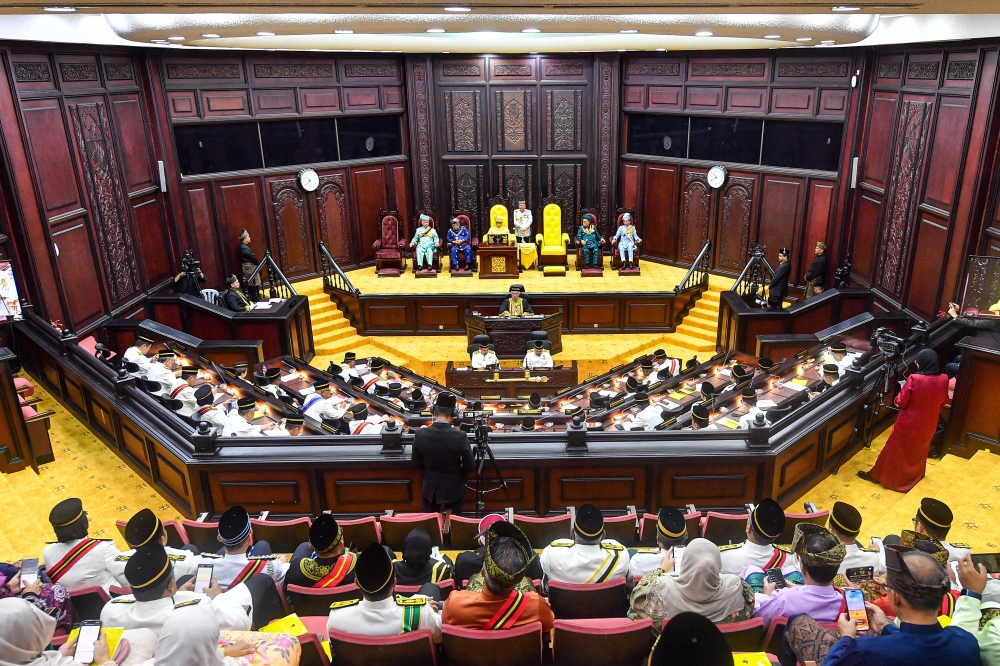
The last chapter, Chapter 8, is on General Provisions, ending with Article 32 which reads as follows:
“Except as expressed herein, this Part shall not affect the ancient constitution and ancient custom of the State of Negeri Sembilan but such ancient constitution and ancient custom, where not inconsistent with this Part, shall continue as heretofore.”
Article 7(1) says that there shall be a Yang di-Pertuan Besar of the State to exercise the functions and powers of a Ruler in accordance with the State Constitution.
Under Article 7(2), the Yang di-Pertuan Besar shall be such person as shall be elected by the Undangs of the territories of Sungei Ujong, Jelebu, Johol and Rembau in the manner provided by the State Constitution and in accordance with the custom of the State.
The Undangs means the Ruling Chiefs of the Luak of Sungei Ujong, Luak of Jelebu, Luak of Johol and Luak of Rembau – the so-called four Undangs. Luak means the area or territories ruled respectively by each of the Undangs.
Under Article 10(1), the Undangs may call upon the Yang di-Pertuan Besar (a) to withdraw from performing His Highness duties for a period to be determined by the Undangs; or (b) to abdicate and relinquish His Highness prerogatives, rights, powers and privileges “if it is considered and determined after full and complete enquiry by the Undangs that His Highness has developed any great and serious defect derogatory to the qualities of a Yang di-Pertuan Besar such as insanity, blindness, dumbness or has become possessed of any base quality on account of which His Highness would not be permitted by the Hukum Syarak to be Yang di-Pertuan Besar or that His Highness has done any overt act detrimental to the sanctity, honour and dignity of a Yang di-Pertuan Besar or has deliberately disregarded the provisions of this Constitution”.
Whatever may be the adat on removing the Yang di-Pertuan Besar, the State Constitution is clear and explicit that there must be a “full and complete enquiry by the Undangs”.
On being called upon to withdraw from performing his duties as aforesaid, Article 10(2) states that His Highness “shall cease to exercise the functions and powers of Ruler of the State for the period so determined” and during such period a Regent or a Council of Regency appointed in the manner provided by the State Constitution “shall exercise such functions or powers” or on being called upon to abdicate His Highness “shall thereupon cease to be Yang di-Pertuan Besar”.
There is an important proviso though, which says that as soon as possible after His Highness has been called to withdraw or to abdicate and relinquish, a proclamation to that effect “shall be issued under the hands of the Undangs and the Menteri Besar”.
Clearly, there must be the concurrence of the Menteri Besar for a proclamation that His Highness “cease to exercise the functions and powers of Ruler of the State”.
One may consider the full and complete enquiry by the Undangs and the concurrence of the Menteri Besar as checks and balances on the power of the Undangs to remove the Yang di-Pertuan Besar.
As for the Undangs, the State Constitution is also clear and explicit that the Undangs “shall be persons lawfully elected in accordance with the custom of their respective luaks” and “removed from office in accordance with the custom of his luak”. The DKU is there to advise on such a custom.
The Menteri Besar may refer to the DKU for its advice on the custom, and when the DKU gives its advice, the advice “shall be final and shall not be challenged or called in question in any court on any ground”.
The DKU is comprised of “His Highness, the Ruling Chiefs, the Tengku Besar of Sri Menanti, Dato Shahbandar of Sungai Ujong and such other Malay member or members as may from time to time be appointed for such period as may be prescribed by His Highness and the Undangs”.
One may also consider the above provisions as checks and balances on the ruling structure in Negeri Sembilan.
Are there checks and balances on the Yang di-Pertuan Besar?
The short answer is: Yes.
Article 28(1) says that subject to Clause (2), the expression Ruler “wherever it occurs in the Second Part of the Constitution shall mean His Highness and the Ruling Chiefs who are available and holding office at the material time”. Clause (2) says “for the purpose of Article 40(2) in the Second Part of the Constitution the expression Ruler shall mean His Highness and at least three of the four Undangs”.
No other State Constitution has the above provisions. The synergy between the powers in the ruling structure of the State of Negeri Sembilan is unique.
The checks and balances in the State Constitution safeguards against abuse of power, upholding the rule of law where no one is above the law.
* This is the personal opinion of the writer or publication and does not necessarily represent the views of Malay Mail.


