


MARCH 7 — In recent weeks, some quarters have renewed calls for a Royal Commission of Inquiry into two matters: the shareholding controversy involving Azam Baki, and allegations of a so-called “corporate mafia” highlighted in a report by Bloomberg.
At first glance, these demands may appear to be driven by a desire for transparency. But a closer look suggests something else. The insistence on a Royal Commission, despite the existence of ongoing investigations and regulatory oversight, raises an uncomfortable question: are these calls genuinely about uncovering the truth, or are they part of a broader political campaign?
The answer may lie in understanding how Royal Commissions are meant to function.
A Royal Commission of Inquiry is not meant to be deployed whenever a controversy emerges. It is an exceptional mechanism established under the Commissions of Enquiry Act 1950, which allows the Yang di-Pertuan Agong to appoint commissioners to investigate matters of serious public importance.
The key word in the statute is expediency. The law does not require a commission whenever allegations appear in the public sphere. Instead, it allows one to be established where it is necessary for the public welfare.
That distinction matters. If Royal Commissions were triggered every time allegations were raised in public debate, the country would find itself trapped in a cycle of permanent inquiries.
Governments would spend more time responding to commissions than governing.
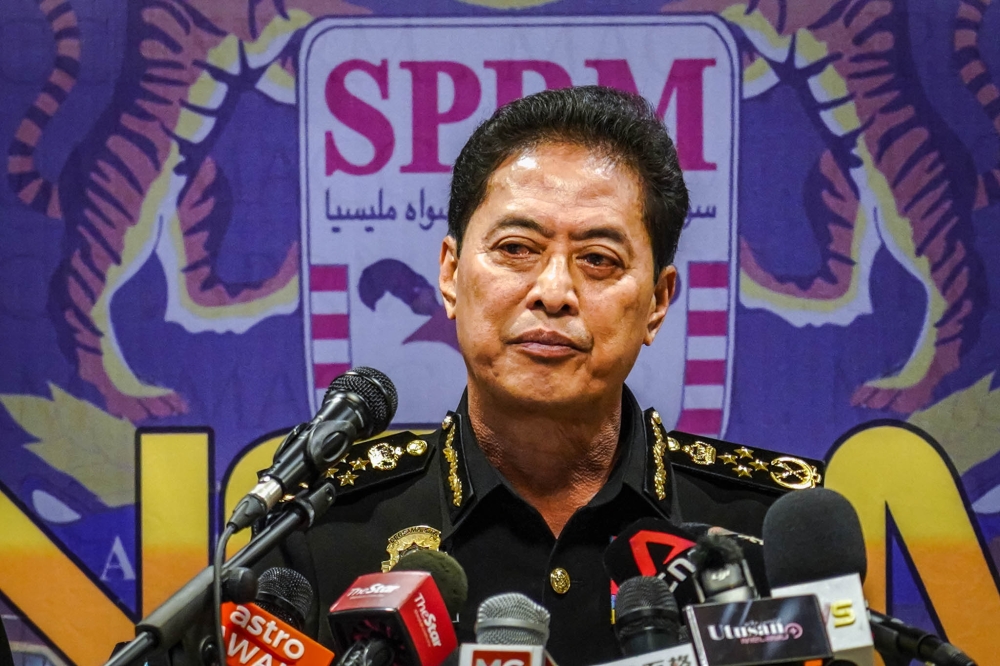
The controversy surrounding Azam Baki, the Chief Commissioner of the Malaysian Anti-Corruption Commission, has been examined through institutional channels.
The Government has already established a task force chaired by the Attorney General of Malaysia to determine whether any breach of civil service regulations occurred in relation to the share transactions.
This step is significant. It shows that the matter is not being ignored or brushed aside. It is being examined through the very institutional mechanisms that exist to review such issues.
To demand a Royal Commission before those processes have even concluded is not a call for accountability. It is an attempt to reopen a matter that is already under examination.
There is a troubling pattern that often emerges in politically charged controversies.
First, allegations are made.
Second, investigations are conducted by the relevant authorities.
Third, when those investigations do not produce the outcome desired by certain groups, the demand shifts. Suddenly, the investigation itself is said to be inadequate. The call then becomes one for a Royal Commission.
In other words, the goalposts move.
If that logic is accepted, no investigation will ever be sufficient. Every controversy will eventually be escalated to the level of a Royal Commission, regardless of whether the facts justify such a step.
That is not accountability, it risks becoming political theatre.
Media narratives are not evidence
The same reasoning applies to the claims of a “corporate mafia” reported by Bloomberg.
Journalistic reporting plays an important role in public discourse. It can highlight concerns and raise important questions. But a media narrative is not the same as an evidentiary finding.
If the allegations involve corruption or financial misconduct, the appropriate response is investigation by the relevant enforcement agencies, including the Malaysian Anti-Corruption Commission, the Securities Commission Malaysia, and the Royal Malaysia Police. These agencies exist precisely to investigate wrongdoing.
Calling for a Royal Commission simply because an international publication has raised concerns would set a troubling precedent. It would mean that media reporting alone could dictate the establishment of national inquiries.
Ironically, the constant demand for Royal Commissions may end up weakening the very institutions that critics claim to support.
Malaysia already has multiple investigative bodies with statutory powers and technical expertise. If their work is repeatedly dismissed in favour of ad hoc inquiries, the message becomes clear: regulatory institutions are not trusted to do their jobs.
Over time, this erodes institutional authority.
The result is a system in which every major issue is expected to be resolved through a special commission rather than through the ordinary processes of law enforcement and regulation. That is not a sign of institutional strength. It is a sign of institutional distrust.
A tool of last resort, not a political strategy
Royal Commissions have their place. They have been used in the past to investigate major institutional failures and matters of national importance. But their credibility depends on restraint.
If every controversy becomes the subject of a Royal Commission, the instrument loses its significance. It becomes just another political tool used to prolong disputes rather than resolve them.
The current demands for an inquiry into Azam Baki and the allegations raised by Bloomberg therefore deserve careful scrutiny. Before asking for a Royal Commission, the more honest question should be asked:
Are existing institutions truly incapable of investigating these matters?
Or is the call for a Royal Commission simply the latest chapter in a political campaign to keep a controversy alive?
Until that question is answered, the demand for an RCI says more about the politics of the moment than about the pursuit of truth.
* This is the personal opinion of the writer or publication and does not necessarily represent the views of Malay Mail.


