













MARCH 7 — Rising tensions in the Middle East involving Iran, the United States, and Israel are sending shockwaves across the global landscape. What may appear as a regional conflict carries far-reaching implications for international trade, energy markets, technological competition, and global security.
The Middle East has long served as a cornerstone of the global energy system. Any disruption in the region inevitably affects supply chains, shipping routes, and energy prices worldwide. Prolonged instability could even challenge the long-standing petrodollar systems that has shaped global energy transactions for decades.
At the same time, the shifting geopolitical environment may accelerate the emergence of new economic powers and reshape global economic alliances. While the crisis introduces significant uncertainty for some nations, it also creates an opportunity for others to strategically reposition themselves within a shifting global order.
In this environment of uncertainty, the key question is not simply how long the tensions will last, but which countries are prepared to adapt quickly and capitalise on the opportunities that arise. Malaysia, if strategic and decisive, stands among the countries capable of benefiting from this global shift.
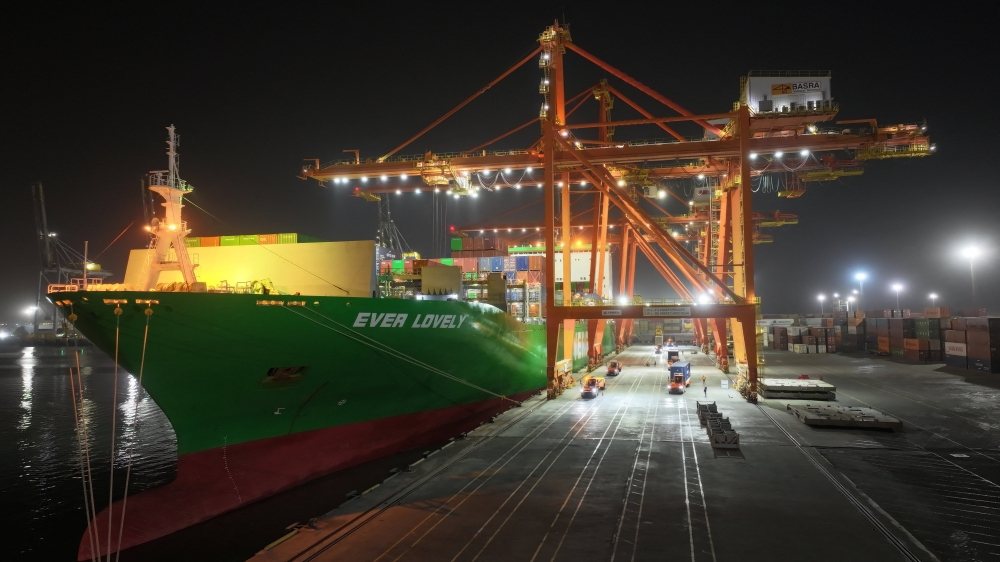
One of Malaysia’s most underutilised strengths lies in its strategic geographic location along some of the world’s busiest shipping lanes. Positioned at the crossroads of global trade routes, Malaysia has the potential to become a major maritime hub.
As a net exporter of oil and energy resources, the country could benefit from higher global demand and potential disruptions in Middle Eastern supply. Beyond crude oil, Malaysia is also a major producer of liquefied natural gas (LNG) that remain essential to global industries during periods of geopolitical instability.
Geopolitical instability often triggers capital movement. Investors seek safe, stable, and predictable environments to protect their assets and ensure long-term returns. Prolonged tension in the Middle East may prompt funds and institutional investments to relocate or diversify into new regions.
To fully realise this potential, Malaysia should consider developing a comprehensive maritime ecosystem that attracts shipowners, maritime financial institutions, shipbrokers, insurers, and international maritime training institutions. Creating a one-stop maritime centre would not only strengthen the country’s shipping industry but also position Malaysia as a regional leader in maritime services.
Malaysia should anticipate this shift and develop a proactive strategy to attract and retain high-quality foreign direct investment (FDI). Capital is fluid and for sure it flows toward stability, efficiency, and opportunity. Countries that move quickly to provide regulatory clarity, infrastructure readiness, and long-term policy certainty will capture these inflows.
Malaysia therefore must strengthen its investment ecosystem, streamline regulatory processes, and present itself as a trusted base for international companies looking to relocate operations or diversify their regional presence.
Upgrading maritime infrastructure will also be essential. Ports, logistics networks, and maritime digital systems must be modernised to accommodate future shipping demands, including greener vessels, automated operations, and more integrated supply chains.
At the national level, Malaysia’s Maritime Master Plan 2026-2040 should reflect these geopolitical realities. Long-term maritime and logistics strategies must account for global tensions, supply chain realignment, and the increasing importance of maritime security and resilience.
Opportunities created by geopolitical shifts rarely last long. History shows that global crises can either weaken nations or propel them forward. The difference lies in strategic foresight and decisive action.
Nations that move decisively secure investment, infrastructure, and industry leadership before competitors can respond. Those that hesitate risk watching opportunities migrate to faster and more agile economies.
In times of uncertainty, opportunity belongs to those prepared to seize it. Malaysia has the potential to emerge not merely as a beneficiary of global change but as a critical corridor connecting global trade and energy.
Malaysia therefore must act with urgency, by strengthening policy coordination, investing in infrastructure, enhancing workforce capabilities, and building a strong investment narrative that signals stability and ambition to the world. For Malaysia, this moment may define its place in the next chapter of the global economy.
* Izyan Munirah Mohd Zaideeen is a Senior Lecturer at the Faculty of Maritime Studies and a Fellow of the Industrial Centre of Excellence (Maritime Cluster) at Universiti Malaysia Terengganu.
** This is the personal opinion of the writer or publication and does not necessarily represent the views of Malay Mail.