


FEBRUARY 1 — When I saw children welcoming Anthony Albanese during his recent visit to Timor-Leste, smiling, performing, offering gestures of warmth, the scene felt instantly familiar.
Comforting, even. It was visually pleasing, emotionally disarming, and entirely predictable.
That familiarity is precisely the point.
What often appears as a simple cultural welcome is one of the most enduring rituals of international diplomacy.
Across political systems and regions, children have become a preferred visual language through which states signal peace, legitimacy, and goodwill.
These moments are rarely spontaneous. They are carefully staged because they work.
Children carry meanings that formal diplomacy cannot easily convey. They symbolise innocence, sincerity, and moral purity, qualities politics itself struggles to embody.
Unlike officials or guards of honour, children are perceived as untouched by power.
When leaders are welcomed by children, the visit is framed as benign and universally acceptable. Politics is softened before a word is spoken.
Children also embody the future. Their presence signals continuity, suggesting that diplomatic engagement is not only about present interests but about generations to come.
This is particularly powerful in moments of transition, whether after conflict, during regional realignment, or at the start of a new partnership.
The image quietly tells us that this relationship is meant to last.
This symbolism travels well. In an age where diplomacy unfolds before multiple audiences at once, citizens, foreign publics, regional partners, and international media, images often matter more than statements.
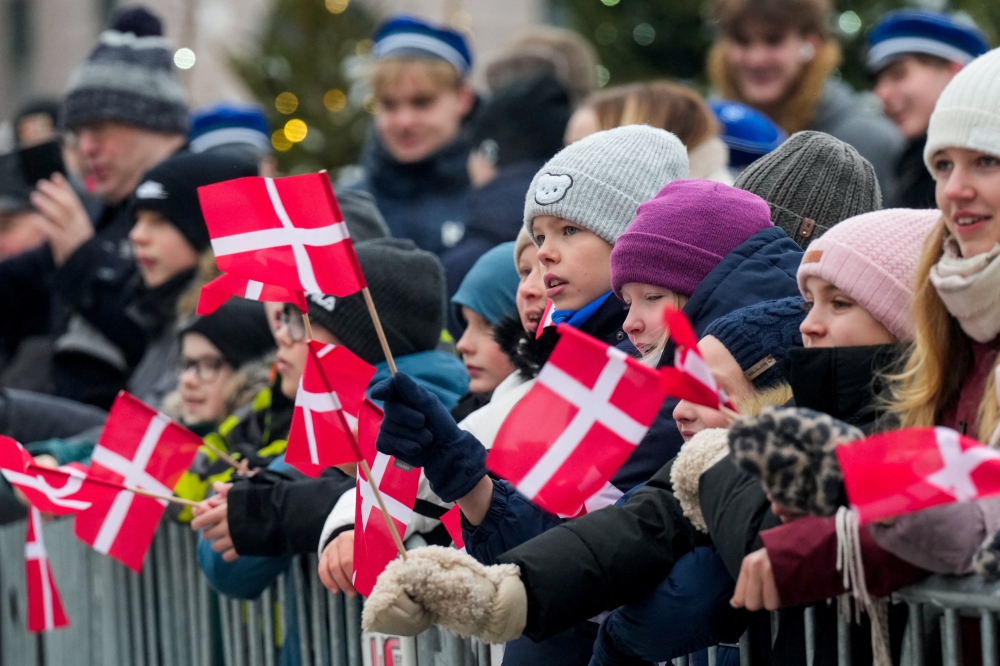
Cameras linger on small gestures, shared smiles, and unscripted moments. A leader welcomed by children appears human, approachable, and caring, even when their policies may tell a more complicated story.
In this way, children function as emotional soft power. They generate warmth while lowering critical defences.
They make diplomacy feel intimate rather than strategic.
Children also help manage power asymmetries. When smaller states welcome leaders from major powers, their presence reframes hierarchy as hospitality.
Instead of projecting dependence or submission, the scene resembles a host receiving a guest within a communal space.
Sovereignty is preserved symbolically through warmth rather than assertion.
Cultural performance deepens this effect. Children dressed in traditional attire or performing local dances allow states to express identity without appearing confrontational.
When such performances are carried out by adults, they may read as nationalist or political.
When performed by children, they are interpreted as heritage and continuity. Culture becomes a safe language of pride.
There is also a moral logic at play. Children implicitly frame politics as being in service of protection, peace, and responsibility.
Their presence suggests that governance, and diplomacy itself, exists for future generations.
This symbolism is especially attractive to leaders seeking to project moderation or care.
Even illiberal regimes rely on it to signal benevolence, despite contradictions on the ground.
Yet this practice carries an unease that is often left unspoken. Children do not choose the political meanings attached to their presence.
When used repeatedly or in highly politicised settings, their appearance risks becoming instrumental.
Emotional imagery can draw attention away from difficult questions about power, inequality, or human rights.
What looks gentle can also be strategic. What feels innocent can be deeply political.
The meaning of these rituals is never fixed. In democratic contexts, they may be read as hospitality and cultural continuity.
In authoritarian settings, they can resemble performance and socialisation.
In post-conflict societies, children symbolise renewal, while in contested political spaces, their presence may feel uneasy or even unsettling.
Seen this way, the child at the front of a diplomatic welcome is not simply part of the ceremony.
They are a symbol through which states imagine themselves, project values, and manage power in a global arena increasingly shaped by images as much as by policy.
That is why this ritual endures. It is quiet, effective, and emotionally powerful.
And it reminds us that in international politics, what moves us often matters as much as what is negotiated.
* Khoo Ying Hooi, PhD is an associate professor at Universiti Malaya.
* This is the personal opinion of the writer or publication and does not necessarily represent the views of Malay Mail.


