


KUALA LUMPUR, Feb 1 — Hundreds of kavadi-bearers unleash their spiritual fervour in the frenetic kavadi aatam during Thaipusam, one of the most recognisable Hindu festivals in the world.
Devotees fulfil their vows by piercing themselves with hooks, skewers and small spears (vel) as they walk barefoot, carrying the idol of Lord Murugan on kavadis adorned with peacock feathers and lights.
Many place their trust in traditional body-piercers, who insert the metal hooks and skewers through their skin as painlessly as possible.
The piercers behind the kavadi vows
Shankar Ramalingam, 42, first learned the craft in 2008 when his brother carried a kavadi that year.
“I pierced the hooks and skewers on my brother just by observing how the other body-piercers were doing it.
“I was really nervous, like how a doctor would feel when injecting a patient for the first time.
“Thankfully, it went well and now my brother only allows me to do the piercing for him when he carries the kavadi,” Shankar told Malay Mail when interviewed recently.
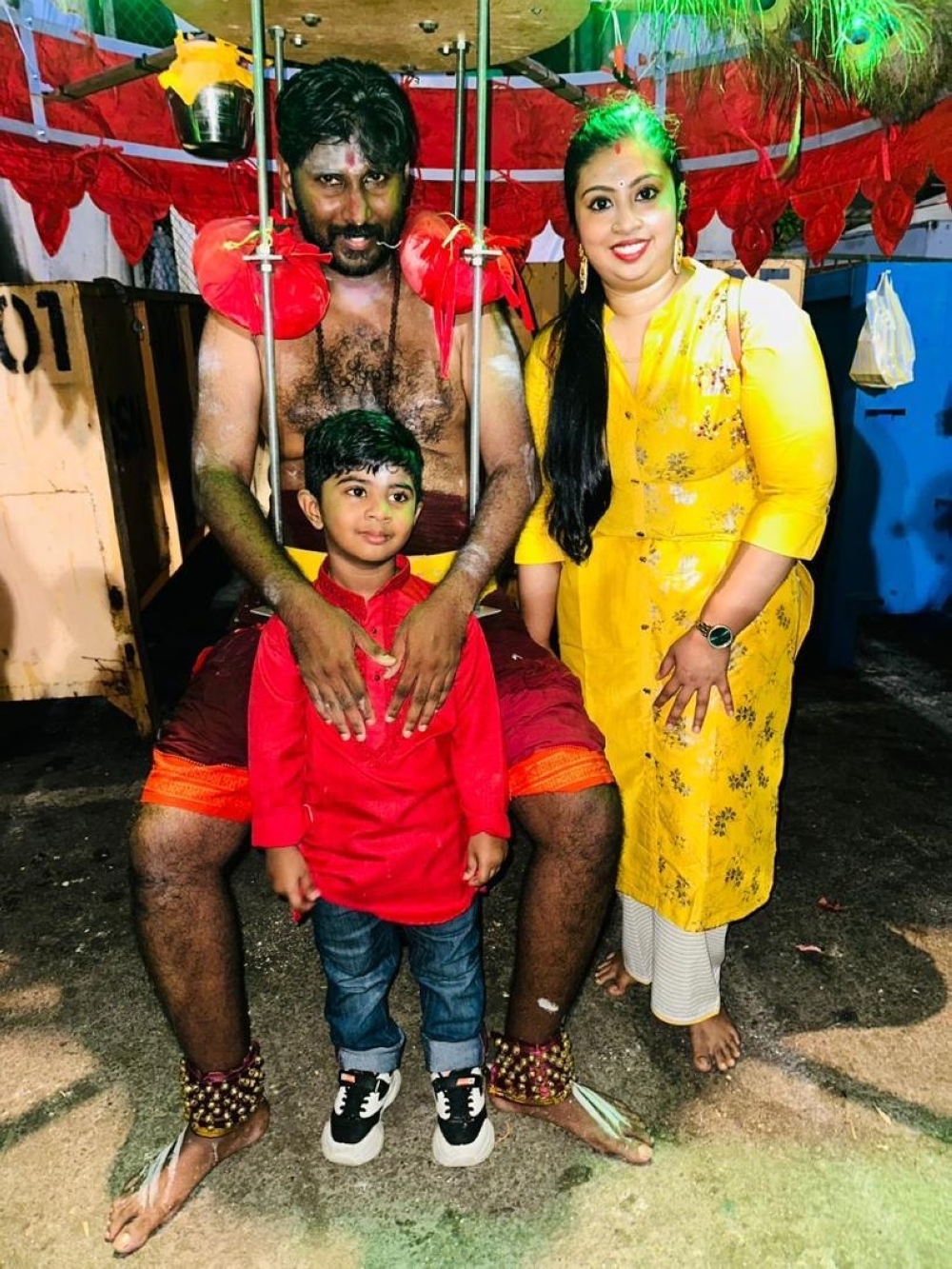
Later in 2024, the KL-born engineer carried a kavadi himself, piercing 21 metal hooks through his own skin. He plans to repeat the vow this year, this time with 31 hooks.
“Every year, I assist at least about 10 kavadi-bearers — mostly family and friends — and also those who spontaneously request the service at the temple.
“I usually start the piercing with a prayer for the kavadi-bearers to fulfil their vows without any hindrance,” he said.
Shankar said body-piercing requires patience — such as when he once attached 108 hooks on a devotee — and occasional creativity, including the time he hooked a devotee’s skin to coconuts that were tied to milk pots, or paal kudam.
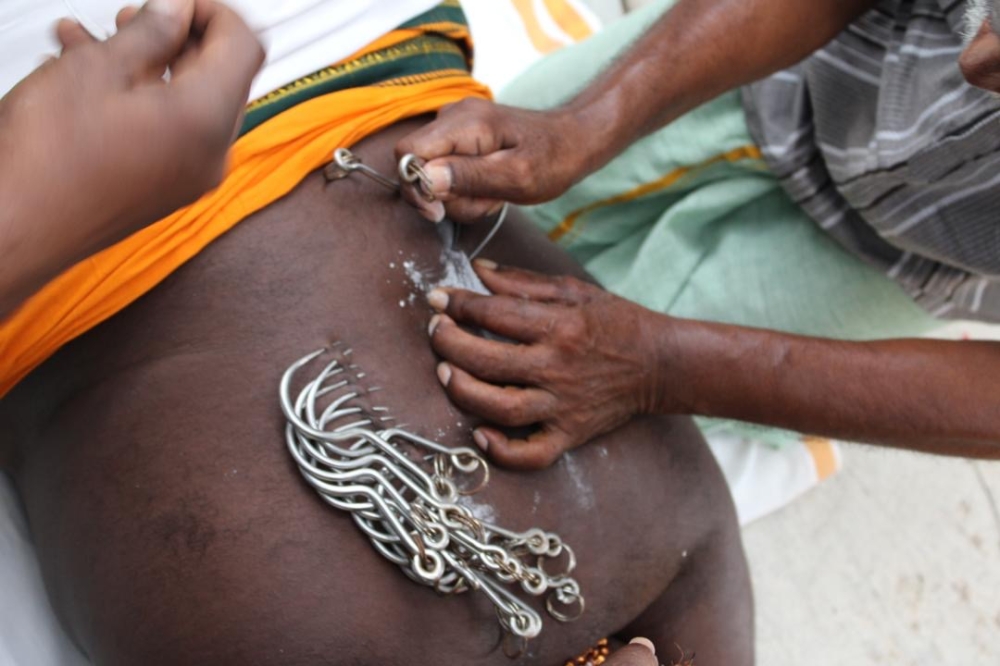
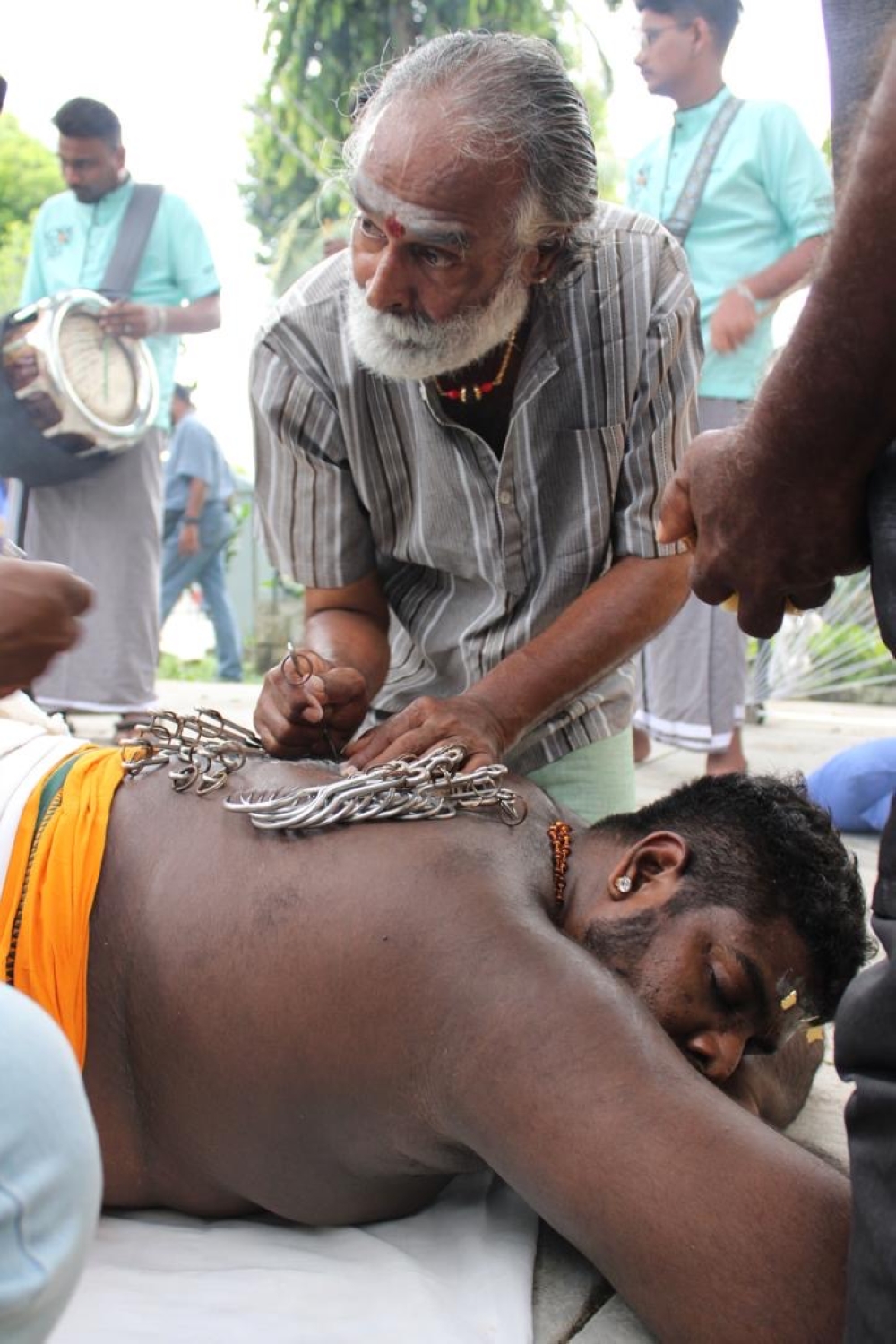
Penang-born Kuhanraj Asokan picked up the skills from his 63-year-old father, Asokan Muniandy, a seasoned kavadi-maker and body-piercer.
Following in his father’s footsteps, Kuhanraj carried a kavadi for the first time at the age of seven, taking on the lifelong religious vow known as jenma kavadi.
“I started piercing for kavadi-bearers when I was 16 years old and that was 16 years ago.
“Every Thaipusam, I pierce for about 40 to 50 kavadi-bearers at the Arulmigu Sree Balathandayuthapani Waterfall Hilltop Temple in Penang,” said the 31-year-old event planner and kavadi-maker.
Kuhanraj said body-piercers must be vegetarian and refrain from smoking or drinking on the day they perform the ritual.
“They should also be dressed in traditional dhoti and should chant the Vel Viratham hymn before they begin piercing.
“Since I also carry kavadi annually, I will usually fast for 60 days before Thaipusam,” he added.
How kavadi piercings stay ‘painless’
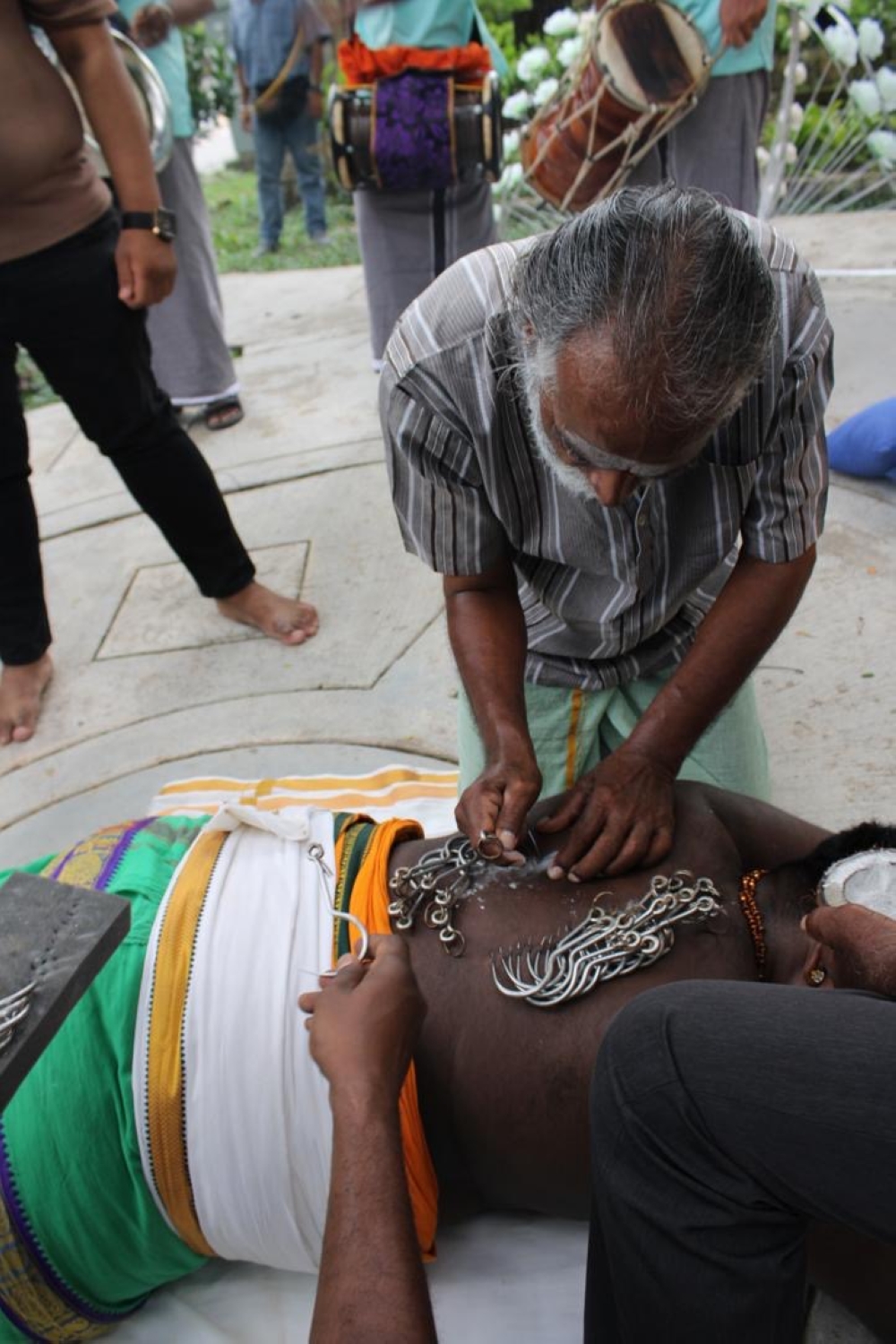
Kuhanraj said bleeding rarely occurs, even when he pierced 1,008 hooks on a devotee during the Maasi Magam religious festival in Pangkor last year.
“I can’t explain why; I just tell people it is Lord Murugan’s miracle,” he said.
He also advises kavadi-bearers to regularly gargle water while twisting their facial piercings to prevent the skewers from sticking to their flesh, reducing the chance of bleeding and pain during removal.
The kavadi procession is traditionally accompanied by urumi melam drummers whose intense rhythms provide a powerful backdrop for the ritual.
But contrary to popular belief, Kuhanraj said the drumbeats do not necessarily induce a trance.
“Rather, it is the continuous chanting of ‘Vel, Vel’ by devotees around the kavadi-bearer that boosts their strength,” he said.
Piercing as an act of devotion
Both Shankar and Kuhanraj do not charge for their piercing services during Thaipusam.
However, devotees typically offer a dakshinai — a token of appreciation — ranging from RM11 to RM401.
Shankar said he usually donates the money back to the temple or to free food booths (thaneer panthal) set up during the festival.
“Sometimes, I pass it to my cousin brother to pay his urumi melam drummers,” he said.
Likewise, Kuhanraj donates the monetary tokens he receives to the temple, charging only a nominal fee of RM1 to RM3 per hook when renting out the equipment.
“Some of these hooks are older than me,” he said, laughing.
“My father ordered these hooks to be made some 30 or 40 years ago and we have preserved them since.
“They are part of my family’s religious tradition and I want to carry this forward as religiously as my father has done,” he said.


