


DECEMBER 11 — When we planned our batch reunion in August this year, I thought it would just be a simple gathering. Maybe a dinner, maybe a photo or two, and a polite round of updates about life at 50. Something nice, something symbolic. What I did not expect was the feeling that came with it. A feeling I had not tasted in decades. Something warmer. Something quieter.
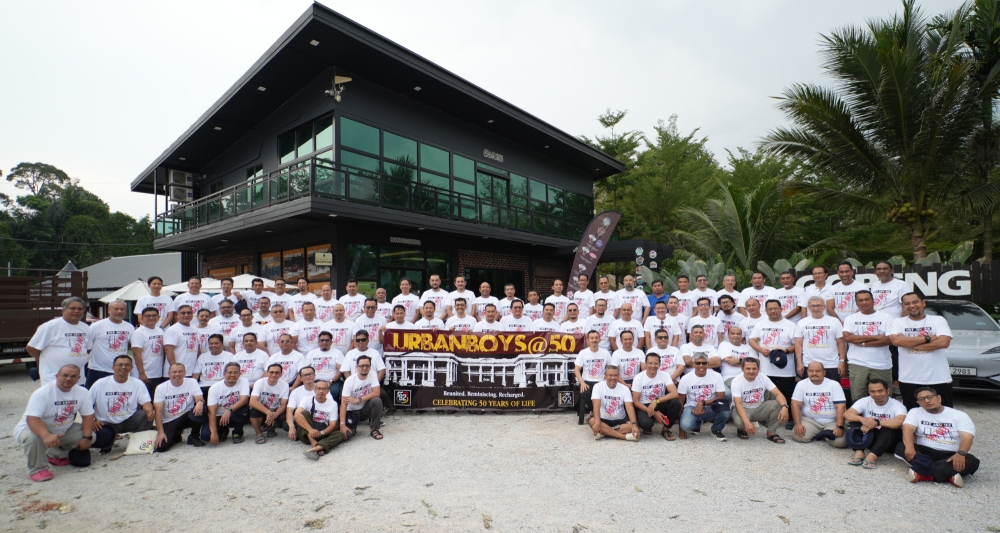
We booked a glamping site in Gopeng for three days and two nights. About eighty of us showed up, coming from all corners of the country. Some even flew in from overseas. And before we even reached the campsite, the reunion had already begun. Many of us carpooled, pairing up with people we had not sat with since Form 1 or Form 2. I ended up in a car with my old bedmate from 1989, a friend I had not seen since we left Kuala Kangsar in 1992. As the car moved, so did old memories. Stories resurfaced. Voices softened. And somehow, three decades folded themselves into the space between us.
At the site, we settled quickly into a rhythm that felt familiar, even though our hairlines were thinner and our laughs a little deeper. Some of the boys went water rafting. Some went caving. Some sat by the pool with coffee, just talking and reminiscing. A few slipped away to Ipoh to relive their teenage escapes, the closest version of “freedom” available to us back then. But most of us stayed put, soaking in the jungle air, the river sounds, and the company of people who knew us long before life reshaped us.
There is a strange comfort in being among those who remember the version of you that existed before adulthood complicated everything. Before the careers, the titles, the expectations. Before success and failure started leaving marks on your confidence. Before you learned to speak carefully and hide certain truths. In Gopeng, none of that mattered. We were just the same boys who once shared dorms and dining halls, the same ones who argued, studied, laughed, suffered punishments, survived heartbreaks, and built small pockets of brotherhood without even realising it.
And this time, as fifty-year-olds, we were able to talk about things we never spoke about in school. Some of us have gone through divorce. Some struggled financially. Some were expelled in Form 5. Some lost their way. And some are no longer with us. Every story found a place to land. Every truth felt safe. That, to me, is what a chosen family looks like. A place where honesty does not require explanation.
One of the most unexpected moments was when we prayed Subuh berjemaah (dawn prayer in congregation) together. I honestly could not remember the last time I did that with my batchmates. Maybe Form 1 or Form 2. Maybe 1989. My memory gets blurry around those years. But standing shoulder to shoulder in the quiet Gopeng dawn reminded me that some connections survive even when memory fails.
And speaking of memory, there was one small moment on the last night that I keep returning to. A quiet moment that came and went almost unnoticed by the others. I happened to walk past the same friend who once got caught smoking with me in a prefect’s cubicle back in Form Five. For decades I had carried a half-finished puzzle about that incident. I could not remember how we even got into the cubicle. I knew I did not climb in. I could not recall the details. Just the punishment and the shock on everyone’s faces when they learned “Adib kena tangkap hisap rokok” (“Adib got caught smoking”).
So I asked him, casually. Almost jokingly: “Bro, how did we get into the prefect’s cube that day? Aku tak ingat pun kita panjat.” (“I don’t even remember us climbing.”)
He looked at me like it was the most obvious thing in the world.
“Lah kau tak ingat? Dia bagi kau kunci. Dia suruh kau jaga bilik dia sebab dia pergi tournament. Lepas lunch hari Jumaat tu kau ajak aku smoke dalam tu.” (“You don’t remember? He gave you the key. He told you to look after his room because he went for a tournament. After Friday lunch you invited me to smoke in there.”)
And then we laughed. Two middle-aged men, standing under the night sky in Gopeng, piecing together a teenage memory that had lived crooked in my head for years. Nothing dramatic. Nothing heavy. Just a small truth returned to me by someone who had kept it without realising.
Maybe that is what moved me most about the reunion. Not the activities. Not the programme. Not even the laughter. But the realisation that these boys, now men, still hold parts of my life that I myself had forgotten. And without effort, without ceremony, they handed them back to me. Like family does.
In the end, I realised something gentle. The family you are born into gives you roots. But the family you choose along the way gives you mirrors. They reflect the pieces of you that you misplaced, softened, outgrew, or simply forgot. And when they return those pieces to you, you recognise yourself a little more.
And that’s what families do.
* Ir Dr Nahrizul Adib Kadri is a professor of biomedical engineering at the Faculty of Engineering, and the Principal of Ibnu Sina and Tuanku Bahiyah Residential College, Universiti Malaya. He may be reached at [email protected].
** This is the personal opinion of the writer or publication and does not necessarily represent the views of Malay Mail.


