


DECEMBER 1 — The northeast monsoon season has brought about massive floods, damaging the environment and properties as well as imposing hardships on people who found themselves trapped in submerged dwellings, roads and elsewhere.
Most affected by the floods were people residing in Kelantan, Perlis, Perak, Selangor, Kedah, Terengganu, Penang, and Pahang. There were already reports of a few deaths arising from the flooding.
It’s bad enough to fall victim to floods in one’s own country, but it’s a lot more harrowing to be hit by floods in a foreign land.
A total of 6,222 Malaysians, mostly holiday-makers, were stranded in Hat Yai after floods struck this city in southern Thailand.
Among them were young children, pregnant women and the elderly, for whom the floods, the cold and a lack of food and water especially posed a great challenge.
There was also a group of Malaysian university students and their lecturers, who was on a cultural exchange programme, trapped in their hotel. Like the rest of the stranded Malaysians, they are safe now.
Help from the local Thais was said to be insufficient while uncertainty and unfamiliarity hung in the air for the Malaysians, which was why a few desperately sought assistance from fellow Malaysians in Malaysia itself.
The United Sikhs Malaysia volunteers were reportedly the first to answer the call for help from these unfortunate Malaysians.
The humanitarian non-profit organisation swiftly dispatched its large trucks and boats to Hat Yai to start its much-needed relief work.
Challenges were many, but these did not break the determination of the United Sikhs to try to save the lives of the Malaysians there.
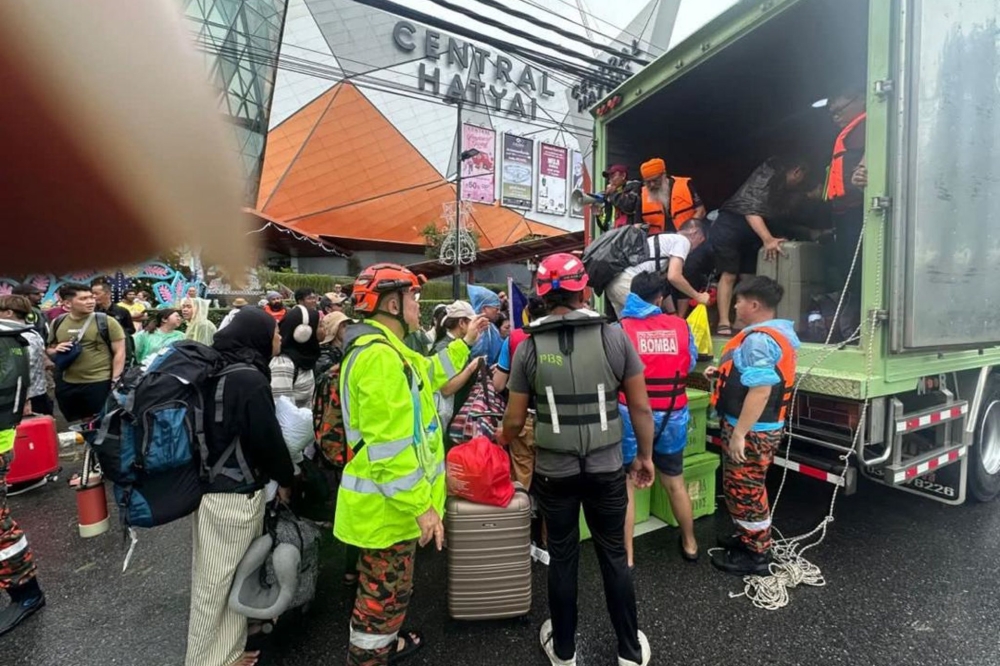
In one case, even a few of the United Sikhs volunteers were stranded in a hotel, and in another instance, one of their boats capsized after hitting a sharp object. But they soldiered on.
Driven by Malaysian spirit, other volunteers, such as the Sungai Petani volunteer fire and rescue team, chipped in for the sake of the stranded. This is indeed commendable.
It is in this context that the guiding philosophy of the United Sikhs becomes ever more significant to us all, which is to promote “diversity, equality and the elimination of discrimination based on age, religion, or belief - for the betterment of all communities.”
To be sure, this commitment to serving humanity comes from a minority group in Malaysia who underlines the important values of empathy and compassion, in the hope of reinforcing its society’s moral fibre.
The volunteers also understand that discriminatory practices can not only divide us as Malaysians, but also cause painful injustice to the victims.
We’re not “Malaysian”, for instance, when we turn a blind eye to an injustice perpetrated in other areas of our collective life against someone who is not “our kind”.
That isn’t being morally upright, inclusive nor celebrating diversity.
But “being Malaysian” obviously shouldn’t prevail only when we are at the mercy of natural calamities. That is, when our humanity is experienced collectively.
Being truly Malaysian and humane shouldn’t be as seasonal as the intruding monsoon.
* This is the personal opinion of the writer or publication and does not necessarily represent the views of Malay Mail.


