DECEMBER 18 — This week, many schools across the country are holding their annual prize-giving ceremonies. Certificates are printed. Trophies are arranged. Names are rehearsed.
Parents adjust their schedules. Children practise walking up the stage, stopping and walking on cues; some nervously, some confidently.
Social media fills up with photos of smiling faces, proud families, and carefully framed moments of achievement.
When I was in primary school, I used to be one of those children called up every year since Darjah Satu. Almost every possible spelling permutation of my name has been used: “Nahrizal Adib”, “Nahzirul Abid”, even “Mahrizal Adip” once, I think.
Either best in class, best in subjects, or top student. Certificates neatly stacked, trophies carefully kept. Story books and colouring sets too, I remembered.
And at that age, it felt normal. Almost expected. Effort went in, recognition came out. That was the rhythm of things.
Then came high school.
I went to a certain boarding school in Kuala Kangsar, Perak, where almost everyone was smart. Very smart, actually.
Suddenly, the prizes stopped coming. Not because I stopped trying, but because the field became deeper, wider, more competitive.
There were many who studied harder, thought faster, and performed better. I was no longer exceptional. I was just one among many.
At the time, I did not have the language to describe what I felt. It was not disappointment exactly. It was more like disorientation.
I had grown up thinking effort would always end with applause. And now, effort simply ended with… effort.
In those quieter years, I learned how to sit with discomfort. How to accept being average in a room full of high achievers. How to work without external validation. How to fail quietly and recover without applause.
These are not lessons that come with certificates. They arrive unannounced, and often uncelebrated. But they stay with you.
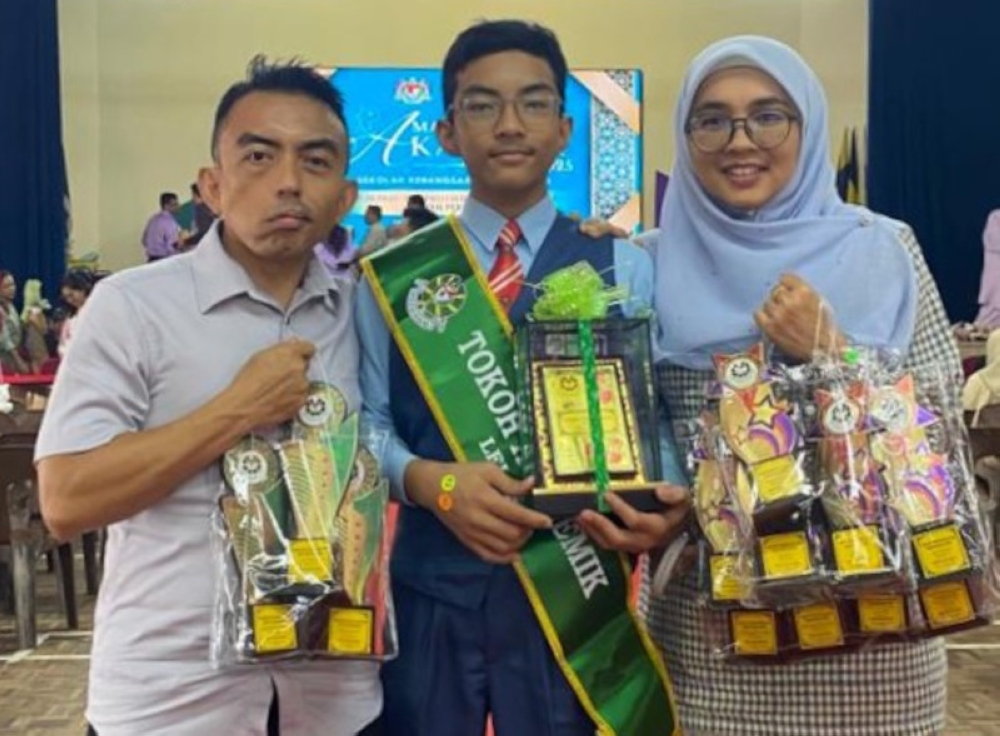
As a parent now, watching my youngest receiving one of the highest number of PBD awards, and subsequently announced as the recipient for the Tokoh Akademik award in this year’s ceremony, I see this season differently.
Of course, we celebrate the children who receive awards. They deserve encouragement. And exactly because recognition matters, especially when young minds are still learning to associate effort with outcome.
But I also think of the children who were not invited to the event. The ones who also tried, but did not hear their names called. The ones who wonder if they are enough. The ones who go home quietly and ask fewer questions.
To them, I want to say this gently: Not receiving a prize does not mean you are falling behind. It simply means that your lessons are arriving in a different form. It may arrive later, or from different places and directions.
And most importantly, some lessons only appear when the prizes stop coming.
They teach you how to define yourself without labels. How to find motivation from within. How to contribute even when no one is watching. How to stay kind in competitive spaces. How to measure progress by growth, not ranking.
In real life, applause is inconsistent. Promotions are uneven. Recognition is selective. Sometimes your best work passes unnoticed. Sometimes, even someone else gets the credit. Sometimes the reward comes much later, or in a completely different shape.
I did not know it then, but the years when I stopped winning prizes were quietly shaping the way I would later approach work, learning, and life.
They taught me to focus on process rather than outcome. To build habits instead of chasing validation. To stay curious even when results were slow. And to stay humble.
So yes, celebrate prize-giving day. Take photos. Smile proudly. Let children feel seen and encouraged. These moments matter. But also remember that not all growth happens on stage.
What truly lasts are the lessons learned when the hall is quiet, the names are no longer being called, and a child discovers that they are still worthy of effort, dignity, and hope.
Even when the prizes stop coming.
* Ir Dr Nahrizul Adib Kadri is a professor of biomedical engineering at the Faculty of Engineering, and the Principal of Ibnu Sina and Tuanku Bahiyah Residential College, Universiti Malaya. He may be reached at [email protected]
** This is the personal opinion of the writer or publication and does not necessarily represent the views of Malay Mail.