






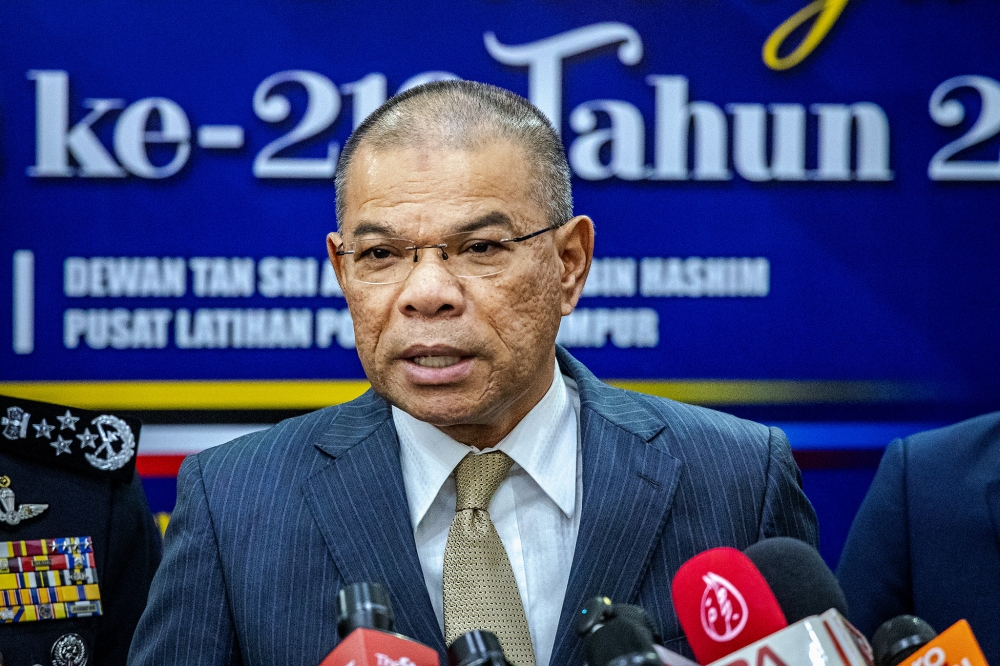


NOVEMBER 23 — Malaysia’s Prime Minister, Datuk Seri Anwar Ibrahim, said the right thing at the sidelines of the G20 Summit in Johannesburg, South Africa, and he must keep saying it. His reminder that all terms and conditions of Malaysia’s role as facilitator in the Thailand–Cambodia border friction were mutually agreed upon by both governments is not merely diplomatic reassurance. It is the strategic foundation upon which peace and stability now depend. Facilitation by mutual consent gives the process legitimacy, clarity, and trust — the very qualities needed to prevent escalation.
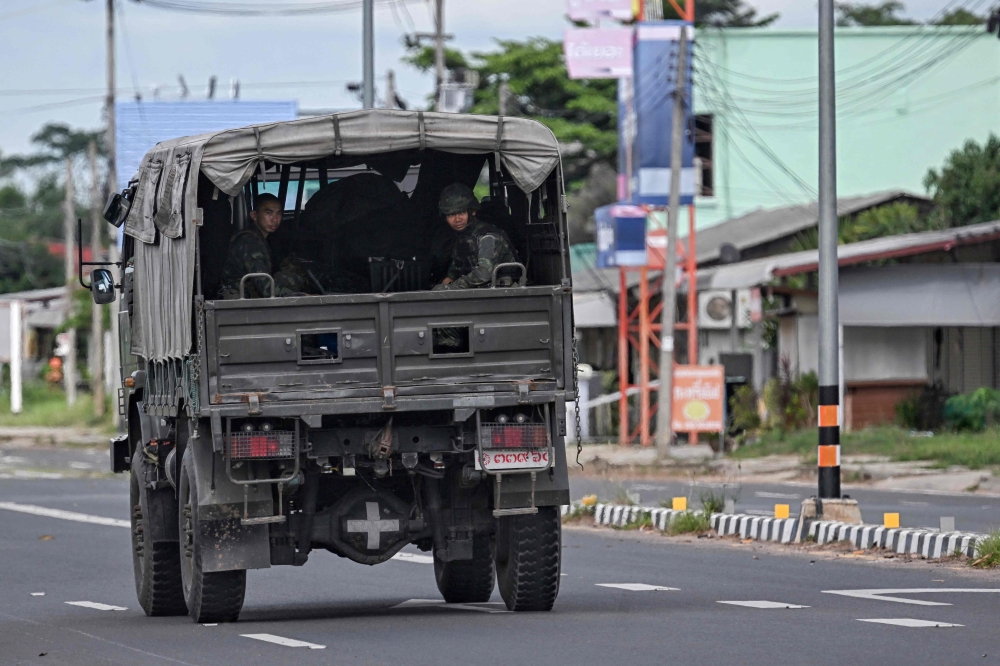
Both Bangkok and Phnom Penh must amplify this point consistently. In the current information ecosystem, where rumours and nationalist rhetoric travel faster than official clarifications, silence is often misinterpreted as ambiguity. The 817-kilometre Thailand–Cambodia border is a long and sensitive frontier, shaped by complex history, lingering minefields, and decades of mistrust. Miscommunication along such a border is not harmless — it carries the potential to ignite conflict.
Asean has witnessed this before. The clashes between 2008 and 2011 around the Preah Vihear temple did more than exacerbate bilateral tensions. They disrupted Asean Defence Ministers’ Meetings, strained trust among neighbours, and exposed the region’s difficulty in containing intra-Asean crises. While Thailand is a founding member of Asean, Cambodia — joining in 1999 — has since become one of the region’s most active participants in regional diplomacy. A renewed border flare-up now would test Asean’s capacity for preventive diplomacy at a time when great-power rivalry and internal divisions are already mounting.
Malaysia’s facilitation is not mediation imposed from the outside, nor is it arbitration or interference. It is the embodiment of Asean’s long-held conflict-management philosophy: voluntary, sovereignty-respecting, and built entirely on trust. This is why PMX’s emphasis in Johannesburg on mutual consent is so vital. It immunises the peace effort against political exploitation and reminds domestic audiences in both countries that this process is co-owned — not externally driven.
For Malaysia, the primary aim is clear: preventing miscalculation before it spirals. Along an 817-km border, where troops patrol in close proximity and where old minefields still lie in wait, a single misunderstanding can escalate rapidly. Facilitation provides a diplomatic circuit-breaker — but only if its foundations are communicated clearly and consistently by all three governments involved.
For Thailand and Cambodia, reaffirming their joint approval of Malaysia’s role strengthens political stability at home. It signals unity, reassures military commanders of the diplomatic track’s legitimacy, and prevents external actors from manipulating the narrative to deepen mistrust or provoke escalation.
For Asean, the stakes extend well beyond this border. War prevention is the ultimate test of Asean’s relevance. The region cannot afford to allow a bilateral dispute — whether between founding members or newer members — to destabilise its broader architecture. If Asean cannot keep peace among its own ranks, its credibility in addressing the South China Sea, the Myanmar conflict, or cross-border crime will erode further.
Malaysia’s facilitation, grounded firmly in Thailand and Cambodia’s mutual consent, represents a model Asean must increasingly rely upon: trust-based, sovereignty-conscious, and preventive in nature. But this model only works when transparency and consistency guide every aspect of the process.
PM Anwar is right. His message in Johannesburg must remain the central narrative. Thailand and Cambodia must echo it clearly and repeatedly. On one of South-east Asia’s longest and most sensitive borders, pre-empting a larger war is not just important — it is indispensable to Asean’s stability, credibility, and collective future.
* Phar Kim Beng is Professor of Asean Studies and Director, Institute of International and Asean Studies (IINTAS) International Islamic University Malaysia
** This is the personal opinion of the writer or publication and does not necessarily represent the views of Malay Mail.