


OCTOBER 25 — Asean and the East Asian Summit are no strangers to women leaders, but their influence is often understated.
This year in Kuala Lumpur, as the world’s attention fixates on the high-stakes negotiations between the United States and China to end their protracted trade conflict, a quieter yet equally powerful form of diplomacy is unfolding — one led by women whose presence, grace, and intellect may determine the true tone of the meetings.
Among them stands Sanae Takaichi, Japan’s first female prime minister, whose ascent marks a watershed moment in Tokyo’s political history. Her leadership style blends conviction with composure.
Though her Cabinet currently has only two women, Takaichi’s firm belief in fiscal reform and her continuation of Abenomics have already revived investor confidence — the Nikkei Index has rallied impressively since her appointment. Her advocacy for higher defence spending, technological self-sufficiency, and the Asia Zero Emissions Community (AZEC) initiative reflects Japan’s determination to restore its strategic and economic prominence.
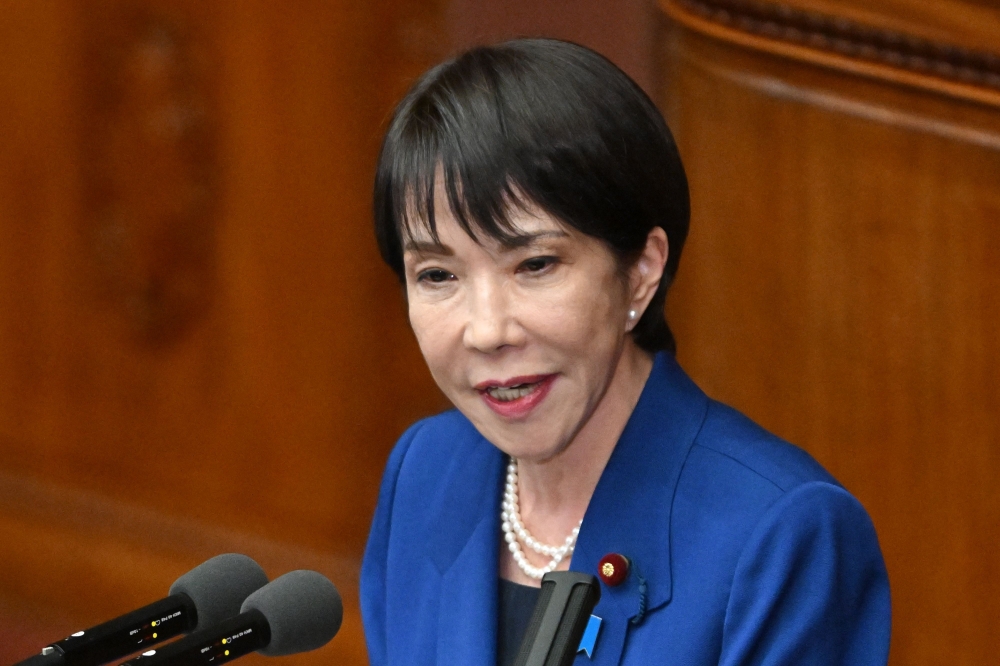
Under her watch, Japan’s “comeback” is more than a slogan — it is a disciplined national project built on innovation, stability, and regional partnership.
At the same time, Giorgia Meloni, Italy’s first female prime minister and currently the only woman leading a G7 nation, brings a distinctly European yet pragmatic flair to Asean diplomacy. Italy, as a Development Partner of Asean, is not here to reminisce about the travels of Marco Polo or the Jesuits of the East.
Rather, Meloni seeks to forge a new bridge between Europe and Asia based on technology, climate transition, and inclusive economic growth. Her assertive yet empathetic leadership style has made her a standout figure in an era of growing political polarisation.
No less important is Dr. Wan Azizah Wan Ismail, Malaysia’s first female deputy prime minister and spouse of Prime Minister Anwar Ibrahim.
As Malaysia chairs Asean and the East Asian Summit until October 28, 2025, Dr. Wan Azizah symbolises quiet moral authority — a voice for moderation, social justice, and compassion.
Her steady hand complements the Prime Minister’s bold diplomacy, particularly as Malaysia positions itself as a bridge between rival powers while preserving Asean’s centrality. Together, they personify the concept of quiescent diplomacy — calm, ethical, and enduring.
Adding to this atmosphere of refined diplomacy are the wives and First Ladies of the respective delegations, whose presence brings a touch of humanity to otherwise austere proceedings.
Their participation — from informal discussions to cultural engagements — underscores the softer side of international relations, where empathy and understanding can achieve what rhetoric often cannot.
Her Royal Highness the Queen of Malaysia, with her characteristic humility and elegance, exemplifies this dimension of diplomacy. Her grace at official functions, including the Asean-US Working Dinner, will lend a sense of serenity and decorum to one of the most consequential gatherings in recent history.
As Presidents Donald Trump and Xi Jinping prepare to continue talks at the APEC Summit in South Korea, the breakthroughs they hope for may, in fact, be seeded in Kuala Lumpur — through the measured diplomacy, quiet resolve, and empathetic influence of these remarkable women.
In a world often driven by confrontation, the true art of diplomacy may once again rest in the hands of those who wield it most gracefully.
* Phar Kim Beng, PhD is the Professor of Asean Studies at International Islamic University of Malaysia and Director of Institute of International and Asean Studies (IINTAS).
* This is the personal opinion of the writer or publication and does not necessarily represent the views of Malay Mail.


