


SEPT 21 — The simmering conflict between Thailand and Cambodia along the border in Sa Kaeo province may seem like another familiar story of contested maps and uneasy neighbors.
Yet the deeper story is about how narratives are constructed, spread, and weaponized in ways that can influence regional diplomacy.
Malaysia, drawn into the controversy by statements and reports emanating from Phnom Penh, must tread with extreme caution.
It is easy for a well-meaning actor to appear impartial when offering sympathy or concern, but in the theater of Southeast Asian border disputes, appearances matter as much as substance.
The events at Ban Nong Ya Kaew illustrate the fragility of ceasefire arrangements. According to the Royal Thai Army, Cambodia has been guilty of repeatedly violating the truce through the use of drones, landmines, and coordinated protests that crossed into Thai territory.
Thailand maintains that the land in question is not disputed but unequivocally Thai, pointing to decades of demarcation and administrative control.
From Bangkok’s perspective, the deployment of tear gas and rubber bullets was not an act of aggression but a defensive response to protesters who removed barbed wire and hurled stones. It insists that its security personnel acted with restraint and within the bounds of maintaining sovereignty.
Cambodia, on the other hand, has carefully framed the episode as Thai hostility against vulnerable civilians. By placing women, children, and monks at the frontlines of demonstrations, Phnom Penh has effectively turned the clashes into an international spectacle. The images of saffron-robed monks coughing from tear gas are far more powerful than technical arguments about border coordinates.
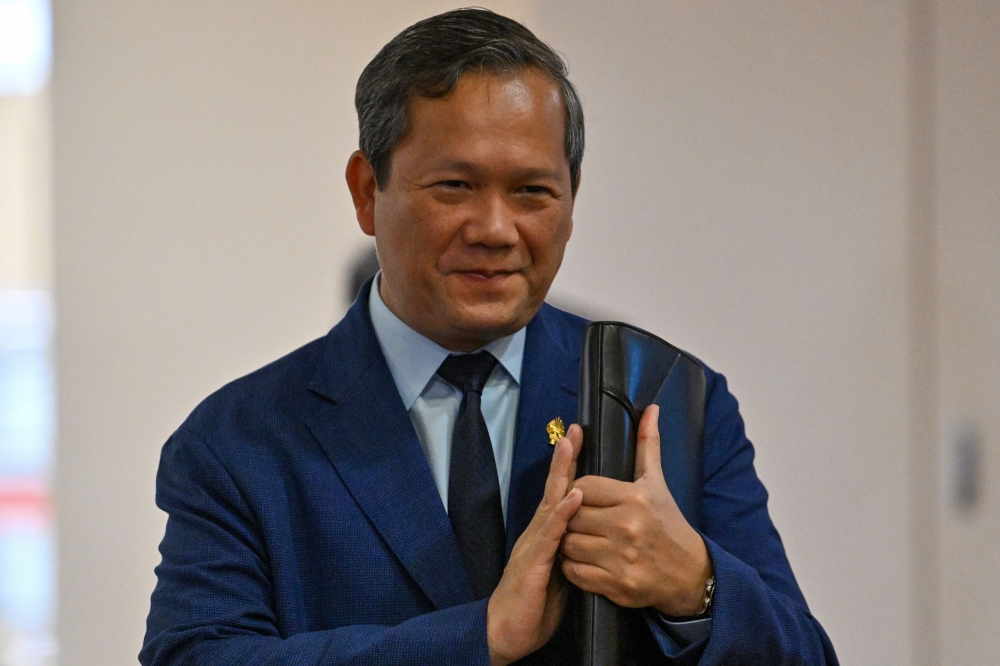
This is where the stakes grow more complicated for Malaysia. Cambodian Prime Minister Hun Manet has directly or indirectly positioned Malaysia, and Prime Minister Anwar Ibrahim in particular, as sympathetic to Cambodia’s claims.
The Thai Army has gone so far as to suggest that Malaysia has been misled by Phnom Penh’s version of events.
If Malaysia is seen as siding prematurely with Cambodia, it risks alienating Thailand, one of Asean’s founding members and a key partner in economic and security cooperation.
Such a perception could undermine Malaysia’s ability to mediate not just this conflict, but other disputes where impartiality and trust are vital.
The reputational risk is not limited to external relations. Domestically, Malaysians are instinctively drawn to stories of injustice, especially when they involve the suffering of monks, women, or children. If the government is perceived as ignoring these narratives, it may be accused of lacking compassion. But if it echoes them uncritically, it could be accused of naivety or of sacrificing long-term diplomatic balance for short-term public approval.
For Asean as a whole, Malaysia’s missteps would be magnified. Asean prides itself on being an honest broker, maintaining neutrality even while nudging disputing parties toward de-escalation. If one of its key members appears partial, it reduces Asean’s collective credibility in resolving conflicts, whether in the South China Sea, Myanmar, or elsewhere.
It is for this reason that Malaysia must proceed with deliberate care. The first priority is to gather complete evidence from both sides. This means not only listening to Cambodian observers but also insisting on Thailand’s full account of events, including operational reports, satellite imagery, and any available video footage.
Second, Malaysia should call for neutral verification through Asean. An expanded observer team, drawn from multiple member states, could provide independent confirmation of what truly occurred at Ban Nong Ya Kaew. Such a mechanism would prevent either side from monopolizing the narrative and would reinforce Asean’s role as a guarantor of regional peace.
Third, Malaysia should frame its public statements with balance. Expressing humanitarian concern for those affected is vital, but so too is recognizing that border tensions are rarely one-sided. By emphasizing restraint, dialogue, and compliance with agreements, Malaysia can show empathy without succumbing to manipulation.
The history of Thai-Cambodian relations shows why this is necessary. From the Preah Vihear Temple clashes in the early 2010s to repeated skirmishes along poorly demarcated borders, both countries have often engaged in battles of words as well as weapons. International sympathy has frequently been cultivated through emotive imagery and selective retelling of incidents.
Malaysia must recognize this dynamic for what it is: an attempt to enlist external actors as validators of contested claims. To fall into that trap would be to jeopardize Malaysia’s standing as a credible and thoughtful regional leader.
At the same time, Malaysia must also be conscious of its own domestic narratives. The country’s media and public discourse can sometimes oversimplify complex issues into stories of villains and victims. Responsible reporting and fact-checking must be encouraged so that Malaysians understand the ambiguity and competing versions of events.
This is not about abandoning compassion or appearing indifferent to civilian suffering. It is about recognizing that in the murky world of border politics, compassion must be paired with caution, and moral concern must be grounded in verified fact.
Malaysia’s broader diplomatic posture depends on this balance. Prime Minister Anwar Ibrahim has worked hard to position Malaysia as a statesmanlike actor within Asean, capable of convening summits and mediating disputes. That credibility is too valuable to squander on the basis of partial or unverified information.
Ultimately, the dispute at Ban Nong Ya Kaew is not just about a patch of contested territory. It is about history, reputation, and trust. These are intangible but immensely powerful assets in international relations. Once compromised, they are difficult to recover.
Malaysia’s task is therefore clear: to uphold dignity, practice informed neutrality, and demonstrate moral clarity. By doing so, it can preserve its role as a respected mediator and ensure that it does not become a pawn in the narrative wars of others.
The lesson is simple but profound. In disputes like this, the terrain may belong to states, but the narrative belongs to whoever tells it most persuasively. For Malaysia, the responsibility is to avoid being drawn into stories crafted for political advantage, and instead to stand firm on principles of truth, balance, and regional stability.
Because at the end of the day, what is contested is not just land. It is also Asean’s ability to maintain trust among its members, Malaysia’s reputation as a fair-minded actor, and the region’s collective capacity to manage its own affairs without external manipulation. That is a contest far more consequential than any stretch of borderland.
*Phar Kim Beng, PhD, is professor of Asean Studies at the International Islamic University of Malaysia and director of the Institute of International and Asean Studies (IINTAS).
**This is the personal opinion of the writer or publication and does not necessarily represent the views of Malay Mail.


