


SEPT 14 — Manhattan Fish Market. San Francisco Coffee. Bonia. Padini. Vochelle. Ogawa.
If you thought these companies were American, Italian, Swiss/French, or Japanese respectively, you would be forgiven. In reality, they are all 100 per cent home-grown Malaysian brands. Surprised? Let’s take a closer look at some of them:
• The first ever Manhattan Fish Market outlet wasn’t set up in New York, but in Kuala Lumpur – Mid Valley Megamall, to be exact.
• San Francisco Coffee has nothing to do with the Bay Area except in name – the company was founded as a Sendirian Berhad in 1997.
• Bonia isn’t Italian. Their headquarters is in Cheras.
• And yes, you guessed it: Ogawa, the massage chair specialist, isn’t Japanese. The last time this writer looked up their website, they did not even have an outlet in Japan.
So why do these companies, despite being Malaysian, go to great lengths to cultivate a non-Malaysian image in their profiles?
It all comes down to a tried-and-tested trademarking strategy called “foreign branding” – that is, the practice of using names, imagery, language, or design elements associated with different countries or cultures to attract customers.
These trademarks capitalise on the positive reputations of certain countries as a tactic to influence consumer attitudes. Such countries are often perceived as prestigious, exotic, or synonymous with producing high-quality goods.
Usually, these countries are consistent high scorers in nation brand indices.
To give a few well-known (if perhaps a little clichéd!) examples: countries like Japan, Germany, France, and South Korea are variously renowned for their global influence in technology, haute couture, traditional cuisine, engineering, and popular culture – think K-pop and anime.
Italy is also associated with luxury brands and perennial culinary favourites such as pizza and pasta. Switzerland has a long-established reputation for fine watchmaking and chocolates, and thanks to IKEA, most of us are familiar with Swedish/Scandinavian design, known for its minimalist and functional aesthetics.
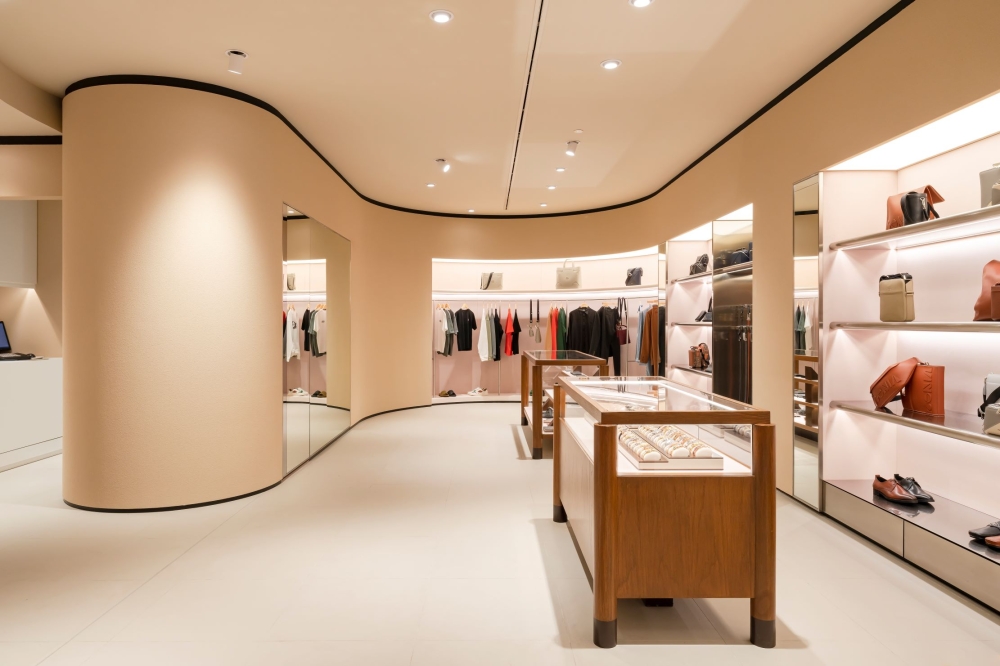
Foreign branding also plays with what is termed the “country-of-origin effect”, where consumers form perceptions – both positive and negative – based on what country a particular product comes from. Think of consumer biases like “German cars are reliable”, “French fashion is stylish”, or “Japanese gadgets are superior”, versus assumptions – oftentimes unjustified – that goods from less-developed countries are inferior.
To be fair, Malaysian businesses are not at all unique in adopting foreign-sounding names to lend their brands a cachet of exclusivity.
Companies the world over have a long history of incorporating foreign elements in their brand identity. Some better-known examples:
• Häagen-Dazs may sound like a vaguely German, Nordic or Central European brand, but it’s American.
• San Remo, the pasta sauce brand, is not Italian but proudly “100% Australian”.
• Superdry is British, not Japanese. (Footnote of interest: Like Ogawa, they have never actually entered the Japanese market.)
Foreign branding can take several different forms. Some companies use foreign names or words, or add special characters to letters, like the aforementioned Häagen-Dazs, Laneige (French for “The Snow”, but actually a South Korean cosmetics company), Prego (American, not Italian), or Tous les Jours (South Korean, not French).
Many Malaysian businesses have an obsession with adding the prepositions “de” and “d’” in their trademarks and trade names – oftentimes without regard to the actual orthographical rules in the languages of origin.
Other businesses add famous place names associated with the products, e.g. Manhattan Fish Market, Paris Baguette, and Bonia Firenze.
Still others use foreign scripts to add a veneer of exoticism or authenticity, like Chinese characters, Japanese kanji and kana (Superdry 極度乾燥 しなさい, though they have since rebranded and ditched the Japanese lettering), Korean han’gŭl, Arabic, Cyrillic, or Greek (like Ambrosial yoghurt, stylised as “AMBΡOΣIAL” and produced by Chinese dairy company Yili Group).
Some companies may even resort to creating artificial origin stories for a brand to falsely imply a “foreign” pedigree, for instance, claiming or giving the impression that the brand’s products are made in a certain country when they’re actually manufactured elsewhere.
This practise is outright deceptive and can even be considered illegal, e.g. under the Trade Descriptions Act 2011.
At the very least, the actual origin of the goods can be questioned by more inquisitive consumers, as happened with Guangzhou-based Miniso some years ago, which sparked criticism for resembling the Japanese retailer Uniqlo in its trademarking, store and product design, and overall branding.
Closer to home, in the landmark Federal Court case of Chocosuisse Union Des Fabricants Suisses De Chocolat, Kraft Food Schweiz AG and Nestlé Suisse SA v. Maestro Swiss Chocolate Sdn. Bhd., a consortium of Swiss chocolate manufacturers sought to prevent a Malaysian company from using the term “Maestro Swiss” in its branding.
The Court ruled that the company’s product packaging, which prominently featured the phrase in the Swiss national colours (red and white), was misleading, as it could confuse consumers into thinking the chocolates were made in Switzerland.
This locus classicus serves as a cautionary tale against employing suggestive branding that may deceive consumers about a product’s true origin.
And yet the question remains: if deceptive foreign branding is a no-no, how do local players like San Francisco Coffee and Manhattan Fish Market continue to trade under such names?
One possible explanation is that the trademarks have been used in commerce for such an exceptionally long period of time that they have acquired distinctiveness through an extended history of use, leading the marks to take on a “life” of their own, separate from the original connotations of the geographical names.
As can be seen earlier, San Francisco Coffee has been in business since 1997, whereas Manhattan Fish Market has been around since 2002.
Even so, the use of geographical names in trademarks comes with strings attached. Both “Manhattan Fish Market” and “San Francisco Coffee” are registered trademarks, but as a condition of registration, their owners must disclaim exclusive use of the place names “Manhattan” and “San Francisco”.
Businesses would also do well to ensure that their marketing practices do not give consumers the wrong impression about the origin of their products and services.
For example, Manhattan Fish Market’s website does not explicitly say they come from Manhattan, only that they were “inspired” by the famous Fulton Fish Market once located in that borough of New York City. That’s one way to avoid accusations of deceptive branding.
Foreign branding thus presents its own set of pros and cons. Looking at the positives, imparting a foreign identity to products may enhance their perceived quality or prestige.
Such branding appeals to consumers’ fascination with faraway countries and living the high life, and this will consequently boost interest and sales.
An air of “foreignness” or “international” vibe may also help a trader’s goods and services to stand out from those of others in a crowded market.
On the other hand, foreign branding can create false impressions about a product’s origin, which can potentially result in erosion of consumer trust, enforcement measures by the authorities, or even the threat of legal action.
In addition, if applied incorrectly, such as through translation errors or improper use of characters (hyperforeignisms), foreign branding may invite ridicule among more linguistically-informed consumers, such as the “de” or “d’” so commonly found in many local marks, which are often never used the way they would be in French or Italian.
The takeaways: International flair, Malaysian spirit
There’s nothing inherently wrong about using foreignisms in your branding as a marketing ploy, such as special characters or words with a foreign flavour, as long as they do not mislead people into believing your brand originates from a particular place when in fact it does not.
This is especially true where a geographic place name is involved.
Ultimately, a certain degree of caveat emptor still applies: the reasonable Malaysian consumer should always remain aware that not all foreign-sounding brands are, in fact, foreign – many might even be proudly Malaysian.
In the end, informed purchases are always the best purchases. So keep this in mind, shop with confidence, and support local businesses by buying Malaysian – even if they sometimes hide behind a “foreign” façade!
* This is the personal opinion of the writer or publication and does not necessarily represent the views of Malay Mail.


