


DECEMBER 24 — In Malaysia, sustainability is often framed around renewable energy, carbon reduction, green technology and climate risk management. However, one of the country’s most valuable sustainability assets lies not in advanced technologies or heavy industries, but in a heritage craft shaped by wax, fabric and generations of artisans.
Batik, long celebrated as a cultural emblem, is increasingly recognised as a strategic economic and sustainability resource that sits at the intersection of heritage preservation, community development, entrepreneurship and modern ESG expectations.
Batik’s value extends far beyond its aesthetic appeal. Its production process represents a longstanding knowledge system that promotes continuity across generations, strengthens community identity and reflects a distinctly Malaysian cultural expression.
Within global frameworks such as the SDGs, Integrated Reporting and the IFRS Sustainability Disclosure Standards, this cultural continuity is recognised as social and human capital, positioning batik as a repository of economically and socially relevant intangible assets.
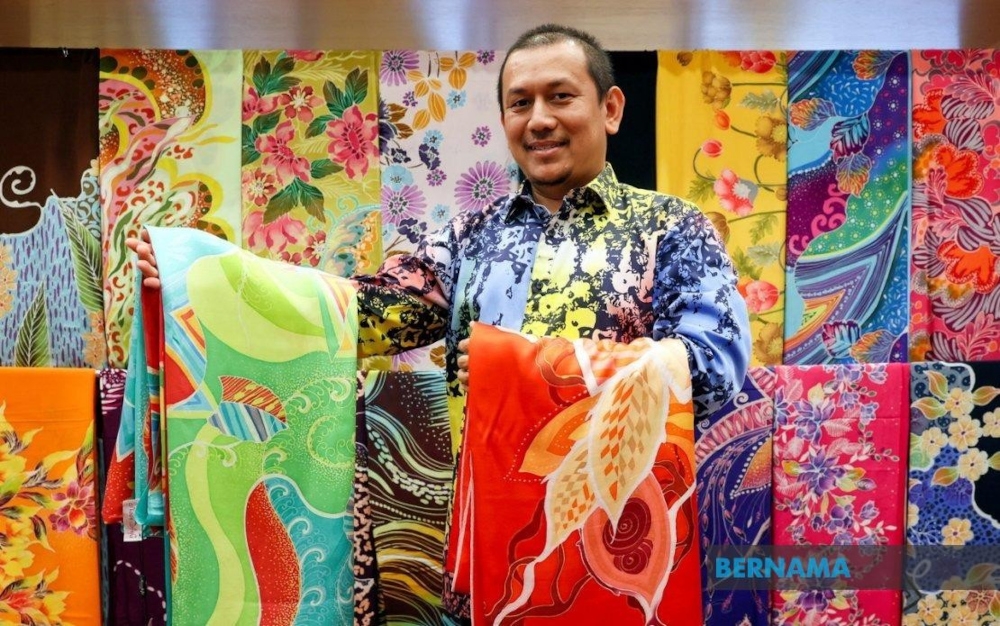
From a business and economics perspective, batik sustains a longstanding ecosystem of small enterprises, family workshops, social entrepreneurs and creative businesses. Many of these enterprises operate in rural communities, where alternative sources of income are limited.
Income from batik-making supports local economic stability and reduces urban migration, functioning as a heritage-based multiplier that sustains livelihoods and cultural practices.
Batik has also aligned naturally with Malaysia’s policy direction on micro-entrepreneurship and SME development, particularly where women’s economic participation is concerned. A large proportion of batik artisans, dye specialists, canting artists, fabric designers and seamstresses, are women who have built careers and home-based enterprises around this craft.
For many low-income families, particularly in Kelantan and Terengganu, batik production has been a pathway to socioeconomic mobility. This positions batik as a socially sustainable industry, one that contributes directly to Malaysia’s inclusive development agenda.
Economically, batik carries significant potential if treated as a premium heritage product rather than a commodity. Global consumers increasingly value authenticity, provenance, craftsmanship and ethical production, especially within the growing sustainable fashion market.
Malaysia has the cultural legitimacy to position its batik as a high-value artisanal textile, similar to how India has positioned its handloom sarees or how Japan markets its indigo-dyed fabrics. However, such repositioning requires deliberate branding, industry coordination and long-term investment, particularly in design innovation and international trade promotion.
The industry remains undercapitalised, with many artisans unable to access financing for technology, eco-dye facilities or digital expansion. A structured mix of soft loans, heritage sustainability grants and impact investment could help scale the sector in line with Malaysia’s creative economy ambitions.
As sustainability reporting evolves, accounting increasingly recognises impacts on people, culture and communities alongside environmental metrics, with IFRS S1 emphasising entity-specific matters such as human, intellectual and social capital. This shift opens the door for heritage industries like batik to articulate their contributions to long-term value creation.
Although many batik enterprises operate as micro-SMEs, simple indicators such as water use, dye management, artisan working conditions, apprenticeship training and design documentation can demonstrate sustainability. When articulated clearly, these measures help show how cultural enterprises generate measurable social value.
Sustainability accounting is particularly relevant to batik because its value lies largely in non-financial assets. Batik embodies human capital through tacit skills developed over years, social capital through shared identity and trust among artisans as well as intellectual capital in motifs and design traditions. These intangible resources are not captured in financial statements but are central to the industry’s long-term viability.
Preserving these forms of capital is a critical component of heritage sustainability. As older artisans retire and younger Malaysians migrate to urban centres in search of higher incomes, the continuity of batik craftsmanship becomes increasingly fragile.
The long-term sustainability of the industry depends on whether the next generation views batik not merely as a cultural artefact, but as a viable economic opportunity. This requires formal training pipelines, apprenticeships and entrepreneurship programmes that present batik production as a modern career path supported by digital tools, design technology, e-commerce platforms and a globalised creative economy.
Environmental sustainability also forms a significant part of the discussion. Although batik production is often regarded as a low-impact activity due to its small-batch processes and handcrafted methods, it still faces challenges related to water consumption and dye waste.
Many workshops rely on synthetic dyes that require proper wastewater management and small-scale producers may lack the resources to invest in treatment systems. At the same time, universities and social enterprises have been advancing research into natural dye chemistry, rainwater utilisation, solar-assisted wax heating and other innovations that could support cleaner production.
These developments demonstrate that environmental sustainability in batik is both achievable and economically advantageous, especially as international consumers increasingly demand transparency in supply chains.
The future of batik as a sustainable heritage industry depends on integrating cultural preservation with business strategy. This requires collaboration among accountants developing heritage reporting tools, financiers recognising cultural entrepreneurs, policymakers strengthening certification frameworks and universities supporting research, training and innovation.
When these elements come together, batik becomes more than an artistic tradition. It becomes a strategic economic sector capable of contributing to Malaysia’s ESG leadership, community well-being and global cultural identity.
As Malaysia deepens its commitment to sustainability, the country must expand its definition of what sustainability means. Cultural heritage is not merely sentimental. It is economic capital, social capital and intellectual capital.
Batik is one of Malaysia’s clearest examples of how heritage can serve as a sustainability pathway. With the right business models, financial support and accounting frameworks, batik can evolve into a national sustainability flagship and a symbol of how tradition and modernity can coexist to create lasting value for generations to come.
* Dr Dalilawati Zainal is a senior lecturer at the Department of Accounting, Faculty of Business and Economics, Universiti Malaya, and may be reached at [email protected]
** This is the personal opinion of the writer or publication and does not necessarily represent the views of Malay Mail.


