















DECEMBER 24 — Michael Holister’s article in Geopolitical Monitor — arguing that Thailand demonstrates how the West has “already lost South-east Asia” — is not merely overstated.
It is analytically careless, historically shallow, and strategically misleading.
Thailand has not been “lost” to China. Nor is it drifting inexorably into Beijing’s orbit.
What Thailand demonstrates instead is something far more uncomfortable for Western commentators: South-east Asian states are neither ideologically captured nor civilisationally submissive. They are selective, pragmatic, and deeply conscious of dignity, agency, and reputation.
Various structural realities explain why Holister’s thesis collapses under scrutiny.
First, China has always been present in Thailand — but never hegemonic
China’s presence in Thailand is not new, sudden, or disruptive.
It is civilisational and demographic. Waves of Chinese migration have shaped Thai commerce, urban life, and family structures for centuries.
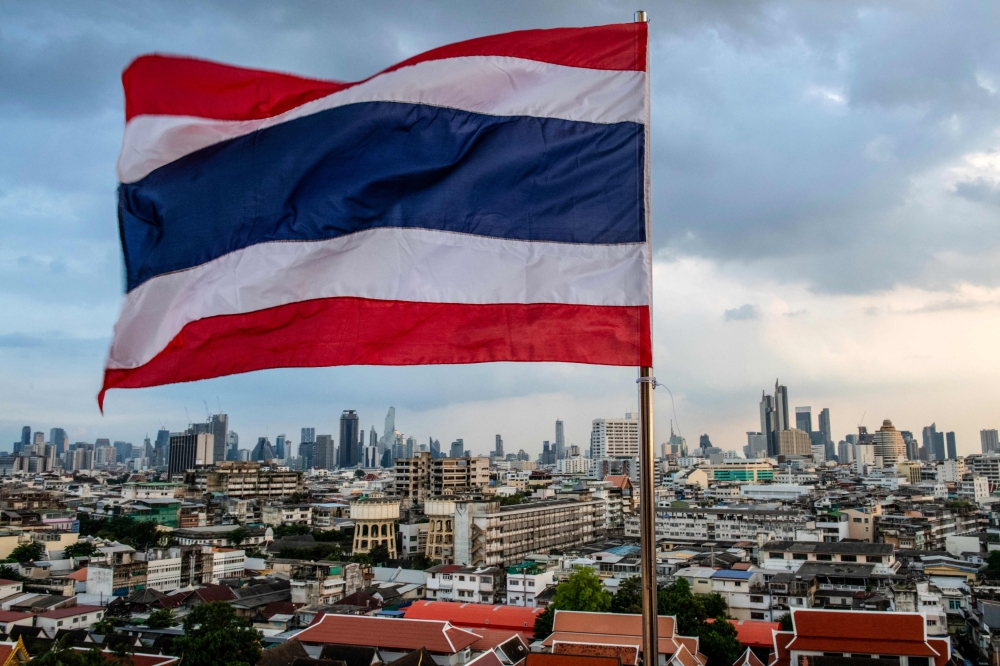
The Thai monarchy itself has long accommodated this pluralism without surrendering sovereignty.
Yet this enduring Chinese presence has never translated into automatic political allegiance to Beijing.
Thai-Chinese communities are not instruments of Chinese state power.
On the contrary, many of Thailand’s most Western-oriented elites — entrepreneurs, technocrats, educators — are themselves of Chinese descent. Their cultural confidence allows them to engage China economically while remaining socially, institutionally, and aspirationally oriented toward the West.
They send their children to Western universities.
They consume Western media.
They benchmark success using Western professional standards.
This is not ideological hostility toward China — it is civilisational choice.
Second, Western soft power in Thailand remains intact — and decisive
Holister underestimates the persistence of Western soft power in Thailand because he confuses infrastructure with influence.
China can build railways.
China can finance industrial estates.
China can flood markets with consumer goods.
But soft power is not cement, steel, or capital. It is attraction without coercion, legitimacy without fear, and aspiration without humiliation.
In this respect, the West — particularly the United States and Europe — retains deep reservoirs of Thai respect.
Western governance norms, legal predictability, merit-based advancement, and professional accountability continue to define what Thais consider “high quality” systems.
This was made unmistakably clear in Thailand’s recent political history.
Barely two years ago, the reformist Move Forward Party campaigned explicitly on strengthening ties with the United States, reinforcing democratic institutions, and aligning Thailand with global liberal norms. It received the strongest popular mandate in modern Thai electoral history.
A society supposedly “lost to China” does not vote this way.
Third, Chinese economic presence generates resentment, not loyalty
China’s projects in Thailand are often welcomed — but rarely admired.
Thai citizens appreciate investment.
They appreciate infrastructure.
They appreciate jobs. But appreciation does not equal trust.
Across industrial zones and construction projects, a recurring grievance persists: Chinese companies frequently retain senior management positions for Chinese nationals, limit upward mobility for Thai professionals, and suppress wage progression. This violates deeply held Thai expectations of fairness, hierarchy, and reciprocity.
Economic nationalism does not require hostility.
It requires dignity.
Moreover, the flooding of Thai markets with cheap, surplus Chinese goods has produced deflationary pressures, squeezing local manufacturers and small enterprises. When livelihoods are threatened, gratitude evaporates.
China’s economic footprint in Thailand is thus transactional, not inspirational.
Fourth, Thailand does not exclude great powers — by tradition or instinct
Holister’s most serious error is assuming that alignment with China requires exclusion of others.
Thailand has never practiced exclusionary diplomacy.
From the Cold War to the present, Bangkok has consistently diversified relationships — engaging China, the United States, Japan, Europe, and Asean simultaneously. This is not hedging born of weakness; it is statecraft rooted in historical survival.
Thailand does not “choose sides.”
It chooses space.
There is no diplomatic tradition in Thailand of subordinating itself to a single great power, least of all one that demands loyalty signaling.
Fifth, Chinese tourism behavior damaged trust in 2025
Finally, Holister ignores a critical social rupture that occurred in 2025.
Following reports — often exaggerated — of Chinese nationals being kidnapped and trafficked to Myanmar, Chinese tourists cancelled reservations en masse, devastating Thai tourism sectors without verification or engagement.
To many Thais, this reaction signaled something deeply troubling: panic over prudence, rumour over responsibility, and self-interest over mutual respect.
Tourism is not merely economic — it is relational.
And relationships are remembered.
This episode reinforced perceptions of immaturity, not partnership.
Thailand is not lost.
The West has simply misread South-east Asia
The West has not lost Thailand.
What it has lost is the comfort of assuming obedience.
Thailand is navigating a crowded strategic environment with confidence, memory, and choice.
China is present — but not dominant. The West remains influential — but no longer entitled.
This is not decline.
It is pluralism.
Holister’s article fails because it treats South-east Asia as a prize to be won rather than societies to be understood.
Thailand does not belong to China.
It does not belong to the West.
It belongs to itself.
And that, ultimately, is the lesson Western analysts must relearn.
* Prof Dr Phar Kim Beng is the Director of the Institute of International and Asean Studies (IINTAS) at the International Islamic University of Malaysia
** This is the personal opinion of the writer or publication and does not necessarily represent the views of Malay Mail.