


NOVEMBER 9 — Prof Dr Ahmad Zaki Abu Bakar has that distinct professorial demeanour. I don’t mean the “in your face” scholarly but rather the innate traits of a teacher; ever willing to facilitate, share and guide.
“It seems like a family vocation to teach. My father started as an ustaz and my grandfather was a headmaster,” he said when asked if teaching was a career choice. Originally, he had wanted to fly planes and had even collected the application form. But his mother had her concerns and vetoed.
Hooked on teaching
 Zaki was born in Sungai Korok, Alor Star in 1956. But from the age of two, the family was based in Singapore where his father worked as a journalist with Utusan Melayu. His father, known professionally as Abu Zaki Fathil, had decided to change jobs during those heady days of political awakening. Utusan, published in Jawi then, was a fiercely independent paper and brooked no nonsense from their nationalism zeal. A journalist with Utusan was held in high esteem within the Malay community in those days.
Zaki’s first job was as a telecommunication technical assistant with Telekom Malaysia upon obtaining his Diploma in Electrical Engineering from Universiti Teknologi Malaysia (UTM), along with the top student award. He obtained early release as a Telekom scholar when offered the post of assistant lecturer at the Faculty of Electrical Engineering in UTM in 1977.
He proceeded to earn his BSc in Electronic Engineering from Essex University in the United Kingdom in 1981, Masters of (Computer) Engineering from California Polytechnic State University, United States, in 1984 and his PhD in Electrical (Computer) Engineering from UTM, in collaboration with Kyoto University in 1989. He was the first UTM PhD graduate.
Zaki said the moment he started in academia at age 21, he has never once looked back. He enjoyed the interaction, the cajoling, and all that passionate teaching entails and demands.
Although Bahasa Melayu is the official medium of instruction in public universities, English is used widely for many courses especially in ICT studies. However, there was a class where because there was only one foreign student, from a Middle Eastern country, some lecturers forgot her presence and used largely BM.
She complained to her education ministry and all of their sponsored students were withdrawn and left for another country. She happened to be the favourite niece of their education minister.
An industrious local student had graduated as a top student. She felt indebted to Zaki and insisted her Ipoh-based parents meet him. Their immediate remark to her upon seeing Zaki was something like, “How come a Malay professor paid so much attention to help us Chinese?” It was occasions like this when Zaki is reminded of the privileged roles teachers play in bridging assorted societal gaps.
Of course, like all teachers, he enjoys the regular appreciation former students shower at the most unexpected moments.
Presently, Zaki is a visiting professor at University Malaysia of Computer Science & Engineering (UniMy) and the National Council of Professors chief information officer.
He is married to Norrizan Alias from Malacca. Zaki has six children and six grandchildren.
39 years and 10 months
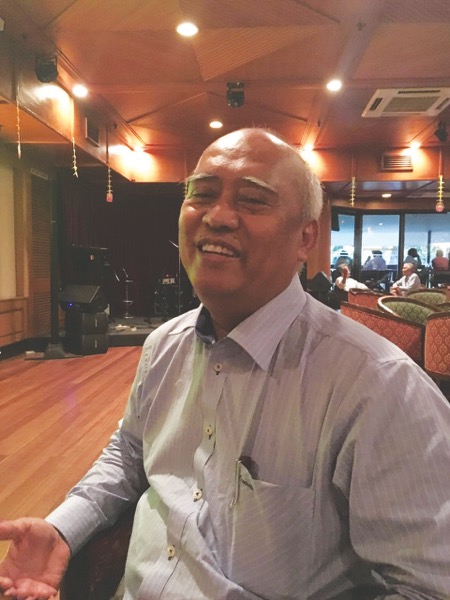
Zaki retired as the Special Grade A Professor in the Department of Interactive Media, Faculty of Information and Communication Technology in Universiti Teknikal Malaysia Melaka (UTeM) in June, after spending the last four years there. From 1977 till 2012, he was attached to UTM in various capacities as dean, senate member, directorships, etc.
A Public Services Department official told him his service record lists his length of public service as 39 years and 10 months.
He became an associate professor in 1991 and a full professor in 2000. In the academia, when one qualifies to be professor, it is based on eligibility and not on available management posts. This is quite unlike other services, like the military or police where promotions come in tandem with ranks and posts.
It has been commonly accepted to be eligible for promotion to full professorship means meeting the 7Ps requirements, in teaching, research, publications, consultancy, management and community service, commercialisation, and supervisory experience.
It has been argued there’s been an over-emphasis on the publications criteria and easy to see why — publications by staff bring some fame quite immediately to the university. But thus far, university panel members are known to jealously guard the prestige of their university however subjective the criteria may be.
Why do our professors have to retire at 60?
From their undergrad to PhD studies and with the continuing seminars, workshops and a variety of courses, each professor could have cost the people a whopping bundle. Maybe RM5 million apiece?
Thailand’s mandatory retirement is at 65, Belgium at 70, Philippines at 65, Singapore at 62 but many are contracted till 65, France at 65 and the UK at 65 with most contracted till 68. I am told in Indonesia it varies from 65 to 70.
Some of our professors who are willing and able to serve beyond 60 have been subjected to harsh treatments from universities, like demotions to lower grades or even compelled to bring in grants that exceed their contracted wages.
Most make the grade to full professorship between 45 and 55 years old. Why are they hung out to dry so soon after reaching their peak?
Postscript
Should it be thought we have too many professors, we can always raise the eligibility bar — together with the mandatory retirement age to 65!
It is confounding why we don’t value our professors like most progressive nations do.
* Datuk Lee Yew Meng is the CEO of Genovasi Malaysia.
** This is the personal opinion of the writer or organisation and does not necessarily represent the views of Malay Mail Online.


