


APRIL 30 — The global economy is no longer guided by predictable rhythms.
It is shaped by uncertainty – deep, structural, and often beyond the control of any single nation.
The escalating tensions around the Strait of Hormuz exemplify this new reality.
With Donald Trump affirming that a blockade posture against Iran could persist for months, the world is staring at a prolonged disruption to one of its most critical energy lifelines.
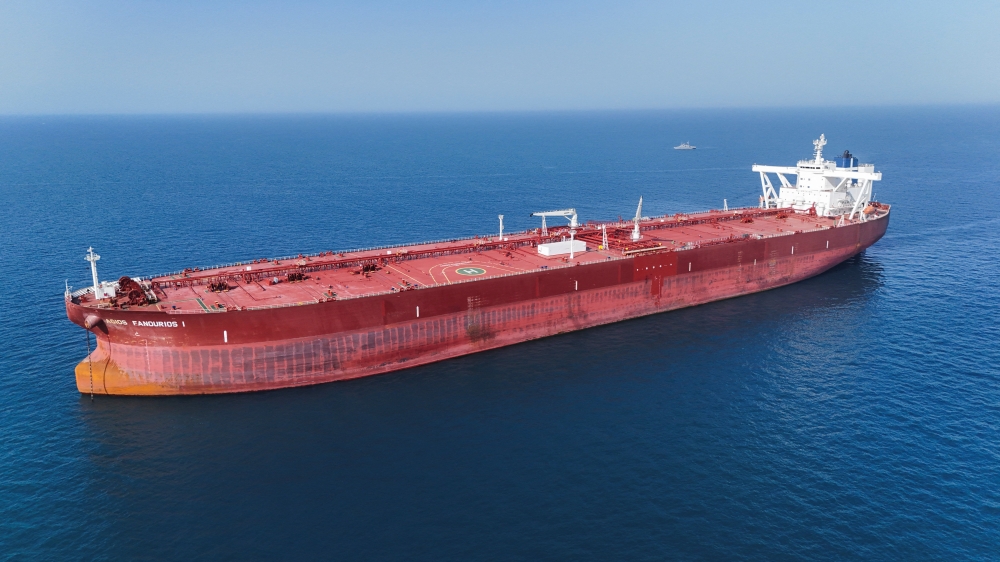
The Strait of Hormuz is not merely a maritime passage; it is the central artery through which a significant portion of global oil and liquefied natural gas flows.
Any sustained disruption carries systemic consequences.
The warning from the International Monetary Fund is already stark. Global growth has been revised downward from 3.4 per cent to 3.1 per cent.
Should energy flows remain constrained into next year, growth could slide further to 2 per cent, accompanied by inflation rising to 6 per cent.
This is the makings of a stagflationary environment that few economies are prepared to withstand.
More worryingly, according to estimates from Malaysia’s Prime Minister’s National Advisory Council (PNAC), if global growth were to fall as low as 1.4 per cent, Malaysia would face a direct and immediate risk of recession.
This is not an abstract projection. Malaysia is a trading economy that leans heavily on international commerce for its growth.
When global trade is disrupted – whether through energy shocks, supply chain breakdowns, or geopolitical conflict – the trajectory of Malaysian growth will be affected deeply and decisively.
As Gita Gopinath, Professor of Economics at Harvard, has pointed out, the burden of such a crisis will fall unevenly.
Energy importers – especially in Asia – are particularly exposed. Malaysia, despite being a producer of hydrocarbons, is not insulated.
The country’s integration into global pricing systems and its reliance on subsidies mean that international volatility translates quickly into domestic fiscal pressure.
This is where the argument for budget cuts becomes unavoidable – not as an ideological position, but as a strategic necessity.
Malaysia’s fuel subsidy regime has reached a level that is no longer fiscally tenable under conditions of prolonged geopolitical uncertainty.
The subsidies for RON95 and RON97 petrol alone now stand at approximately RM3 billion per month.
Diesel subsidies add another RM4 billion monthly. Combined, Malaysia is spending about RM7 billion every single month to cushion domestic fuel prices.
This figure is staggering when placed in historical perspective.
It represents a tenfold increase from the earlier monthly subsidy burden of roughly RM700 million; which was the subsidy prior to the eruption of the war on February 28 2026.
What was once a manageable fiscal instrument has now evolved into a massive and accelerating liability.
In ordinary times, such expenditure might be justified as a means of protecting consumers and stabilizing the economy. But these are not ordinary times.
The persistence of tensions in the Strait of Hormuz – combined with the explicit willingness of Washington to sustain pressure on Iran, potentially, for months on end – suggests that high energy prices may not be a temporary phenomenon.
They could become structurally embedded over the medium term.
Under such conditions, continuing to absorb RM7 billion a month in fuel subsidies risks crowding out other critical areas of national expenditure.
Education, healthcare, infrastructure development, and strategic investments in emerging industries all require sustained funding.
When a disproportionate share of the budget is allocated to consumption subsidies, the long-term competitiveness of the economy is inevitably compromised.
Moreover, the inflationary impact of a prolonged energy shock extends far beyond fuel prices.
Petrochemicals are deeply embedded in modern economies.
Fertilizers, food production, transportation, animal feed, and manufacturing all depend on stable energy inputs.
For example, helium is crucial to MRI scanning and the making of semiconductor boards. One third of helium comes through the Strait of Hormuz.
If global prices remain elevated, Malaysia will face rising costs across multiple sectors.
Attempting to offset all these pressures through subsidies would be fiscally unsustainable.
The divergence highlighted by Gopinath is also instructive.
Some economies, such as South Korea, have managed to cushion the impact of energy shocks through their integration into high-value sectors like artificial intelligence and advanced manufacturing. Notwithstanding the declaration of the Blue House in South Korea that the country’s economy is now on war footing.
Malaysia is making progress in these areas, particularly in semiconductors, but it has yet to fully anchor itself within the AI-driven growth cycle.
This limits its ability to offset external shocks through technological gains in the immediate term.
Budget cuts, therefore, must be understood as a recalibration of national priorities.
They are not about reducing the role of the state, but about ensuring that state resources are deployed where they are most effective.
Rationalizing fuel subsidies – especially those that disproportionately benefit higher-income groups – is a necessary step.
At the same time, targeted assistance for vulnerable households must be preserved to maintain social stability.
Equally important is the need to redirect fiscal resources toward building resilience.
Investments in energy diversification, including renewable sources and regional power connectivity, can reduce long-term dependence on volatile external supply routes.
Strengthening public transportation systems can also mitigate the impact of high fuel prices on households.
The broader lesson from the Hormuz crisis is that Malaysia must adapt to a world where external shocks are more frequent and more severe.
Fiscal policy cannot remain static in the face of such uncertainty.
It must evolve to reflect new realities. Stable political leadership will play a decisive role in this transition.
Budget cuts are never popular, particularly when they involve reducing subsidies that have long been seen as entitlements.
Yet leadership is precisely about making difficult decisions in the national interest.
The alternative – continuing on the current fiscal trajectory in the face of mounting external risks – would expose Malaysia to far greater vulnerabilities.
The Strait of Hormuz may be thousands of kilometres away, but its impact is immediate and profound.
As long as uncertainty persists, Malaysia must act with foresight and discipline. Budget cuts are not a sign of weakness.
They are a reflection of strategic clarity in an era defined by unknown unknowns.
In navigating this period of global instability, prudence is not merely advisable. It is indispensable.
* Phar Kim Beng is a professor of Asean Studies and director at the Institute of Internationalization and Asean Studies, International Islamic University of Malaysia.
** This is the personal opinion of the writer or publication and does not necessarily represent the views of Malay Mail.


