


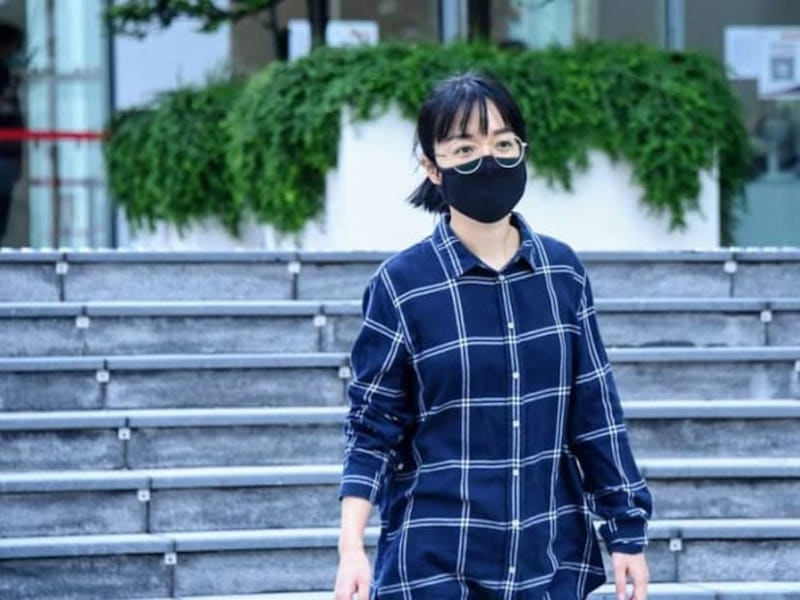


SINGAPORE, Feb 22 — Despite having signed an undertaking to safeguard official information, a former deputy lead of the Ministry of Health’s (MoH) data management unit chose to leak classified Covid-19 information to members of a chat group on multiple occasions before it was officially announced to the public.
In fact, Zhao Zheng’s attitude towards the role entrusted to her was so “cavalier”, as described by a judge, that she even went so far as to play a game on some days, asking the group to guess how many confirmed Covid-19 cases there were that day.
The winner would receive RMB1 (RM0.65) as a good luck gift from Zhao.
Today, the 36-year-old Singaporean was sentenced by a district court to 18 weeks’ jail after she pleaded guilty to 12 charges related to the offences which took place in 2020.
One charge came under the Computer Misuse Act, as Zhao had accessed a government Covid-19 database to extract confidential information about a patient who tested positive for the virus at the request of a 36-year-old woman, Tang Lin.
The rest were charges under the Official Secrets Act related to her wrongfully sending the number of daily Covid-19 cases to a WeChat group, comprising of 49 other members who were also mothers, before MoH officially released the information.
Another 12 related charges were taken into consideration for the woman’s sentencing.
How Zhao got the information
Deputy Public Prosecutor (DPP) Joshua Lim told the court that before the Covid-19 pandemic, Zhao was working as an assistant director at the biostatistics and research branch of MoH’s public health division.
However, she was later assigned to be the deputy lead of MoH’s data management unit when the ministry’s Covid-19 operations began sometime in February 2020.
As part of her position, Zhao was given access to a shared folder on MoH’s intranet that contained various documents and spreadsheets used by the ministry in its Covid-19 operations.
These included:
A spreadsheet titled “master”, which was created by the MoH’s case reporting team. It had a compilation of information related to Covid-19 positive cases such as an individual’s age, gender, nationality and address.
A spreadsheet maintained by the data management unit titled “masterforinternaluseonly”. This was used by the unit to collate and analyse data pertaining to Covid-19 positive cases in Singapore, and also used to produce tables and charts required for MoH’s daily press releases that were published during that period.
A spreadsheet for each confirmed Covid-19 case, which would contain more biodata of the individual, as well as his or her movement and activity patterns.
Even when she was not at work, DPP Lim said Zhao would be able to receive information on the number of Covid-19 cases for that day as she would receive this via a WhatsApp group chat containing other members of her department.
The leak
The prosecutor added that Zhao had signed an agreement in 2008 — the year she started working at MoH as a statistician, according to her LinkedIn profile — in which she acknowledged that all official information she acquired in the course of her work was of a strictly secret and confidential nature.
It was not to be shared with anyone else “except in the course of her official duties”, unless she had the consent of MoH’s permanent secretary.
Despite this, Zhao began sharing the number of confirmed Covid-19 cases in the WeChat group chat as early as March 16, 2020. She even told its members not to disseminate the information as she was not supposed to share it with them.
Zhao would also occasionally share other details relating to Covid-19 cases in the group, such as how many cases involved foreigners arriving in Singapore in a given day.
“On some days, the accused would also play a ‘guessing game’ with the other members in the group chat, whereby (they) could guess how many confirmed Covid-19 cases there were that day, before the accused subsequently revealed the actual figure,” said DPP Lim.
According to court documents, Zhao had leaked classified information to the group on at least 20 occasions, before it was released publicly by MoH.
In the case involving Tang, DPP Lim said it also happened sometime in March that year.
Tang came to know of a resident of her condominium who had tested positive for Covid-19, and asked the WeChat group if anyone knew more about the case.
As no one responded, Tang sent a private text message to Zhao asking for more details.
Zhao acceded to her requests, and used her government-issued laptop to retrieve the information that Tang wanted.
Tang, who had also leaked the information she received from Zhao, was fined S$10,000 last year.
A message must be sent
DPP Lim, who sought a jail term of nine months for Zhao, said the premature release of Covid-19 related information has myriad implications, such as signalling increased restrictions.
“The perception of an impending tightening of other measures can have large economic significance on the markets, retailers, employers, and travellers,” he said.
Moreover, he said it is important that sensitive information is made public in a manner that would not cause panic to the population at large, which was seen when people began crowding supermarkets in anticipation of measures.
This only exacerbated the risk of transmission, he added.
Said DPP Lim: “A message has to be sent that public servants who are entrusted with confidential and highly sensitive information should be guardians of that information and not breach the public’s trust.”
Zhao’s defence lawyer, Ms Diana Ngiam of the Quahe Woo and Palmer law firm, who sought the sentence imposed, said her client had made a mistake and was “ultimately a mother who empathised with other mothers who were fearful, anxious and scared” by the Covid-19 situation.
In response, DPP Lim said leaking the information once might be considered a mistake, but Zhao’s multiple charges showed “multiple mistakes were made”.
In delivering her sentence, Deputy Presiding Judge S Jennifer Marie said an appropriate sentence must be given as there was a need to maintain confidence that the government can be “guardians of highly sensitive information”.
While the judge accepted that there was no “nefarious motivation or personal gain” for Zhao to leak the information prematurely, she said Zhao had treated the confidential and sensitive data she had access to in a “cavalier manner”, as shown by the guessing games she had played.
Furthermore, aside from knowing she was not to share the information, Zhao had caused various public agencies involved in the fight against Covid-19 to redirect resources to investigate the source of the leaks, the recipients of the leaked information and the extent of any further leaks.
“The Public Service had to adjust to deal with such leaks, including ring fencing certain processes, which reduced the speed of information flow between agencies while the investigation was ongoing.
Overall, the ongoing efforts by the authorities to address the Covid-19 crisis were impeded due to your unauthorised disclosures,” said Deputy Presiding Judge Marie. — TODAY


