


NOVEMBER 22 — With the local Tamil language film Simple Manusan from earlier in the year proving to be one of the highlights of the year for Malaysian films, the arrival of Macai, the latest film from writer-director Sun-J Perumal (of the FFM-winning Jagat fame), has got me thinking that maybe, just maybe, the most interesting Malaysian films being made and released this year are local, low budget Tamil films.
It’s a well-known fact that the most interesting and adventurous art being made anywhere in the world are made by people on the fringe or outside of the mainstream, where money might be in short supply but courage and the spirit of exploration definitely aren’t.
While Jagat was a more conventional, neo-realist concoction, which probably made its acceptance by the Malaysian film industry a bit easier, Sun-J has come out with all guns blazing on his latest film, boldly and confidently mixing up elements and moves not only from the likes of David Lynch and Quentin Tarantino, but also from the more arthouse end of the spectrum, with some shots calling to mind films from the likes of Greek master Theo Angelopoulos and Turkish master Nuri Bilge Ceylan.
Worry not though, for this is not one of those impenetrable arthouse exercises that some film fans simply can’t stand to sit through, because at heart, this is still a crime thriller, with all the elements that you’d expect from such films.
The narrative/plot is a simple one, centered on a lead character named Siam (played with memorable intensity by Karnan G. Crak), his best friend Oosi (Kuben Mahadevan brilliantly playing the comic sidekick) and an old high school friend of Oosi’s named Jack (Irfan Zaini from Blood Brothers, delivering another impressive performance), all of whom will spend most of the film’s running time trying to come up with ways to help Siam find enough money to pay back a local kingpin named Ibu (played by Susan Lankester) for a lost stash of drugs.
If you want a plot summary, that’s it. There are no mind-blowing plot twists, or clever plot machinations.
This is one of those films where it’s not the story that’s important, but how it’s told and what’s hidden beneath that makes it such a unique experience.
Most obviously, this movie is set in a fictional country called Lingapura, that’s situated between Singapore and Thailand.
Clearly this is a clever attempt to reduce censorship problems for the film, as you can get away with more things if the country you’re portraying is fictional instead of an actual country like, you know, Malaysia.
Also, by setting it in a fictional country, it allows Sun-J to play around with the movie’s world building, leaving hints of the real world in the film’s tiny little details, like the brand of the beer that everyone in the film drinks, called Old Speckled Lynch, which clearly refers to the well-known brand Old Speckled Hen.
And by using the word Lynch, Sun-J is also clearly signaling to the audience of the influence of David Lynch in the more surreal passages of the film, like its first and final few scenes.
Setting this in Lingapura also allows Sun-J to have fun with portraying corruption within the police force, staging quite a few scenes that many Malaysians would be quite familiar with, either in trying to “settle” things with a police officer or after being stopped for a random spot check, but it’s all done in good humour and without any malice, and Sun-J is even graceful enough to have a police character refusing to accept a bribe because it’s against our moral values.
This also allows Sun-J to make other references to our country’s many issues and social problems, all within a package that can still be considered a commercial film.
What’s most impressive about what he’s achieved with this film is the confidence he has in telling this story the way that he’s telling it.
Tiny bits of detail like the aforementioned Old Speckled Lynch beer or the repeated (but always subtle) appearance of the Hindu goddess Varahi (the Shakti of the Hindu god Varaha, often depicted with a female pig’s face on a human body) show a confident storyteller who knows that little things like this can be used to advance a film’s plot and signal things to the viewer, without bashing the viewer’s head with its symbolism.
There is a dream/nightmare logic at work here, much like the work of David Lynch, but Sun-J is always careful to drop hints in order to tie everything together, even if he never really spells things out for the audience.
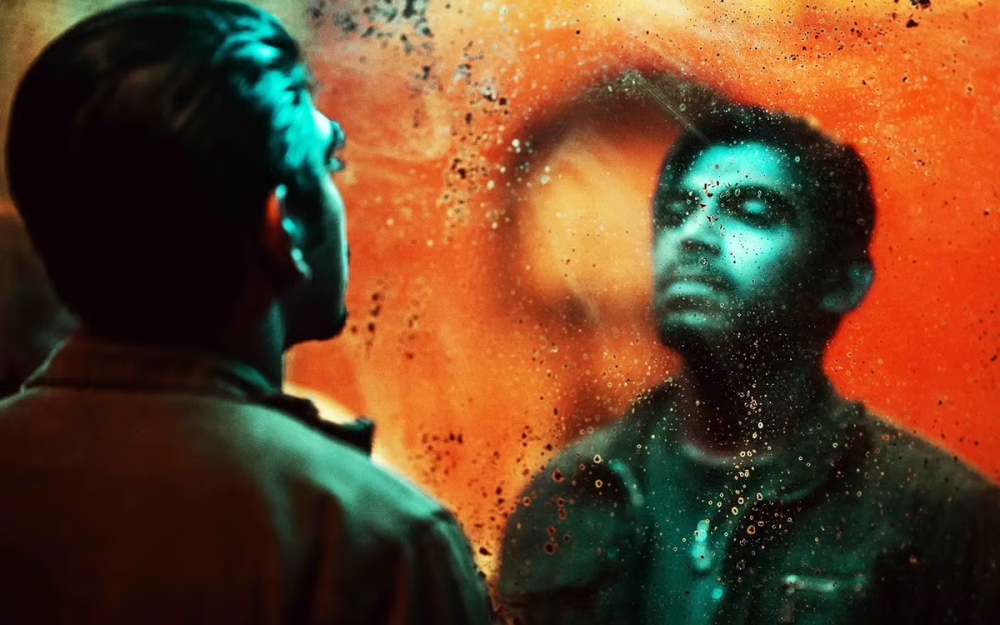
It’s a nice balance of enigmatic and straightforward storytelling, all wrapped up in a gorgeous visual package that’s so striking, especially during the first few scenes and the last few scenes, that many of them will burn themselves into your memory for days to come.
This is comfortably the most cinematic, and probably best Malaysian film of 2025, and the fact that it’s a small, low-budget Tamil film makes it even sweeter.
* This is the personal opinion of the columnist.


