


DECEMBER 11 — Surprisingly, even the election outcome summaries are trite and predictable in the country.
Like the two dimensional purported analyses of Sabah polls. Cash is still king in the old North Borneo Company, GRS stuck to the known, Semenanjung parties are unwelcome and that ever annoying overreliance on majority rather than vote percentage.
Take only the old lessons, then make certain you try only the old tricks. And if everyone relies on the same, the voters react the same way.
Which then becomes proof the old ways are valid. The self-validation is not proof that other methods do not work, just evidence other methods are not employed.
How to change the answers, if only the same questions are asked?
Like how did we in 2025 end up with only five female winners out of 73 races in the Land Below The Wind?
Were there not enough female candidates or that female candidates ran very male campaigns?
If there are those who want to revolutionise elections in Malaysia, they may want to do exactly that, revolutionise rather than just use new politics, dynamic campaigning and flat hierarchies as merely soundbites.
Now is the time to shift gears, if the parties want a different outcome.
There are two years before the current administration is forced to go to the polls. Within 24 months or around 730 days Malaysians may vote, if they choose to.
Did you make me want to?
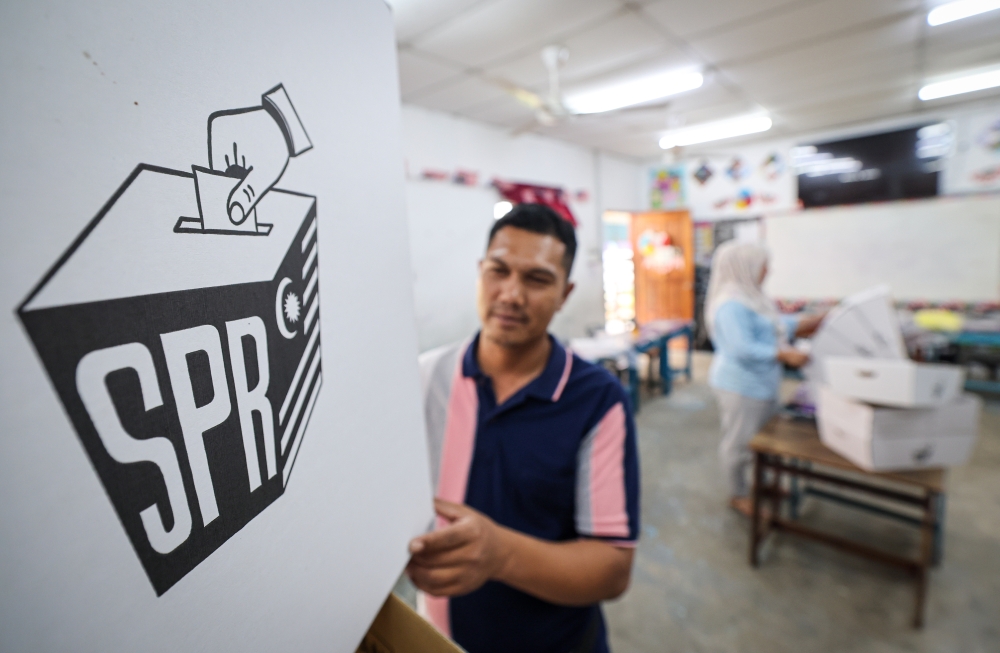
Choose, as in Sabah’s under 65 per cent voter turnout, or only two in three picked up their ballot papers.
A side note about the 200,000 Sabahans in Semenanjung, and how many of them made up the 1.1 million who voted.
I say side note since they get more media mention than the 600,000 who chose not to vote despite residing in Sabah.
A large number of people were seated in their Kota Kinabalu or Sandakan homes on November 29, 2025 and opted not to trot down the block to the polling booth.
The cities’ turnouts hovered around 55 per cent. In Sandakan’s Elopura, Vivian Wong who won the parliamentary seat with more than half the total votes in 2022 — and the by-election in 2019 after her incumbent dad’s passing — only gathered 5,000 votes. More than half the voters did not bother.
DAP’s lethargy notwithstanding, get out the vote (GOTV) programmes are underserved. Voters need cajoling.
If DAP got five per cent of their base to care about this election, not just rely on their historical affiliations and voting records, and made them know why this candidate needed their specific vote, the results may have been considerably different.
People need to be asked each time to dance even if they have been to many dance events. Expecting natural voter inertia to aid a party across the line is lazy.
Undi18 and automatic registration ups the ante. More people who do not care to vote are registered voters, and more often than not, they are unaware on election day they can vote.
A sliver passes the chance to vote because they are ignorant of what is involved and are afraid to be embarrassed.
There are multiple permutations in the no show percentage and unless the parties address this, they are literally not selling enough.
While Malaysian parties were behind the curve on Internet based campaigning in the late noughties, now their challenge is voter turnout, GOTVs are more critical than ever.
In the old days, resources dictated GOTV. The village down the river cannot vote without passage to the centre upstream, and both boats and fuel are cornered by incumbents.
Today, in an urbanised nation, they need reasons to care. A car ride or umbrella holding usherers at the school entrance when it pours are welcome, but the initial and more central question is how to get them off their sofas and out of the door.
Whether electronic efforts, or knocking on the door, the need to get to the voter somehow is the new electioneering goal.
The slogan campaigners
In 2018, Mahathir Mohamad pledged to end the GST if he won. He also pledged an additional holiday on Thursday — since Najib Razak thought voting on a Wednesday lowers turnout.
It did not, and Pakatan Harapan won, and Mahathir delivered both, the death of a tax and Malaysians a hangover sleep.
But are elections won only by short slogans or single promises?
Since the 2010s, because the criticisms were mounting that Malaysian parties lacked substance and relied on identity politics, the parties began to generate documents in the middle of election campaigns, and declare them manifestos.
Except they act like high school student debaters, thinking releasing their manifestos only after nomination day catches the opponent cold and avoids criticisms.
Unfortunately, it also catches the voters cold. Instead it turns out as a weird act of self-sabotage. No one criticises, no one knows about it, no one cares about it.
The election discourse then, as it was in Sabah, was reduced to soundbites. “We are pro Sabah and will defend the 40 per cent back pay of taxes since the 1970s.”
There were hardly any solid pledges. Like a boyfriend pledging his commitments in generalities so that he is not caught cheating later and clears his name on a technicality.
Similar to the poor retail culture to engage voters, the broader stroke engagement through policy in manifestos sucks.
Infinite coalitions destroy meaning
A value proposition limited to slogans is also enforced by a steadfast belief in creating the largest tent possible.
Gang up with everyone. The bewildering decision to contest the 2023 state elections as the unity government turned the winning side into a collection of many standing for everything. Impolitely put, they have no idea what they stand for.
The respective party policy wonks can produce a specific list of pledges to match the party’s aspirations, but they cannot unify them with all their unity friends.
It is impossible for DAP and Umno to stay true to their alleged values, and stick together. They are very different parties.
PKR has absolutely no left- or mass-oriented spine left, thanks to its dominant populist tangent the last 10 years.
But there they are forcing a round peg into a square hole and asking the people to imagine they see a dolphin doing lassoes with its non-existent arms.
As it stands, the unity gang are charging down the last stretch with the hope that their togetherness is enough to stave off the far more dysfunctional Perikatan Nasional (PN). “Choose A because B is impossible” is a one-trick strategy.
However, if nothing challenges the binary electoral choice, the unity gang can get away with the next election.
Indies can rock it
Since only five independents won, the media underplays it. But in an election with that many parties putting up so many candidates, 596 for 73 seats, the independents defied the odds.
More so, in Sabah, where the votes were spread out.
In the 2022 General Election, in Semenanjung despite there being four clear blocs, one Gerakan Tanah Air under Mahathir Mohamad’s Pejuang leadership collapsed completely. They lost their deposit in every contest.
The votes were keenly split among PN, BN and Pakatan in varying degrees across the peninsula with simple majorities rather than absolute majorities dominating.
By 2027, more Malaysians will be braver to back candidates over parties, compared to 2022.
BN won Sabah’s N2 Bengkoka seat by 77 votes. More instructively, Harun Durabi only collected less than 21 per cent of the votes. He won by getting only a smidgen more than one in five votes casted.
Eighteen of the 73 seats were won with less than one-third of the votes casted.
In the old days, independents were drowned by the resources of the main parties. Today, an organised campaign leveraging social media can punch above its weight class.
The caveat of being organised is still applicable.
Independents can be lean fighting machines not hampered by the bureaucratic party machinery.
Campaigns are about campaigning
Here’s what they do not print. Malaysian election campaigns are sluggish.
Stand at the campaign HQ three days after nomination day and there will be hardly any activity.
While pollsters are active in our elections, giving snapshots to leadership, the campaigns lack campaigners.
The efforts centre around ceramah gatherings in the evening, morning market visits and polling and counting agents training. Those are important but there are so many more unutilised dimensions.
The signal from Sabah, and probably backed by findings at Melaka and Johor which hold polls before GE16, that the fractured political situation means try new things and not reverting to type.
Malaysians are readier than once thought. If only the options were available.
* This is the personal opinion of the columnist.


