


SEPT 18 -- In the next few months, chess players in the region will be able to participate in two Open Championships; the first to be held in Hong Kong from September 30 to October 6 and then it will be the turn of Yangon, Myanmar from November 23-30, and all thanks to the sponsorship of the Kasparov Chess Foundation Asia-Pacific.
These join the HB Bank Open in Ho Chi Minh City, Vietnam, the Bangkok Open and of course the Malaysian Open as other leading regional Open Chess Championships.
Sadly there will be no 4th Indonesia Open held on its traditional dates of October 9-18, as there is no longer any reason for PERCASI (All Indonesia Chess Federation) President Hashim Djojohadikusomo to sponsor the US$100,000 (RM319,799) prize fund that broke all records in 2013, after spending a large part of his fortune helping bankroll his brother Prabowo Subianto's failed bid to become President of the Republic of Indonesia.
These events, with multi-year sponsorships, are a welcome alternative to the super strong Opens held throughout the year in India where even unknown kids make it a habit of beating famous Grandmasters!
India of course for many years had Viswanathan Anand as World Champion and a genuine challenger in Koneru Humpry for the Women's World Championship and building on these is a new generation of talent which is taking the bulk of medals at World and Asian Youth events. Indians winning big International Opens has become something commonplace.
How strong then is India? Well, the World Chess Olympiad held in Tromso, Norway, saw a team without their two best players take the Bronze medal for the first time in their history and they boast at last count, an amazing 34 Grandmasters!
Let's now see a excerpt from a well-received book in the Quality Chess' Grandmaster Repertoire series written by Stanford-bound 22-year-old Parimarjan Negi, a winner of the Malaysian Open, former world's youngest Grandmaster and Asian Continental Champion who was most recently the leader of the Indian team in Tromso.
1 e4 e6 2 d4 d5 3 Nc3 Bb4 4 e5 c5 5 a3 Bxc3+ 6 bxc3 Ne7 7.Qg4 0–0 8.Bd3 f5
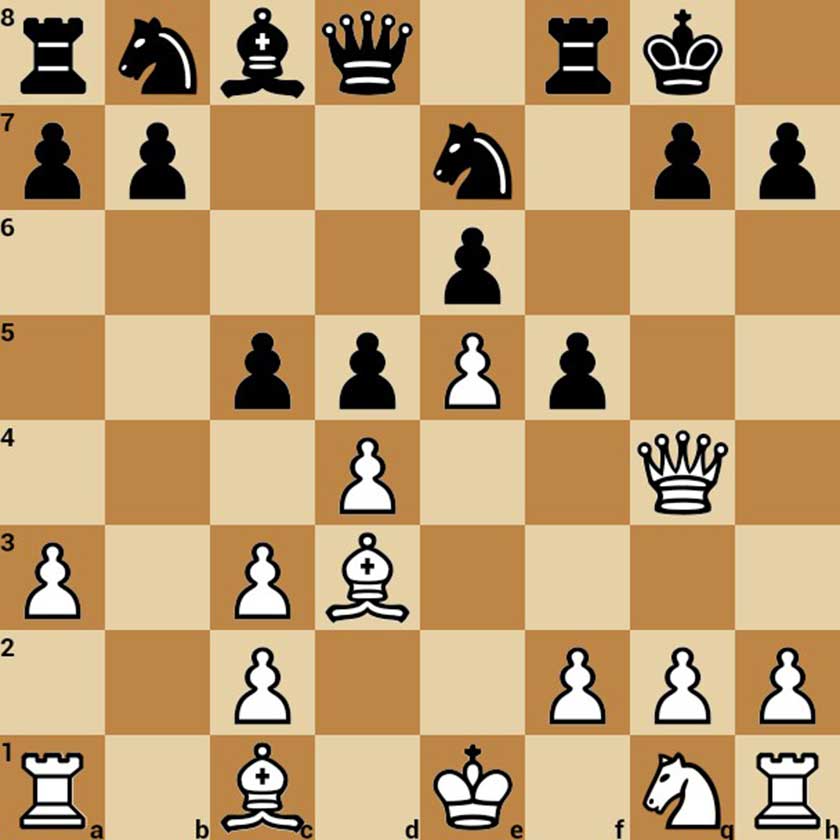
It is natural but some players would prefer to gain more breathing room on the kingside and avoid facing an attack after Qh5. However, this once-popular variation has fallen on hard times in recent years.
9 exf6 Rxf6 10 Bg5
We will briefly look at a couple of exchange sacrifices that Black can make here with A) 10...e5 and B) 10...Nd7, before examining the most popular C) 10...Rf7
A) 10...e5
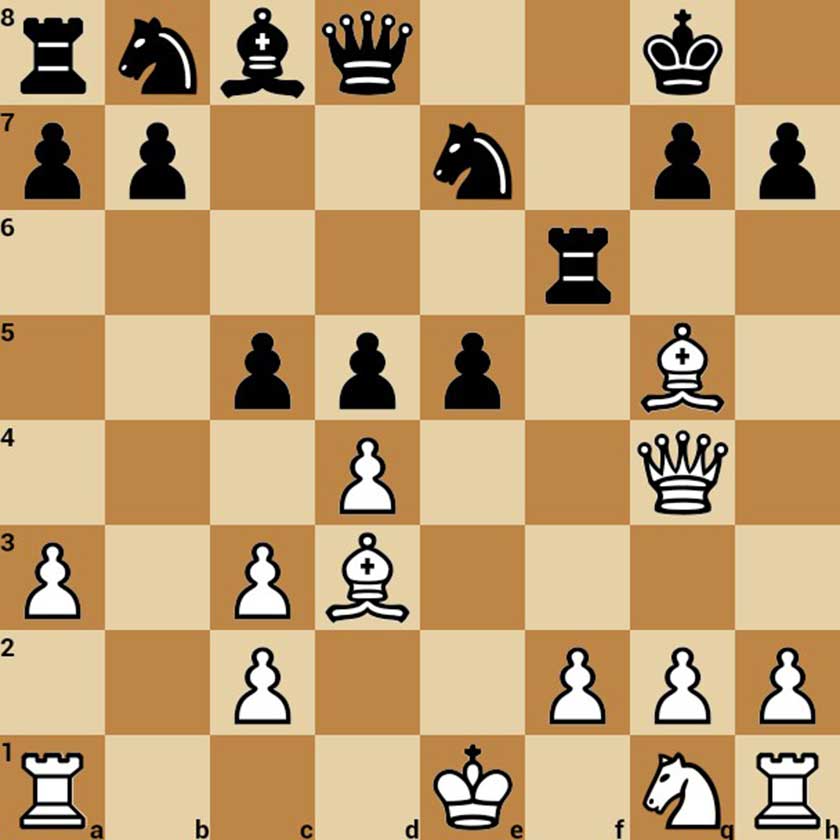
With the moves ...Nbc6 and Nf3 included, this would be strong for Black, for the obvious reason that ...e4 would lead to a fork. Here it just loses an exchange, but Black hopes to get some activity in return. Ian Nepomniachtchi has used this line and drawn with a couple of strong opponents, but it appears to me that he was relying on the surprise value more than the objective strength of the last move.
11 Qh4 e4 12 Bxf6 gxf6 13 Be2
13 Bf1 is preferred by the engine, but I can believe that Black may obtain nasty compensation here.
13...Qa5
13...Nf5 was later played by Nepo in a blitz game against Leko. This move is only suitable for blitz, as White just needs to figure out the correct route for his queen: 14 Qh3! Intending Bg4. 14...Ng7 15 Qe3 Nf5 16 Qd2+-. The Queen returns to safety and defends everything.
After the text move White’s main problem is of development, and Dominguez solves it elegantly.
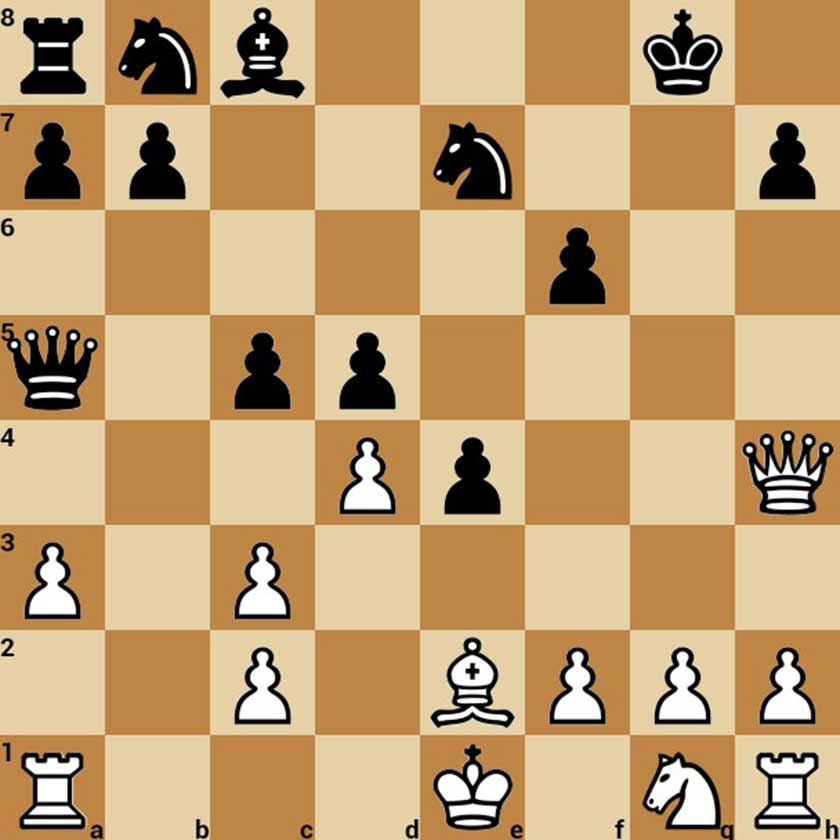
14 Qg3+ Kh8 15 Bh5!
An important move. Now White easily completes his development and remains an exchange ahead.
15...Nbc6
It is important to mention that 15...Nf5 can be met by 16 Qh3 when the queen is perfectly safe, despite the impending discovered attack. 16...Nc6 17.Ne2 Nfxd4 18 Qh4 These are ‘only moves’ for White, but they are enough. 18...Kg7 19 Qg3+ A queen triangulation! 19...Kh8 20 0–0 White is safely an exchange ahead.
16 Ne2 cxd4 17 0–0 dxc3 18 Qd6 Kg7
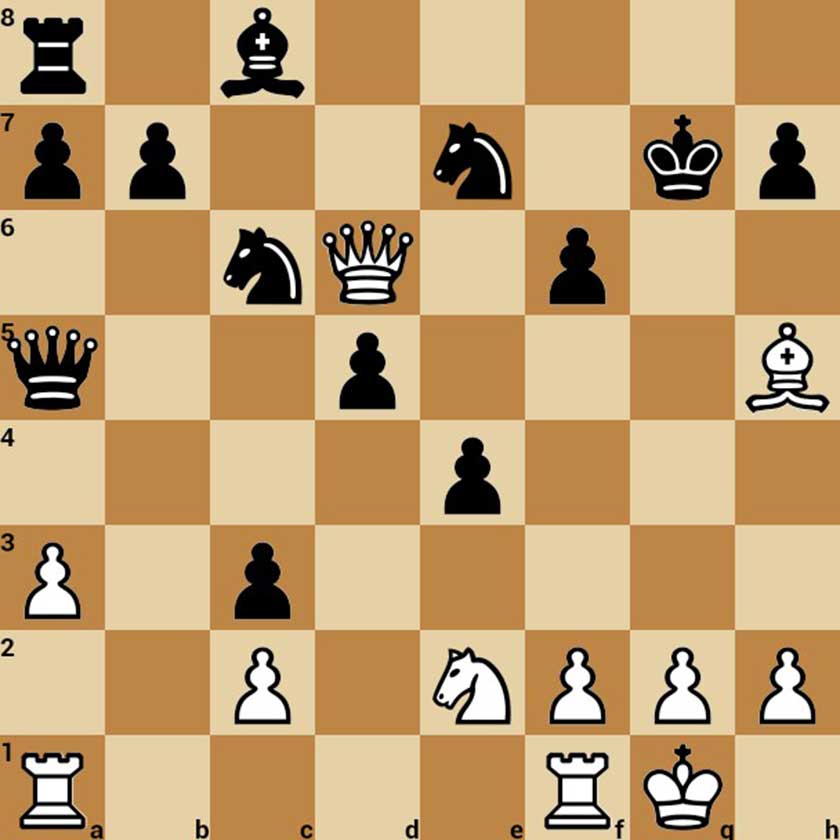
19 Nd4!N
This improves over 19 f3 e3 20 Bg4 Qd8 when Black was back in the fight in Dominguez Perez – Nepomniachtchi, Eilat 2012.
19...Qd8
This is the only way for Black to complete development, but it allows White to pick up an important pawn.
20 Qg3+ Kh8 21 Qxc3+=
Black does not have full compensation for the exchange.
* This is the personal opinion of the columnist.


