


KUALA LUMPUR, March 19 — For the second consecutive week, fuel prices in Peninsular Malaysia have seen a massive spike as the government moves to align domestic rates with a global market rattled by the outbreak of conflict in the Middle East.
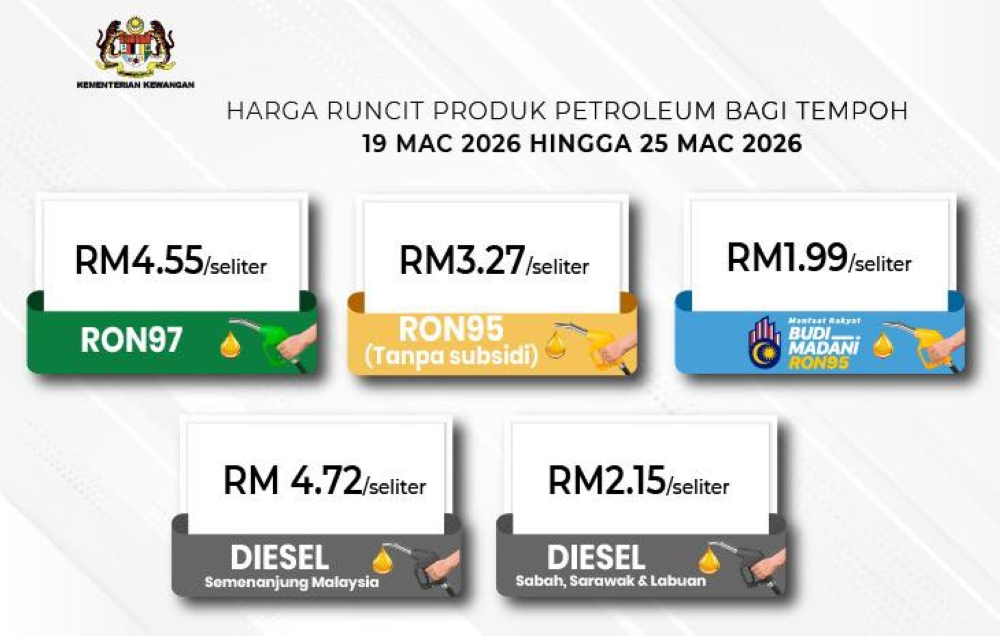
Effective from today until March 25, RON97 petrol will jump by a staggering 70 sen to RM4.55 per litre, while diesel in the Peninsula will surge by another 80 sen to a record RM4.72 per litre.
Despite the sharp increases in premium and commercial fuel, the Ministry of Finance (MOF) confirmed it will continue to shield the general public by maintaining the subsidised "BUDI95" petrol rate at RM1.99 per litre.
Unsubsidised RON95 will remain unchanged at RM3.27 per litre for this weekly cycle.
Additionally, diesel prices across Sabah, Sarawak, and Labuan are being held steady at the regional ceiling of RM2.15 per litre to ensure regional price stability.
The latest adjustments follow a similarly aggressive hike on March 12, when the escalating conflict in Iran first triggered an 80 sen jump for diesel and a 60 sen increase for RON97.
Over the past 14 days, diesel users in Peninsular Malaysia have seen the pump price climb by a total of RM1.60 per litre, reflecting the severe "energy crunch" and unprecedented market volatility caused by the geopolitical crisis.
The MOF stated that the current strategy is aimed at "gradually aligning" market prices while maintaining the social safety net for those who qualify for targeted subsidies.
By keeping the BUDI95 rate at RM1.99, the government intends to prevent a drastic spike in the cost of living for low- and middle-income households, even as global crude oil supply remains highly uncertain.
As the situation in the Middle East develops, the government has pledged to continue monitoring international market movements closely.
MoF said that these periodic adjustments are necessary to ensure the long-term well-being of the people and the stability of the national economy amid the worsening global energy landscape.


