


KUALA LUMPUR, Dec 3 — As Prime Minister Datuk Seri Anwar Ibrahim’s coalition government reaches its midterm point, Parliament has over the years passed a series of institutional reform laws.
With November 24 marking three years since Anwar took his oath of office, we take a look at several key legal amendments spearheaded by the Legal Affairs Division (BHEUU) under the Prime Minister’s Department, as well as proposed legislation slated for tabling in the Dewan Rakyat.
Together, these measures form part of the current administration’s ongoing reform drive and set the tone for the legislative priorities and commitments expected in the second half of its term.
Thanks to the BHEUU-developed PetaRI portal, the public can now track regular updates on the progress of these reform initiatives, providing greater transparency and insight into the government’s legislative agenda.
2023
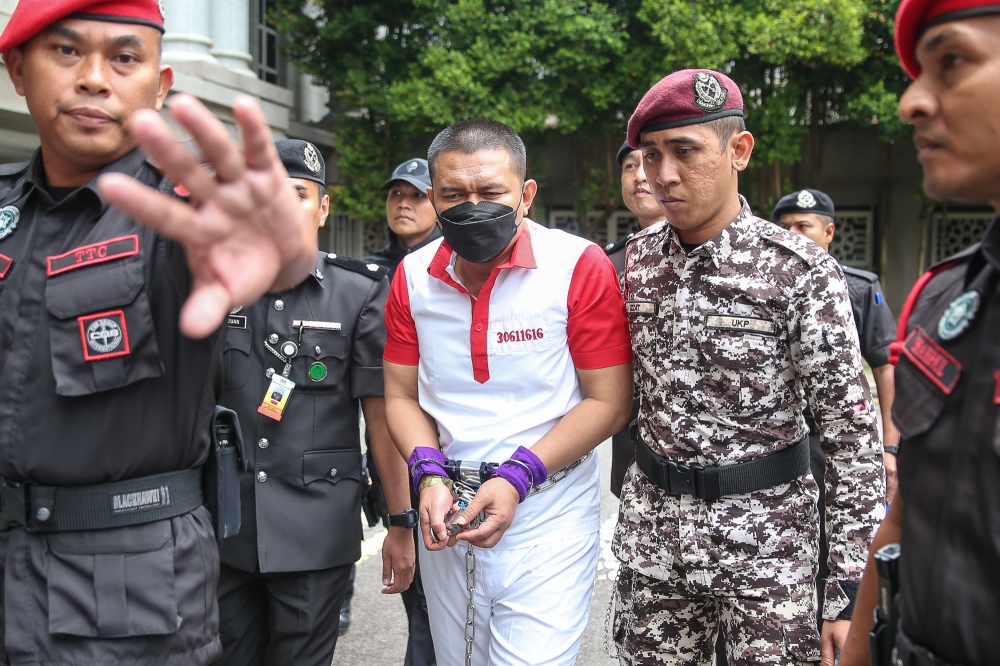
1. Abolition of the mandatory death penalty
Arguably one of the most significant institutional reforms to date, Malaysia took a historic step toward abolishing the mandatory death penalty by amending legislation for multiple criminal offences, aiming to uphold human rights and establish a more flexible and humane justice system.
The amended law gives judges discretion in imposing the death penalty, rather than making it mandatory for certain offences.
It also replaces life and natural life imprisonment as the alternative to a mandatory death sentence with a new penalty of 30 to 40 years’ imprisonment, along with no fewer than 12 strokes of the cane.
The Bill was passed in the Dewan Rakyat on April 3, followed by the Dewan Negara on April 11. The law came into force on July 4, 2023.
2. Decriminalisation of suicide
Malaysia also took its first concrete steps toward decriminalising attempted suicide, with legislation to abolish the offence tabled in Parliament for the first time in almost 80 years.
A legacy of British colonial rule, the criminalisation of suicide attempts has been reformed as part of the federal government’s efforts to destigmatise the issue and encourage those in distress to seek help.
The Bill was passed in the Dewan Rakyat on May 22, followed by the Dewan Negara on June 20. The law came into force on September 10, 2025.
3. Criminalisation of stalking
Malaysia’s efforts to classify stalking as a criminal offence began in 2019, culminating in a Bill to introduce provisions for the new offence of stalking into the Penal Code, carrying penalties of up to three years’ imprisonment, a fine, or both.
The new anti-stalking law applies when there is more than one incident of following or tracking a person—physically or online—communicating or attempting to communicate with them, loitering near their home or workplace, or sending anything to them through any medium.
Crucially, the act must be committed with the intention of causing, or with knowledge that it is likely to cause, distress, fear, or alarm to the person’s safety.
The Bill was passed in the Dewan Rakyat on March 29, followed by the Dewan Negara on April 6. The law came into force on May 31, 2023.
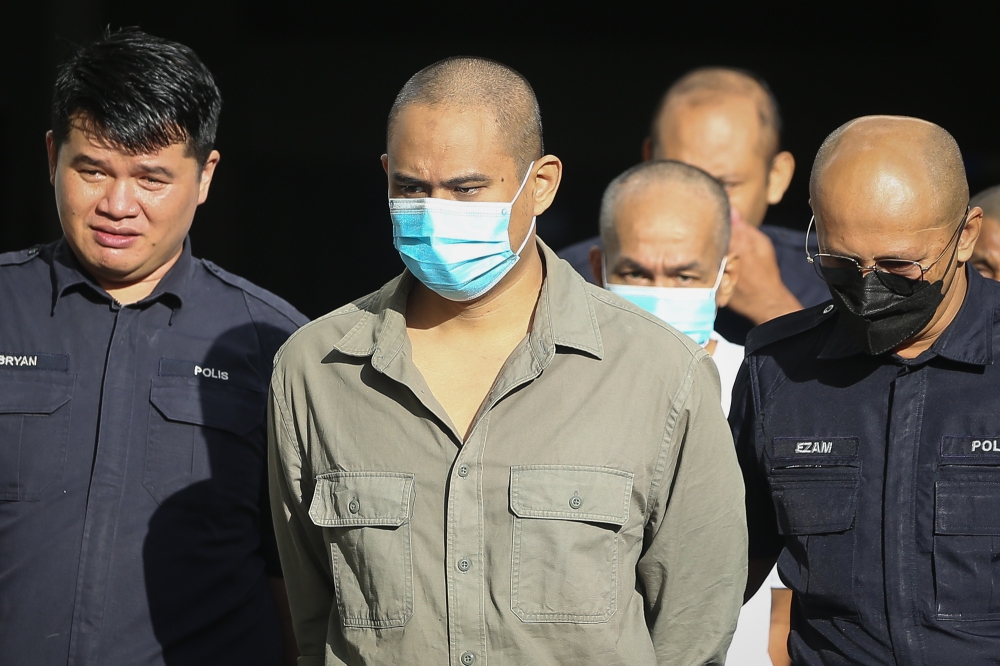
Mohamad Safiq Rosli became the first person in Malaysia to be charged with stalking. He avoided a prison sentence but was ordered to undergo psychiatric treatment at Hospital Bahagia Ulu Kinta, where he will be detained at His Majesty’s pleasure.
4. Safeguarding children
Legal amendments were also introduced to better protect children against all forms of sexual exploitation and abuse.
Among the key amendments are the replacement of the term “child pornography” with “child sexual abuse material” to broaden the definition and provide more comprehensive protection for children; raising the age of children from 16 to 18 years; introducing provisions for special hearings to allow child witnesses to give evidence; and prohibiting improper questioning of child witnesses.
The Bills were passed in the Dewan Rakyat on March 29, followed by the Dewan Negara on April 6.
2024
5. Safeguarding cyberspace
The Malaysian government also introduced legislation to strengthen user safety on social media platforms, requiring providers to obtain a licence and take proactive measures to curb harmful content on their platforms, or face potential enforcement action.
“Harmful content” includes child sexual abuse material, financial fraud, content that may incite violence or terrorism, or encourage self-harm; content promoting drugs; harassment or threats; profane or culturally inappropriate material; and lewd content offensive to decency and modesty.
Key provisions require platform providers to ensure online safety, protect children under 13, and block harmful content. While the Act does not restrict freedom of speech, it emphasises user protection and the regulation of online service providers.
The Online Safety Act was passed in the Dewan Rakyat on December 11, followed by the Dewan Negara on December 16. The law came into force on January 1, 2025.
6. Combating financial fraud
Harsher laws were also introduced to combat online fraud related to mule accounts and targeting individuals who allow their bank accounts to be unlawfully used by others for illegitimate purposes, carrying penalties of up to 10 years’ imprisonment, a fine, or both.
The purpose of the amendment is to strengthen Malaysia’s legal framework against cybercrime and improve enforcement against financial account misuse, including granting authorities the power to seize or block transactions suspected to be linked to criminal activity.
The Bill was passed in the Dewan Rakyat on July 10, followed by the Dewan Negara on July 22.
2025
The government has planned to table both the Ombudsman Malaysia Bill and the Freedom of Information (FOI) Bill — originally designed to complement each other — as early as June 2026.
The proposed Ombudsman Malaysia will provide an independent avenue for complaints on federal public services, while the forthcoming FOI Act will grant the public a legal right to access government-held information.
Both Bills, which seek to strengthen transparency and accountability, have been under development since 2023.
The government also plans to table legal amendments to introduce a Deferred Prosecution Agreement (DPA) framework, with the Bill expected to be finalised in March 2026 and tabled in the Dewan Rakyat in June 2026.
Originating in the United States, a DPA lets prosecutors defer charges in exchange for an admission of wrongdoing, payment of penalties, and agreed reforms, with the case withdrawn upon full compliance.
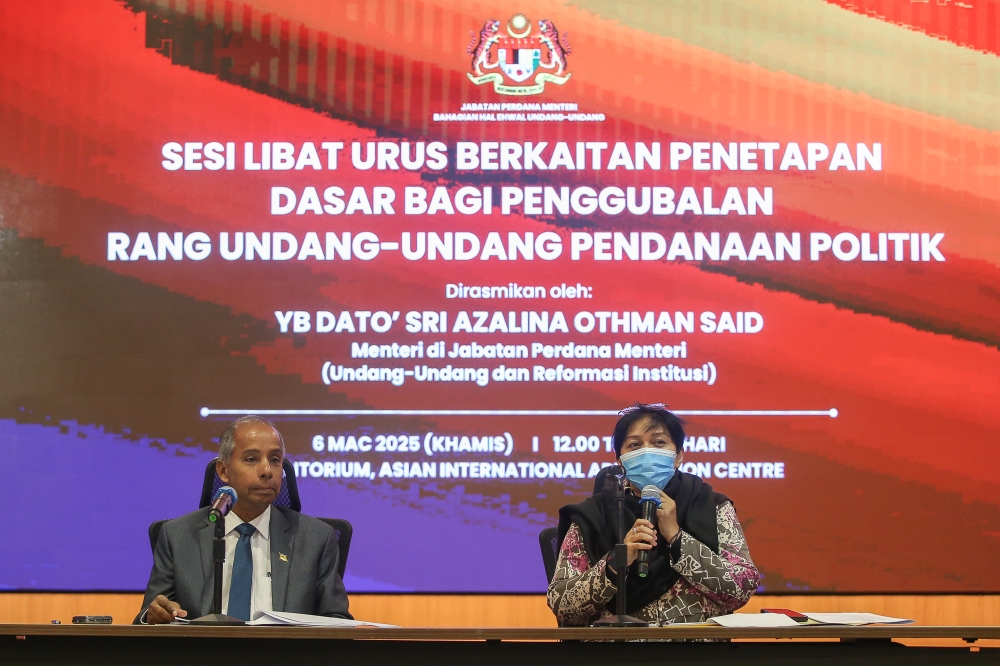
An initiative underway since 2019, the government is committed to tabling and enacting the Political Financing Bill to regulate political funding and ensure continuous oversight of contributions, not only during elections, as no dedicated legislation currently exists.
Several state-level grassroots engagement sessions have been held with stakeholders to gather direct input, with feedback covering public funding for political parties, financial disclosure, contribution limits, and rules governing eligible and prohibited donors.
Currently, a comprehensive public perception study on the proposed Bill is set to conclude in December, with the Bill’s policy parameters still under refinement and first to be referred to the Parliamentary Special Select Committees related to Ministries for consideration.


