


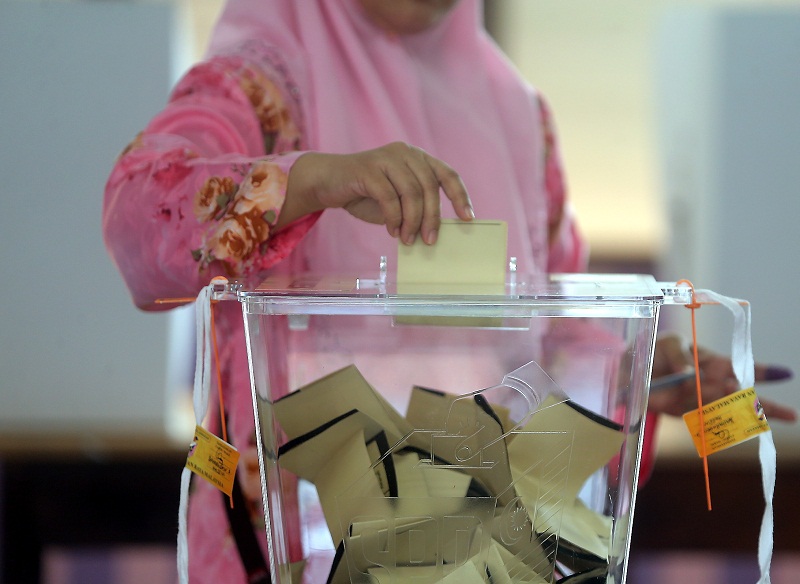


KUALA LUMPUR, April 25 — With the 14th general election falling smack in the middle of the week this year, many Malaysians have been asking if they could vote by post instead.
If you are overseas and have registered for it, congratulations! You will be among those who can vote in advance on May 5, while the rest of Malaysia wait to cast their ballot on May 9.
If you haven’t registered, sorry. Registration for postal voting ended the day Parliament was dissolved. But you might make it for the 15th general election in the next five years if you do it now.
If you heard that a friend of a friend in the country is allowed to vote by post, well, the election laws provide do provide for certain exceptions. That is because they are registered voters unable to cast their ballots on May 9 due to work obligations, such as those in the emergency services departments, those on duty at polling stations or journalists who are covering the elections.
So now that you know you are a postal voter or otherwise, but are clueless on what to expect next, don’t worry. Follow us as we walk you through the process, in 10 steps.
Fill in the postal voter registration forms
There are three forms to be downloaded from the Election Commission’s (EC) website here: Borang 1A, Borang 1B and Borang 1C. How do you know which form to fill in?
Step 1: Are you an employee of the EC, a member of the Armed Forces or the Royal Malaysian Police, or a journalist with an accredited organisation? Then fill in Borang 1A.
Those who are qualified for Borang 1C are members of the Prisons Department, Immigration Department, Health Department, Fire and Rescue Department, Maritime Enforcement Department, Royal Malaysian Police Volunteer Reserve, Malaysian Civil Defence, National Disaster Management Agency and National Registration Department.
If you fall into either categories, proceed to the next step.
Step 2: Fill up the forms completely and ensure the address you give is the one you will be at during office hours, because that is where the ballot papers for your postal vote will be sent to. So if you will be mostly at home, then write down your residential address. If you are office-based, then that might work better.
Important note: The address stipulated MUST be a valid address in order for the ballot papers—there are two, one for the state constituency, the other for the parliamentary constituency—which will be placed in an envelope with postage paid to reach you.
Step 3: List down your registered parliamentary and state constituencies in the forms.
Important note: These refer to the constituencies you are voting in and are not to be confused with the constituency that you will be working in during the elections.
Step 4: Submit the form to the Returning Officer (RO) through fax, snail mail or by hand. The contact list of officers in charge for each constituencies can be obtained from the EC website under Media Centre, Announcement subcategory.
I was told my registration was rejected. Why?
There may be times when your submitted Borang 1A form is rejected. Here are the possible reasons for rejection.
The most common reasons are that your form was incomplete, you are not a registered voter in the constituency listed in the form, you submitted the form earlier than February 19 or delivered the registration form after Nomination Day.
Do you lose the right to vote because of your carelessness?
No, the RO or the officer in charge of collecting your postal vote application WILL contact you through phone or by written reply to let you know your registration form was declined and why.
You can then either submit a new Borang 1A form or get in touch with the RO in person to amend any detail such as the delivery address for your ballot slips or constituency changes.
Important note: The deadline for domestic postal voting registration is on Nomination Day, April 28 this year.
Casting your postal vote
Step 5: Your ballots will arrive in a Registered Mail service provided by Pos Malaysia Berhad.
Before casting your vote, READ the “Instructions to Voter” carefully on the back of Borang 2 Parlimen and Borang 2 Negeri.
Important note: You must open and show the envelope containing the ballots in front of a witness who must be a Malaysian and aged 21 above.
Step 6: A valid signature from both the voter and witness must be provided on both Borang 2, with the witness needing to furnish additional personal details such as his/her name, identification card number and address.
Step 7: You can now mark your vote on the ballots on the right side of the candidates’ name with the symbol “X”.
Important note: There is no need for a witness to be present while you mark the “X” on the ballot paper because YOUR VOTE IS CONFIDENTIAL.
Step 8: After marking your vote, insert the ballot paper for the parliamentary seat into a small envelope marked “A Parlimen” and close it. Do the same for the marked state ballot with the envelope marked “A Negeri”.
Step 9: Insert both “A Parlimen” envelope and Borang 2 Parlimen into Sampul Keutamaan B Parlimen addressed to the RO.
Do the same for “A Negeri” envelope and Borang 2 State into Sampul Keutamaan B Negeri addressed to the RO.
Step 10: Both Sampul Keutamaan B addressed to the officer-in-charge MUST be delivered to the Returning Officer’s Office without delay before 5pm on Polling Day or your vote is null.
Important note: The delivery can be made through postage or by hand to the address listed on the envelope. If you opted for postage, no stamp is required and the EC will bear the cost of delivery.
Congratulations! Now you are ready to take part in the country’s democratic process as a responsible citizen!


