


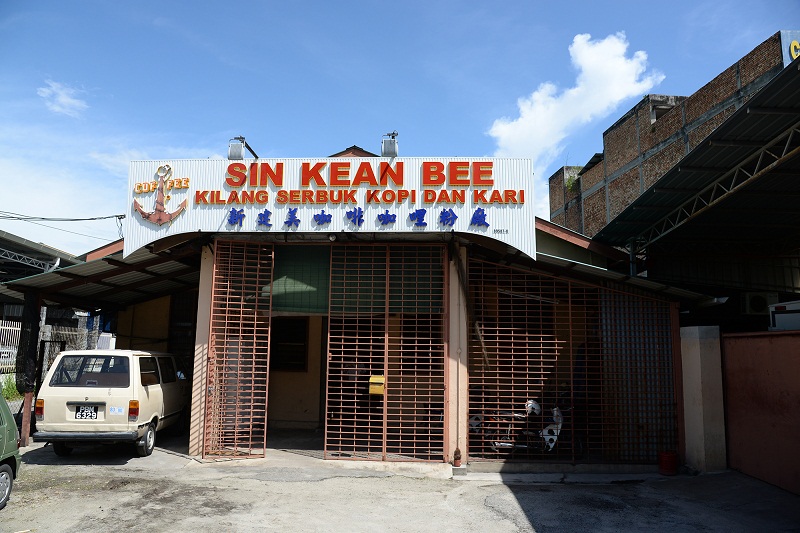
SEBERANG PERAI, Oct 31— Almost hidden among the rows of shoplots and commercial buildings along Bagan Jermal is a small, nondescript factory with a big signboard proclaiming Sin Kean Bee Kilang Serbuk Kopi dan Kari.
This factory, like many other businesses in old town Butterworth, was built almost 70 years ago but don’t let its humble facade fool you. Sin Kean Bee, the factory behind the Bee Coffee brand, is not only thriving, it is expanding.
What many people don’t realise is just how many homegrown brands like this one started in Butterworth.
With the help of Think City’s urban regeneration programme, this slow-paced town can once again become an economic hub and further benefit businesses like Sin Kean Bee.
It all started with a migrant worker from China
It was the early 1920s and Goh Lun Chee had only been married for 17 days before leaving for Singapore to escape the abject poverty back in his home village in Fujian, China.
He left his bride behind with promises to bring her over once he had a stable income.
From Singapore, he travelled to Indonesia and after that to Penang island, then known as Prince of Wales Island. This is where he settled.
He quickly found work as a rickshaw puller and a labourer for a sundry shop, saving the meagre three dollars he earned daily to send back to his wife.
“My grandfather didn’t spend a single cent of his salary because sometimes his employers provided him with meals, lodging and even paid for his clothes to be mended or medicine if he fell sick... but it was a difficult time for him as at times, he had to go hungry when there were no free meals,” said one of Lun Chee’s descendants, Goh Bee Teng.
He said Lun Chee worked really hard and saved everything. When the sundry shop owner decided to close the shop, he could actually afford to take over the business.
From running his own sundry shop, Lun Chee began to earn more and soon started buying land to start rubber estates all over the island and the mainland side of Penang.
“He even had his own ships to import vegetables from Indonesia… so by then, he had become a tycoon with a lot of assets, property and businesses,” he said.
Then came the Japanese
Lun Chee’s business suffered during the Japanese Occupation in World War II as everything was controlled by the Japanese soldiers.
“It was a very dark time for everyone. My mother, her sisters and most girls would shave their heads so as to look ugly and not be taken by the Japanese soldiers to become prostitutes.
“My father and uncle were caught by the Japanese and tortured for several days because my uncle had beaten a Japanese boy,” Bee Teng said.
He added that his father, Goh Teik Ee, was given a choice of a knife, a rope or a stick as his punishment and Teik Ee chose the stick.
“They beat him and my uncle repeatedly with the stick and probably would have killed them if my grandfather didn’t pay them a large sum of money and also found prostitutes for them,” he said.
Establishing the coffee powder factory
After the Japanese left and the British resumed control, Lun Chee continued to expand his business.
Lun Chee started the factory on rented premises on the island in 1948 together with a business partner before he decided to build his own factory on a piece of land in Butterworth. He spent the equivalent of RM17,000 then to build the new factory in 1952 along Bagan Jermal.
“At that time, he was already in his 60s so my father, who was in his 20s then, started to manage the factory with him and learnt all about the process of making coffee powder,” he said.
After a few years, Teik Ee, who was one of Lun Chee’s six children, took over the business with one of his brothers. Lun Chee died when he was in his late 70s sometime in the 1960s.
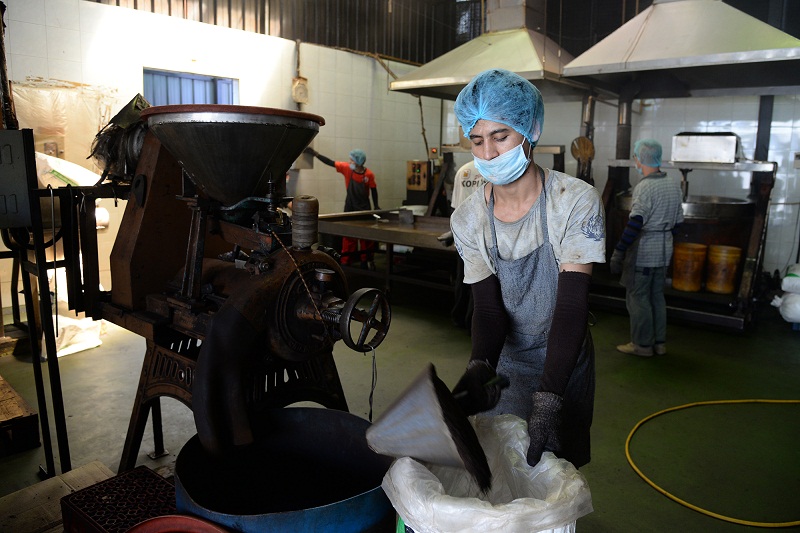
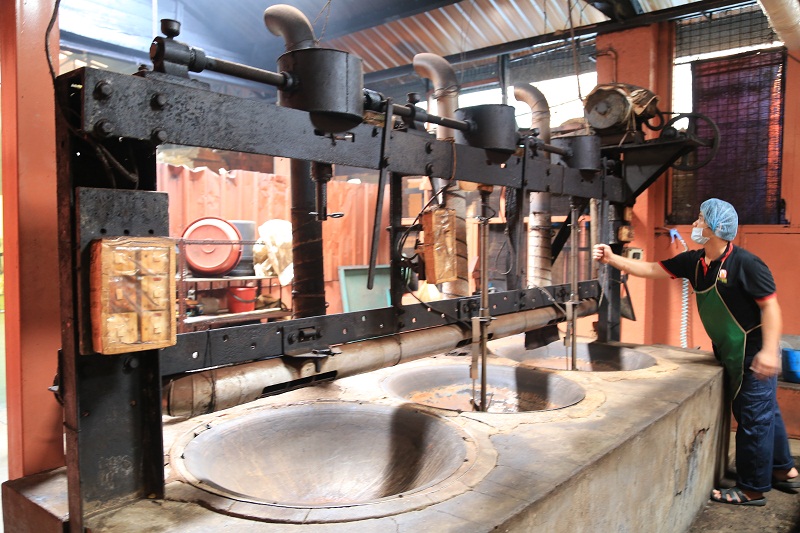
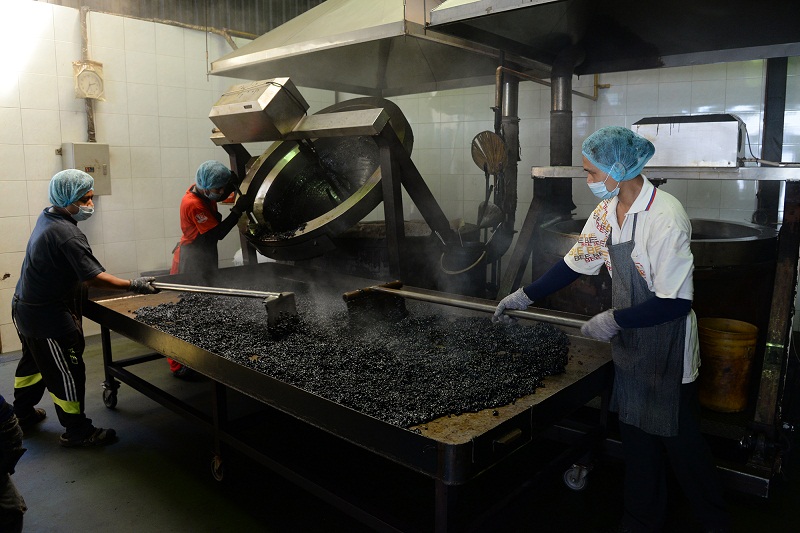
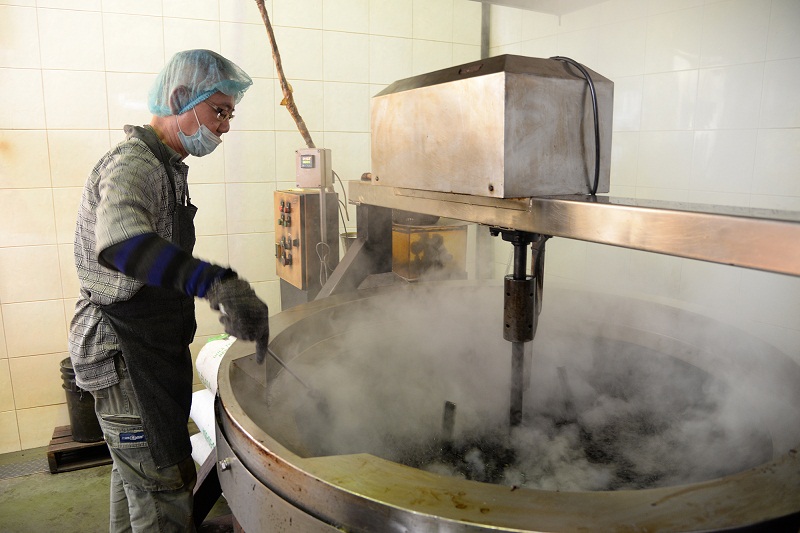
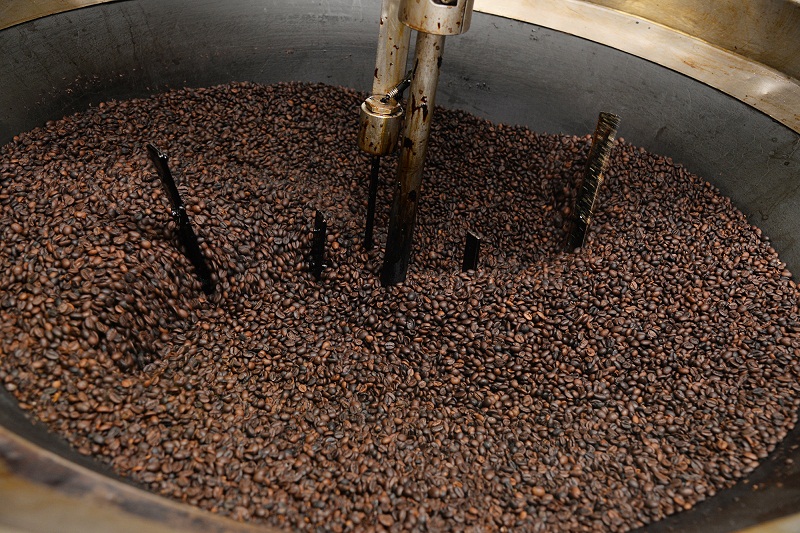
The coffee-making process established in the factory is believed to have originated from Hainan, China; the beans are roasted with margarine and sugar until a sticky, thick, almost black mixture forms.
This is then poured onto a cooling table to cool and harden. The hardened caramelised coffee is then broken into pieces before being put through grinding machines twice to produce the fine coffee powder.
“All coffee beans were imported from Indonesia, as my grandfather had his own shipping line importing food from Indonesia,” Bee Teng said.
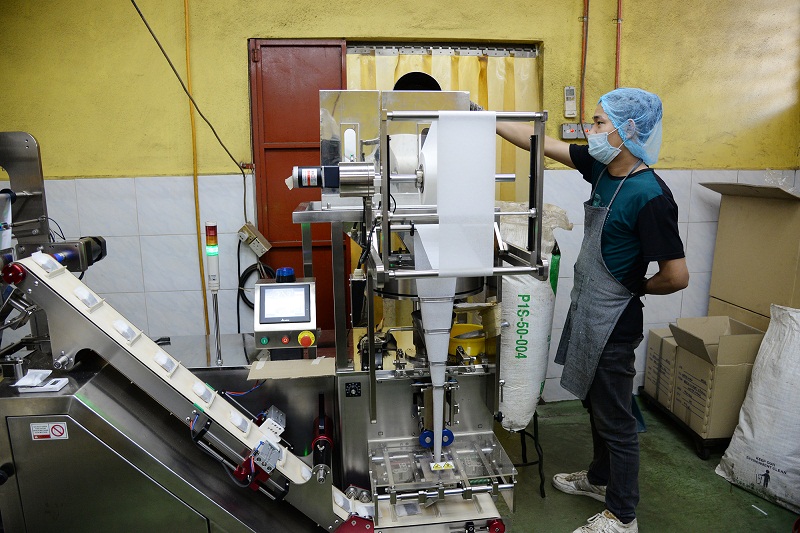
Today, the factory still uses imported coffee beans from Indonesia but the coffee-making processes has since been simplified through the use of more machines to cut down labour and to standardise the process.
Keeping the business afloat… with curry powder
Over the years, the business has had its ups and downs but Bee Teng said there were certain periods when it was barely surviving so they expanded to making curry powder and spices too.
“For 30 years, under my father and uncle’s management, the factory also produced curry powder mix and spices as our coffee powder sales was suffering,” he said.
He said they could barely cover costs so the expansion into other products was to ensure enough revenue to keep the factory afloat.
Bee Teng and his brother, Bee Lye, took over the business back in the 1970s and continued to produce curry powder and other packaged spices.
“We were having a lot of workers’ issues… it was hard to hire good workers but we had to continue doing it to cover our costs as our coffee powder wasn’t selling that well then,” he said.
Bee Teng and Bee Lye both started working in the factory from a young age so they knew the whole process and could even make the coffee or curry powder without good workers but it was hard to increase production.
Turning point for Sin Kean Bee coffee powder
Then, the turning point came in 1995 when Bee Teng thought of a brilliant idea to sell his coffee powder.
“Actually, I got the idea when I wanted to give a pack of my coffee powder to a friend and he didn’t want it. He told me it was too troublesome to make kopi-o as he needed to measure out the coffee powder, use a filter and brew in hot water before adding sugar and sometimes condensed milk. He said end up everything will be spilt all over the table and there’s so much cleaning up to do,” he said.
His friend had started drinking instant coffee as it was simpler and easier; all he had to do was just add hot water.
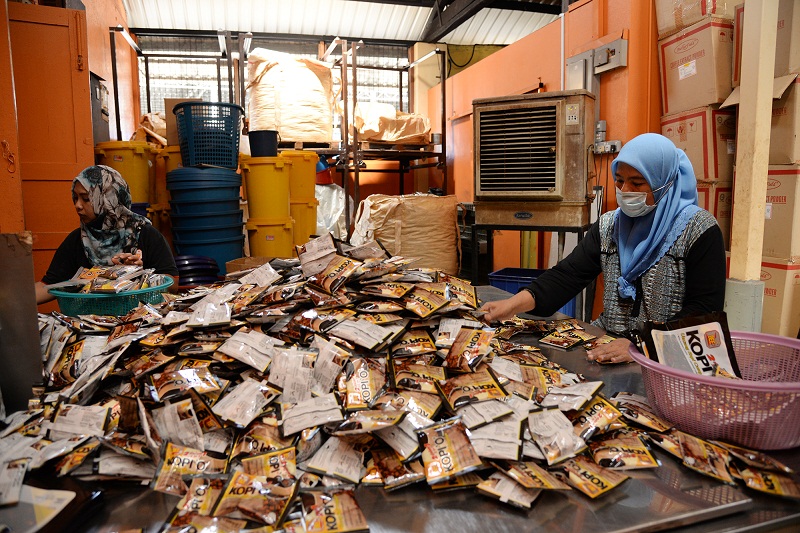
This gave Bee Teng the idea to come up with packets of coffee powder in individual filter bags complete with sugar added.
“This cuts off the whole hassle of having to measure out the coffee powder, filter it and add sugar. I put it all in a filter bag so all they needed to do was add hot water. It is like instant coffee but it’s not, it is our original kopi-o made easy,” he said.
From then, Bee Coffee’s kopi-o became a hit and a few years later, Bee Teng stopped the curry powder and spices production to concentrate fully on their coffee powder.
“We were getting so many orders, we didn’t have enough manpower to do the curry powder as well so I decided to stop it and revert to fully making coffee powder,” he said.
Expanding the market
Today, Bee Coffee produces their trademark kopi-o, with and without sugar, and also other varieties such as instant white coffee and instant cappuccino.
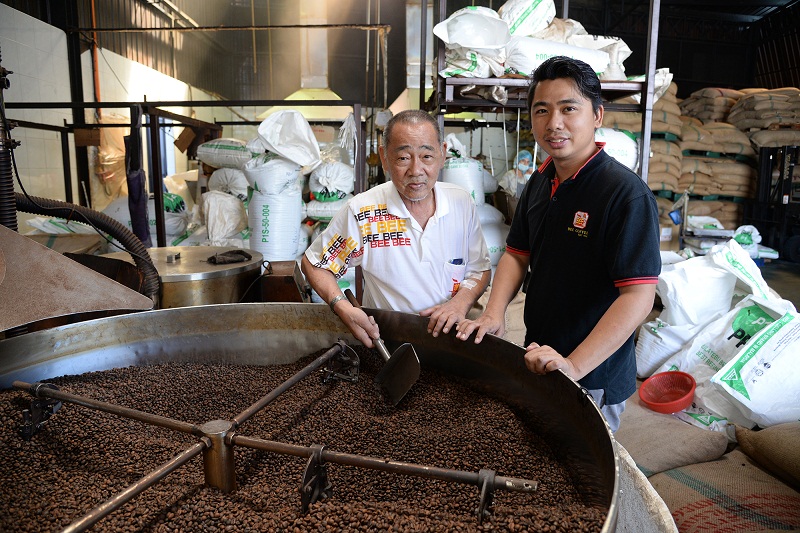
Bee Teng is now 70 years old and though he still oversees production, he is slowly training his youngest son Thian Sin to take his place.
“My son and his cousin will soon take over, it’s time to let the young take over and manage this,” he said.
Other than supplying to sundry shops, retailers and supermarkets, Bee Coffee has also expanded its reach to export its coffee products overseas.
“We are now exporting to Singapore, Brunei, Indonesia and China,” Thian Sin said.
They are also eyeing the China market and hope to sell their cappuccino and white coffee instant coffee there.
“We believe there is a huge market there for our products so we will be focusing on the China market for our exports,” he said.
Thian Sin said their coffee powder is unlike the current trendy Western-style coffee where the roasted beans are used to extract coffee. Sin Kean Bee will continue with the South-east Asian style of roasting the beans with sugar and margarine till fragrant and caramalised first.
“It is not easy to find this type of coffee in other countries as only some coffee factories in Malaysia continue to produce this type of coffee,” he said.
Sin Kean Bee Factory is registered under Brazilian Food Industries Sdn Bhd and is also halal-certified with ISO 9001:2008 certification.
Sin Kean Bee Coffee Factory
Brazilian Food Industries Sdn Bhd
3963, Bagan Jermal, 12300 Butterworth
Tel: 04-3244953
Email: beecoffee.brazilianfood@gmail.com
Website: beecoffee123.com
* Think City is a subsidiary of Khazanah Nasional Berhad currently undertaking urban regeneration programmes in George Town, Butterworth, Kuala Lumpur and Johor Baru.


