


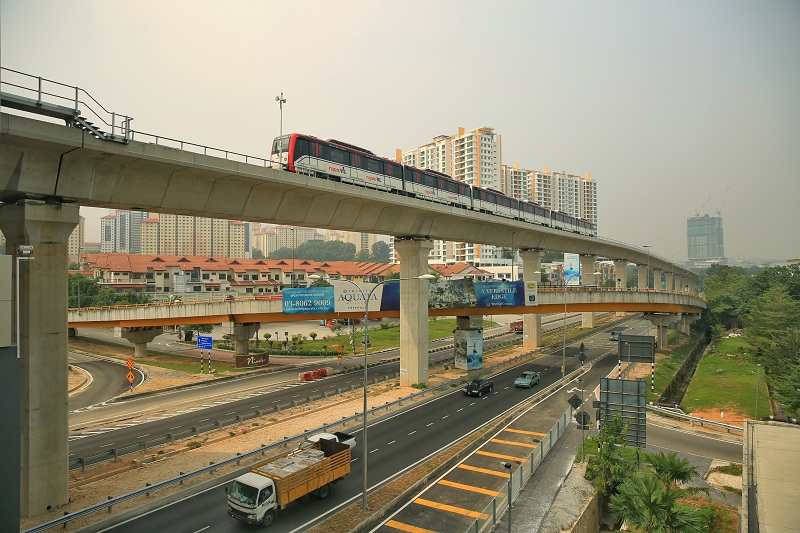
KUALA LUMPUR, May 3 — To reduce traffic congestion in the city by 2020, the federal territories ministry is targetting 60 per cent of city folks and 40 per cent of those in rural areas to use public transportation.
Deputy minister, Datuk Dr Loga Bala Mohan said currently, only 20 per cent of city folks use public transportation in Kuala Lumpur and described it as “very low”.
“In fact, the rate in other major cities in the world such as in Tokyo and Singapore is more than 75 per cent,” he told the Dewan Negara here today.
He was responding to a question by Senator Datuk Mohd Suhaimi Abdullah on the ministry’s efforts to reduce traffic congestion in the city.
Loga said the main approach in solving the congestion problem was through planning that was consistent with Transit Oriented Development and Trip Demand Management.
According to the deputy minister, the most effective measure to overcome traffic congestion was to increase public transportation.
“Various initiatives in the form of facilities and physical infrastructures have been carried out to encourage the use of public transport in Kuala Lumpur such as the park-and-ride facilities; safe and comfortable road pedestrian walkways; building-to-building walkway linkages; bus services information panel; covered walkways and many more,” he said.
He said there were also moves to raise parking rates for private vehicles, as well as introduce congestion charge and car-free zones.
Loga said the government, through its initiatives under the National Key Results Area for Urban Public Transportation and the Greater Kuala Lumpur National Key Economic Area, was in the midst of extending public transport in the Klang Valley, especially the rail system.
“The rail services extension include the Sungai Buloh-Kajang line MRT project which is expected to be completed next year, and can carry about 400,000 commuters daily.
“As for the MRT 2 project for Sungai Buloh-Putrajaya line, construction works have already begun. Once completed, the percentage of people using public transportation will increase and subsequently, reduce traffic congestion,” he added. — Bernama


