


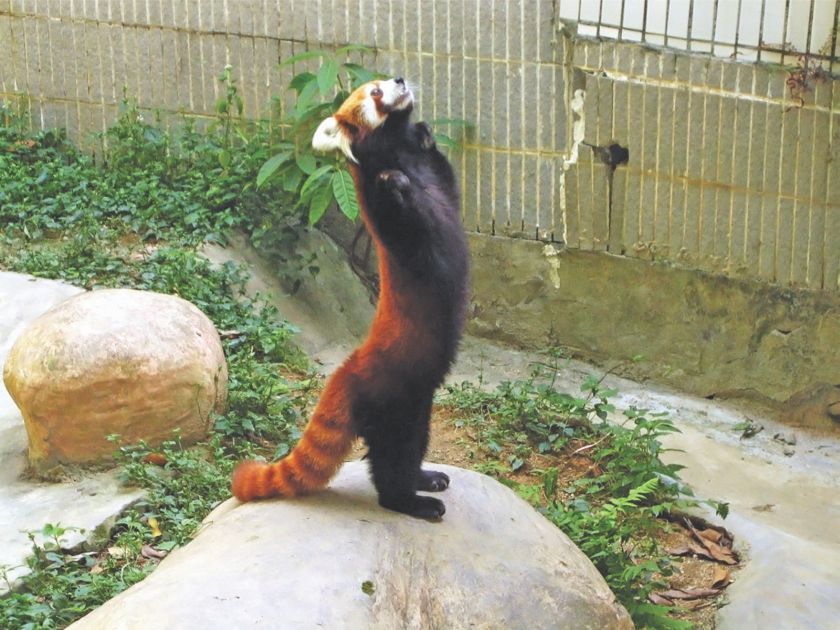
PETALING JAYA, April 21 — Malaysia is aiming to welcome endangered red pandas from China in just three years, adding to the giant pandas that are already here.
Giant Panda Conservation Centre (GPCC) Zoology and Veterinary director Dr Mat Naim Ramli said Zoo Negara was submitting a request to China to enable them to bring in the animals.
“Red pandas are an endangered species and we would like to explore and get to know more about them,” he said, adding that the zoo would propose to bring in four of the animals.
Dr Mat Naim said a section of the conservation centre would be renovated to accommodate the red pandas as they live in cold climates similar to the giant pandas.
“The necessary arrangement would be made when the proposal goes through. We could also make use of some of the empty rooms with glass windows available in the centre to accommodate them,” he told Malay Mail yesterday.
The Japan and Singapore zoos are among those with red pandas in Asia.
The red panda originates from the eastern Himalayas and southwestern China. As of 2008, there had been just 10,000 of these furry beasts remaining in the wild and the numbers are decreasing due to deforestation and poaching.
Their meat is used to make traditional medicines as well as consumed. Red panda fur is used to make hats and gifts for brides at Chinese wedding ceremonies.
The panda gets its name from its reddish-brown fur and is identified by its long, shaggy tail. It has a waddling gait due to its shorter front legs and is only slightly larger than a domestic cat.
It feeds mainly on bamboo but also eats eggs, birds, and insects. It is a solitary animal that is diurnal although it can sometimes be sedentary during the day.
China loaned two giant pandas — Xing Xing and Liang Liang — to Malaysia in 2014 and the two later became parents to a baby cub named Xuan Xuan.
Pandas are loaned out or gifted by China to friendly nations in a practice known as “Panda Diplomacy”.
Dr Mat Naim also said the zoo would be bringing in two other animal species as part of their new facelift in May.
“We would bring in marmoset monkeys and Suffolk sheep and hopefully this would attract more visitors to our zoo,” he said.


