


KUALA LUMPUR, July 11 — When the announcer read out the name of the 2026 World Brewers Cup winner in Brussels, on June 27, there was a brief pause before the reality settled in. Malaysia had done something it had never done before.
Nas Jaafar had become the nation’s first World Brewers Cup champion.
For Nas, the moment still feels difficult to describe. “My first thought was, ‘You actually made it. Thank God,’” he says.
“After so much training, pressure and self-doubt, it felt like everything had finally come together. I also thought about my family, my team and everyone back home who supported me.”
Watching from backstage, his coach, Jhon Christhoper, was overcome with emotion when he realised that his protégé had placed ahead of finalists from Australia, Hong Kong, the Czech Republic, South Korea and France.
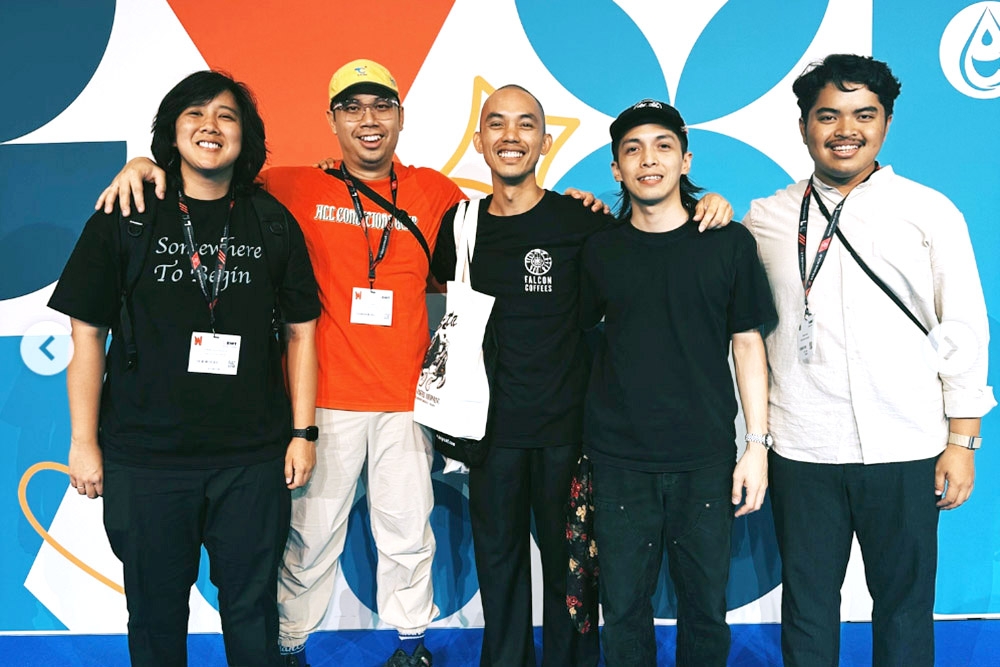
He recalls, “When Nas was announced as champion, I screamed, cried and laughed.”
And for those following from Malaysia — café owners, professional roasters, baristas and coffee lovers — the victory represented far more than just a trophy to us.
The World Brewers Cup is considered the premier global competition for manual coffee brewing, attracting national champions from more than 50 countries each year. For countries with smaller coffee industries, merely reaching the final is considered a significant achievement.
For years, Malaysian competitors had travelled overseas hoping simply to be taken seriously. Now, one of them had come home a world champion.
Yet only days earlier, few would have predicted that outcome.
“When we first arrived in Brussels, I knew no one saw us as the strong team,” says Jhon, himself an Indonesia Brewers Cup champion and World Brewers Cup finalist in Melbourne, both in 2022.
His ambition, at first, was modest: “My first prayer was simple: help Nas reach the final and go further than I did in Melbourne.”
That mindset eventually crystallised into a mantra that guided the entire campaign: “No one needs to expect us to win; our job is to make that expectation irrelevant.”
The philosophy suited both men. They understood they were arriving as outsiders, competing against countries with longer competitive histories. Rather than chasing recognition, they focused on preparation.
That preparation had been years in the making.
At 37, Nas did not arrive at the world stage through a conventional career path. Since entering the coffee industry in 2014, he has worked almost every role imaginable — from barista and café manager to business owner and, today, regional sales for Falcon Coffees.
By the time he stood before the World Brewers Cup judges, he had experienced coffee from nearly every angle of the trade.
“That journey has allowed me to experience coffee from many perspectives,” he says. “From brewing and serving customers to running businesses and working with green coffee across the region.”
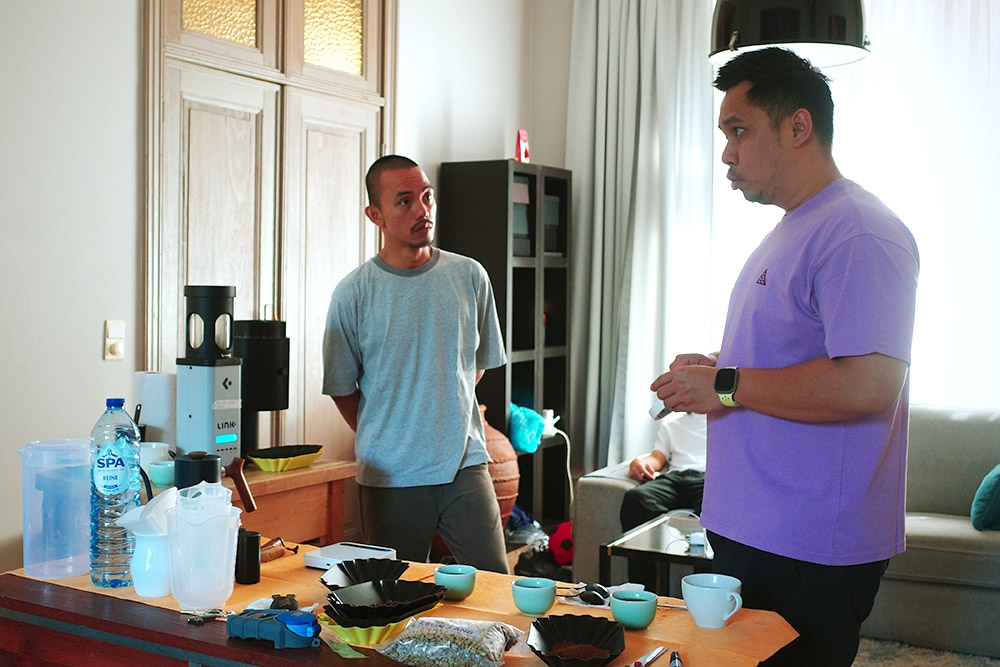
Nas and Jhon began working together in early 2024, when Nas had just finished fifth at the Malaysia Brewers Cup. The road from there was deliberately uncomfortable.
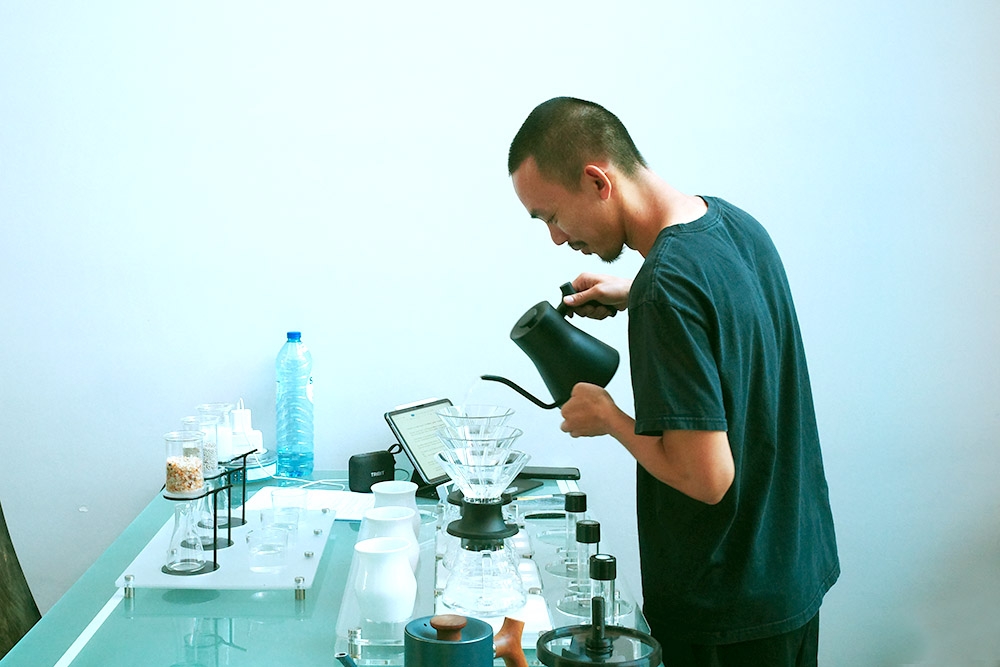
“In my second year of coaching, Nas matured significantly,” Jhon says. “He became more systematic, started asking questions and developed the confidence to grow independently.”
The process, he says, was far from easy. “There were painful lessons, hard conversations and a lot of pressure. But it built trust, chemistry and faith.”
All that hard work paid off; by 2025, Nas was our national Brewers Cup champion.
He had no time to rest on his laurels, however; instead, preparations for the World Brewers Cup intensified. Every aspect of the presentation came under scrutiny.
“I first reflected on my national routine and identified what needed improvement,” Nas explains. “About three months before the World Brewers Cup, our preparation became much more focused.”
Every aspect of the presentation — concept, timing, workflow and communication — was refined until each movement felt intentional.
The greatest challenge, however, wasn’t technical.
“Managing my mindset was one of the biggest challenges,” Nas says. “The technical side was demanding, but the mental pressure of representing Malaysia on the world stage was even greater.”
Like many elite competitors, he occasionally questioned whether progress was coming quickly enough.
“There were times I doubted myself or felt the routine wasn’t progressing quickly enough. I learned to trust my preparation, focus on what I could control and surround myself with people who gave honest support.”
That mental discipline would become as important as anything he brewed.
Nas competed with a natural anaerobic Geisha coffee from Finca Nuguo in Panama, chosen for what it let him explore rather than flavour alone.
“My routine explored how resistance affects water flow, extraction and the final cup,” he explains.
Put simply: when water passes through ground coffee, it meets resistance. Too much slows the flow, too little speeds it up, and both affect extraction and taste.
The idea did double duty as personal philosophy.
“I used to see resistance as something negative,” Nas says. “Through this routine, I wanted to show that if we understand and manage resistance, it can guide us toward better results.”
Life works in strange ways; this concept of resistance was about to be tested rather more literally, a few weeks later, in Brussels… when everything went wrong.
Before departure, Jhon, busy with running Fugol Coffee Roasters and other commitments in Indonesia, had already revised Nas’s script based on judges’ feedback.
Then, two days before leaving, the equipment failed.
“The Ikawa roasting machine I planned to use broke down,” Jhon says, “so I had to bring one that wasn’t calibrated for Nas’s coffee.”
The problems continued in Belgium.
“The unexpected heat in Brussels changed how the coffee tasted, and we received more feedback that required script changes,” Jhon recalls.
He sourced a replacement bean through a contact in Singapore and tested roasts each morning before the temperature climbed, refining the routine against the clock.
Instead of fracturing the team, the pressure strengthened it.
“Through it all, our team never argued,” Jhon says. “Everyone listened, set aside their egos and worked together.”
By competition day, the scrambling was behind them, and what remained was mostly a battle inside Nas’s own head.
“
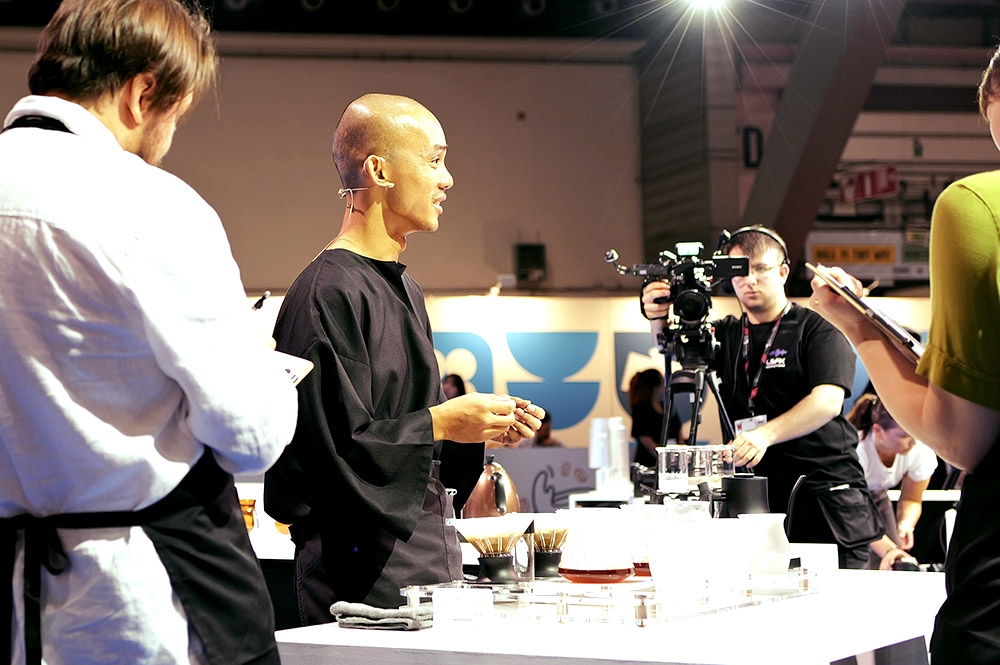
Competitions are never fully predictable,” he says. “The biggest adjustment was managing myself. I had to stay present, control my nerves, and avoid rushing… I focused on the next step and trusted the work we had put in.
Then came time for the announcements, the tension rising as each name was called.
Jimmy Leong, co-owner of Afloat Coffee Roaster in Bukit Jalil, was in the audience when history was made.
He recalls, “There were only a few of us Malaysians in the venue, but we had our flag ready. When 4th place was called, we moved right up to the front row. Then, when he wasn’t called for 3rd or 2nd place, we all screamed like crazy! It felt completely unbelievable.”
Nas himself says it barely registered in real time; he was too stunned.
He says, “To be honest, I’m still taking it all in. During the competition, I just focused on my routine and being present with the judges. It only started to feel real after I got so many messages from people back home.”
For his coach, it was a well-deserved release after two years of work together. Jhon says, “I never expected us to beat teams coached by world champions.”
He believes Nas became champion “not for himself, but to carry a greater responsibility for Malaysian coffee.”
Nas echoes his coach’s sentiment: “What makes me happiest is that this achievement matters not just to me, but also to the Malaysian coffee community.”
For his peers, the victory felt like the culmination of years of waiting. One of the most moving scenes came when Nas called his fellow Malaysians to join him for a group photograph.
“We witnessed one of the biggest milestones in the Malaysian coffee industry,” recalls Jimmy. “I felt so proud to be there and to share the stage with Nas and the team.”
Nas is quick to point out that this isn’t a solo success.
“This achievement isn’t just about one person,” he says. “It reflects years of effort from the entire Malaysian coffee community and the competitors who came before me.”
Indeed, Malaysia’s specialty coffee scene has spent years earning recognition on the global stage.
Recent milestones include four-time Malaysia Barista Champion Jason Loo, who made history as the first Malaysian to reach the finals of the World Barista Championship in 2025, finishing fourth overall, and Jacky Chang, who became the first runner-up at the World Latte Art Championship in April 2026.
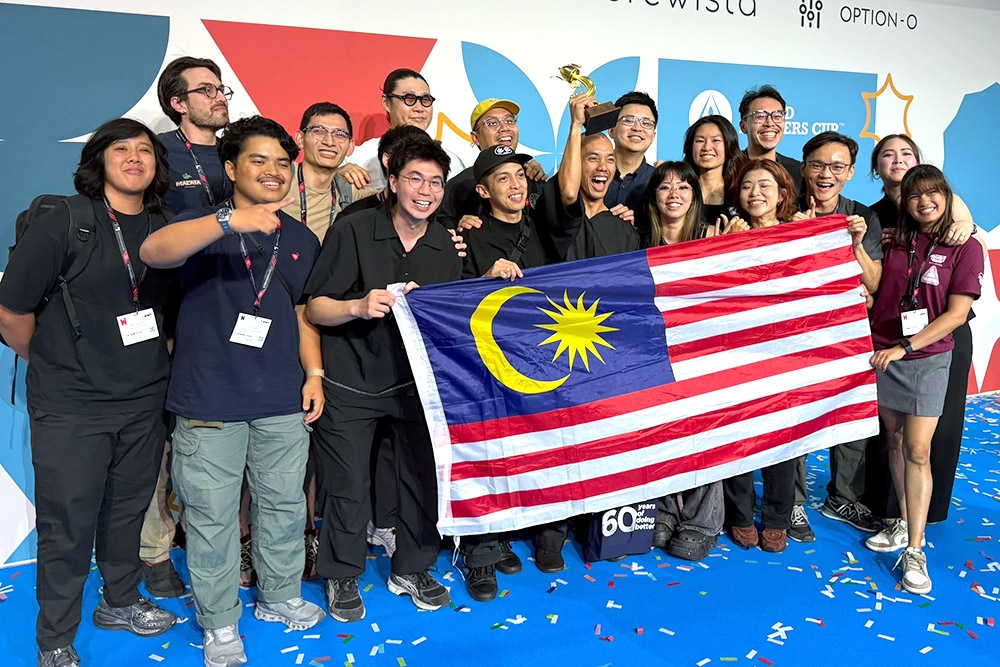
Now, with Nas claiming the World Brewers Cup title, Malaysian coffee professionals have capped an extraordinary run of success on the world stage.
“This achievement will be a powerful catalyst for us to move forward and grow together as coffee professionals,” says Jimmy. “We have officially proven that Malaysians can brew world-class coffee.”
If the victory changes how the world views Malaysian coffee, Nas hopes it also changes how young Malaysians view themselves.
“I hope people see that nothing is impossible, even on the world stage,” he says. “It has always been about heart and mindset, not just coffee.”
He wants future competitors to believe they belong before they ever step onto the international stage.
“My next step is to contribute more and inspire the next generation. I want to share what I’ve learned and help create more opportunities for our community.”
Winning, he insists, is not the destination.
“The title matters, but what I do next is even more important.”
The trophy will always mark a historic first. Its greater legacy, however, may be that it changes what the next generation believes is possible.
What once seemed a dream is now a reality. For Malaysian specialty coffee, our story does not end with a world championship. No, my friends, this is only just beginning.
For more tales of coffee and cafés, of beans and baristas, visit Life for Beginners.


