KUALA LUMPUR, March 4 — I have been asked many times, on account of my motor sport background, if the fitment of a front strut bar and a rear stabiliser really improves the handling of a car.
As a matter of fact, many motorsports parts makers do offer these items, amongst others in their recommended parts to buyers, and being relatively cheap to manufacture, are some of the first things that many car enthusiasts would fit onto their cars to improve handling. The big question is, do they work?
As a race and rally driver, I would say, from my experience, that these items work, but I would like to qualify this statement – you really have to know what you are doing. Fitting equipment such as a strut bar or a rear stabiliser bar incorrectly could mean that you have wasted your money because it had no effect, or worse still, it made your car worse.
Before you go into such an exercise, you should know what a strut bar or a stabiliser does. Not knowing the function and not having a clue as to how it works could result in you spending loads of money with little or no benefit to the performance of your car.
Let’s look at the front strut bar – this is a bar that is fitted onto the top of the left and right hand strut towers of the front suspension, and these bars are often used in race and rally cars. By fitting a strut bar, it helps to increase the rigidity of the top part of the suspension, and helps to minimize the tendency of the strut towers to move inwards. By making the front suspension more rigid, it helps to improve the overall handling.
My personal experience with a strut bar, or rather the lack of one, was in the Rally of Malaysia, 1977. At that time I was still a ‘rookie’ in the field of rallying, and didn’t know much about rally car preparation. I drove a Chrysler Avenger, courtesy of Wearne’s, the then distributors for Chrysler in Malaysia. The car had a stock 1.6 litre engine, with about 90 horsepower or thereabouts, and save for a roll cage, rally shockers, a sump guard, and a Halda Tripmeter, was stock. It handled well, and by the end of the first 24 hours, I was actually placed around 8 th position overall.
However, the very rough rally stages began to take its toll, and by the second day, on the way to Terengganu, the front of the car was starting to ‘sag’, a result of the weak front strut towers moving inwards due to the sever pounding of high speed driving on rough surfaces. I first noticed it near Mentakab, Pahang, and it got worse and worse, with my tyres wearing on the insides. It got so bad I had to stop every 200 kilometres to get the front tyres changed. We also ‘lost’ our service crew, and had to resort to buying cheap second road tyres to continue.
By the time we got to Terengganu where the stages were to be held, the negative camber was really bad – we could still drive, though, but the front tyres would only last about 100 kilometres due to the uneven wear. It was a lesson well learnt, and all my subsequent rally cars had not only a front strut bar, but one at the rear as well. If you are buying a strut bar, just make sure that it is from a reputable maker, and is made from material that is strong and does not bend under pressure.
The other thing to look out for are the mounting points – the strut bars are made to be fitted onto the existing top mount studs – just ensure that there is enough thread on the mounting nuts to minimize the risk of the nuts coming off. Also make sure there is enough clearance between the engine parts and the strut bar itself, keeping in mind that the engine will move a little when the car is in motion.
With regard to the rear stabiliser, let it be known that most cars and even trucks already have a rear stabilizer, and some also have a stabiliser at the front as well. If there is already one rear stabiliser, do you need another?
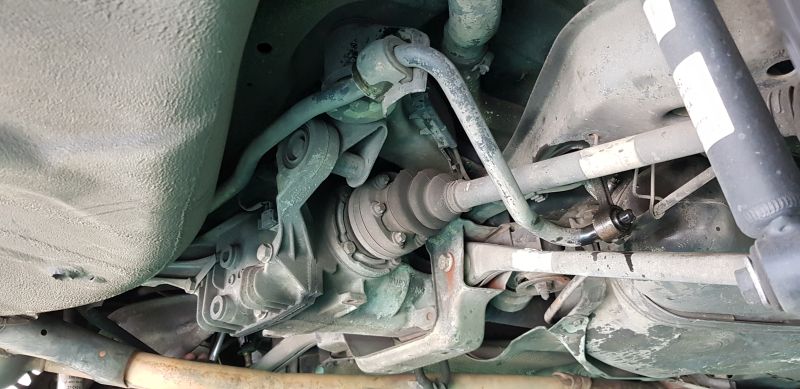
Well, firstly, you need to know what a stabiliser bar does, right? A stabilizer bar is actually a spring fitted to the rear axle of the vehicle. The mounting is somewhat complicated, but the way it is mounted onto the axle is that it only works when one side of the car dips.
The stabiliser bar is also called an ‘anti-roll bar’ – it was designed to counter rolling movements of the car. Here is how a stabiliser or anti-roll bar works – let’s say you are taking a right hand turn – the weight of the car transfers to the left hand side, and pushes the left hand side downwards, usually referred to as ‘body roll’, or just ‘roll.
The springs on the left and shock absorbers help a little in preventing this downward force; it stands to reason that if you have harder shockers and harder springs, then this ‘rolling’ can be minimized. However, ride quality would then suffer – thus they put in a stabilizer bar to ‘stabilize’ the car or minimize the ‘roll’. When both the left and right side of the car go up and down together, then the stabiliser does not work. However, the stabilizer is mounted in such a way that when one side goes down more than the other, the stabilizer works to minimize the resultant ‘roll.
Back to the question of whether you need one, if you already have one – let’s go back to my rally cars of my later rallying days – I needed the tail to kick out a little during turns, because in a rally car, you need to use the tail to steer, so I only increased the rear stabiliser bar diameter by about a couple of millimeters – the effect is slightly less roll than with the standard stabiliser, and cornering ability was improved.
Thus, if you need to improve the handling, by all means go get one. The same rules apply –buy it from a reputable dealer, and get it fitted by professionals. I am currently testing a set form Ultra Racing – this is the Ultra Racing Stage one set for a BMW 318i (1995) E36. So far so good – cornering performance has definitely improved due to the rear stabilizer which is 3 mm thicker, and the front feels more ‘solid’ after fitting the front strut bar.