


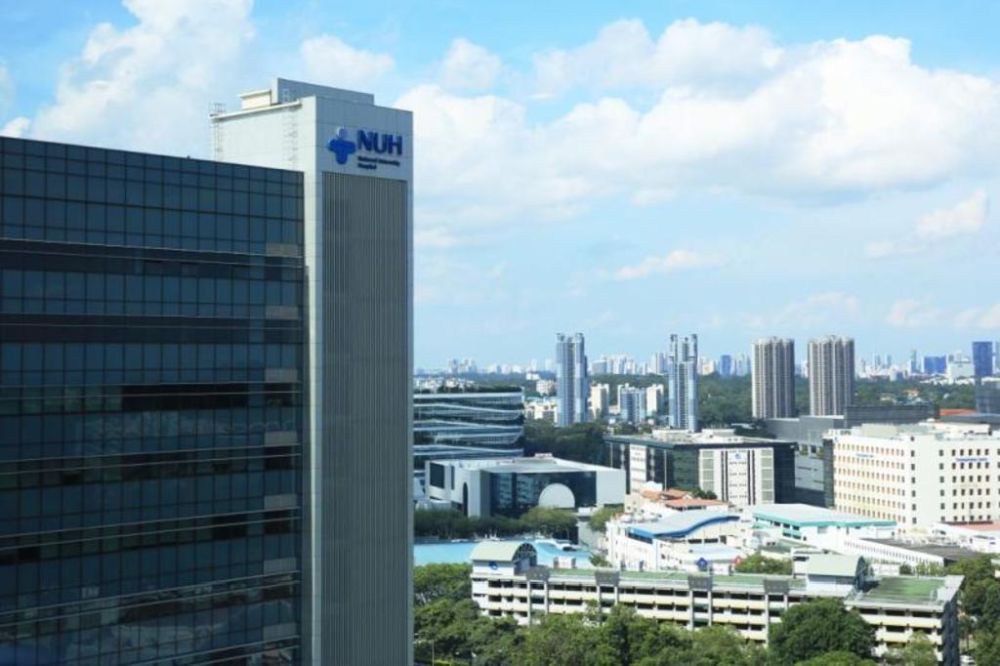


SINGAPORE, April 18 — The family of a 64-year-old housewife who went into a permanent vegetative state in 2014 after undergoing brain surgery at Singapore’s National University Hospital (NUH) is suing the hospital and its head of neurosurgery for an estimated S$2.5 million (RM7.6 million) over alleged medical negligence.
The civil suit went to trial yesterday, with the plaintiff’s lawyers from Virginia Quek Lalita & Partners asserting that the post-operative recovery of Goh Guan Sin, a mother of six, was “woefully” mishandled.
They claimed that Associate Prof Yeo Tseng Tsai — who was the lead surgeon overseeing Goh’s surgery — and NUH jointly committed a “critical failure” in wrongly interpreting a CT scan. They had assessed that the patient’s brainstem was bleeding “substantially” hours after emerging from a successful surgery and a second major surgery would be futile.
As a result, the doctors at NUH had “prematurely written off” the patient and “given up trying to save her”, said the team of lawyers led by Abraham Vergis.
But three neuroradiological experts had since “negatived” Dr Yeo’s and NUH’s interpretations of Goh’s CT scan and a separate MRI scan had showed that her brainstem was not bleeding substantially, the lawyers argued.
Instead of stemming the bleed, Dr Yeo took a “do little or nothing” approach by opting to insert a shunt at the upper part of her brain to drain out fluids, Vergis told the court.
The course of action worsened Goh’s chances of recovery and became a “self-fulfilling prophecy” in which Dr Yeo “snatched defeat” instead of victory, he added.
Furthermore, the lawyers said Goh’s family was not informed of the situation nor told that the surgeons were “at the fork of the road” to undertake or withhold active treatment.
The lawyers also asserted that the level and regularity of monitoring was “well below standard” and that “very telling” clinical signs of Goh’s distress and neurological deterioration were missed “completely and repeatedly”.
They pointed out that another doctor, Dr Gabriel Lu, had checked on Goh close to three hours after surgery and found that she had weakness in her limbs, but he did not do anything until after another hour had passed.
By then, Goh’s limbs on the right side of her body were completely paralysed. It was only at this point that an urgent CT scan was done and it was found that Goh had a massive brain bleed.
Goh remains hospitalised at NUH, almost five years after her admission.
‘Callous and cavalier attitude’
Goh’s family also took issue with the “callous and cavalier attitude” displayed by Dr Yeo and the doctors who “randomly attended” to Goh and her children, Vergis said.
Her children had registered her for brain tumour surgery on June 2, 2014 on the basis that they were comfortable with Dr Ho Kee Hang, a surgeon their mother had visited.
But on the eve of the surgery, they found out that it would be conducted by Dr Yeo, a doctor they had not met before. Dr Yeo was in Bangkok, Thailand, the weekend before the surgery scheduled on Monday and departed Singapore for a family vacation a day after the surgery.
“(Dr Yeo’s) willingness to be a fly-in and fly-out surgeon defies established clinical and surgical conventions,” said Vergis. He pointed out that a responsible surgeon would owe a “solemn, non-delegable duty” to his patients before and after each surgery.
“The fact that a teaching hospital like the NUH has not denounced and called out A/P Yeo’s conduct in this regard is troubling,” he added.
Goh ‘well and alert’ after surgery
Dr Yeo’s lawyers from Dentons Rodyk & Davidson LLP said that it must be appreciated that NUH, as with other public healthcare institutions, operates on a “team-based care system”.
In this system, although Dr Yeo assumes overall responsibility of the patient, other doctors in his team may conduct care for her, including consent taking and the review of her condition before and after her operation.
The legal team led by Lek Siang Pheng asserted that Dr Yeo did not have a duty of care to personally advise and obtain informed consent from Goh or her family to proceed with the surgery and second procedure.
In this case, Dr Ho — a visiting senior consultant at NUH — had requested for Dr Yeo to conduct the surgery during a weekly meeting on May 22, 2014.
Subsequently, Goh was scheduled for a May 27 appointment with him a week before the scheduled surgery, but she did not show up.
Instead, Goh went to NUH’s neurosurgery subsidised outpatient clinic on May 29 and saw another doctor, Dr Ng Zhi Xu, who informed her about the change in surgeons.
Dr Yeo’s lawyers also argued that Goh’s deterioration was picked up in a timely manner.
After the surgery on June 2 ended at about 2.15pm, Dr Yeo and two other neurosurgeons had assessed Goh to be “well and alert”. Nursing staff who checked on her between 3.05pm and 4.20pm also saw that she was fully conscious and well.
At around 5.30pm, she continued to display the maximum score for consciousness, although doctors discovered slight weakness on the right side of her body.
It was only at 6.20pm that NUH Senior Resident Yang Ming assessed that her condition had deteriorated and ordered an urgent CT scan.
Dr Yeo then decided that an emergency procedure had to be done to drain the brain fluids to deal with the complication, instead of stemming the bleeding. This was a reasonable diagnosis considering the circumstances, his lawyers argued.
NUH also stood by Dr Yeo’s clinical judgment as its lawyer, Senior Counsel (SC) Kuah Boon Theng of Legal Clinic LLC, said an “urgent decision” had to be made under time-sensitive conditions so Goh could receive “timely life-saving intervention”.
The brain bleed Goh developed is a “known complication, which can happen even in the best of hands, and even when all due care and precautions are taken”, Kuah said.
She added that Goh and her family were “specifically advised” on the risk of bleeding and even death on multiple occasions prior to the June 2 surgery.
“The plaintiff’s family is understandably upset about her treatment outcome,” Kuah said. “(NUH) accepts that the post-operative complication has been devastating for (Goh) and her family, however they maintain that it was not the result of any negligence on the part of its surgeons or staff.” — TODAY


