


APRIL 13 — Malaysia’s economic story is at a pivotal and profoundly uncertain chapter.
Emerging from the pandemic with resilient growth figures, the nation now faces a complex matrix of global headwinds and domestic imperatives.
The outlook is cautiously optimistic, but it is an optimism that demands urgent, courageous policy action.
We are not on autopilot to high-income status; we are in a manual, turbulence-prone flight requiring skilled navigation.
A recent lecture series hosted by UM Ungku Aziz Centre threw some light on the intricacies of budgeting to put Malaysia on the right trajectory of economic progress.
The three speakers touched on issues related to the history of the economy, the critical role of market dynamics and how Malaysia is doing on her economic journey.
The current trends reveal an economy in transition, with promising green shoots intertwined with stubborn weeds.
On the positive side, we are witnessing a significant investment surge, particularly in high-value sectors. The tech and digital economy is accelerating, driven by global cloud service providers and a burgeoning startup scene.
More critically, Malaysia is capturing a strategic position in the global supply chain realignment. The race for semiconductor sovereignty and the electric vehicle (EV) ecosystem has made Malaysia an attractive, neutral destination for diversifying away from geopolitical hotspots.
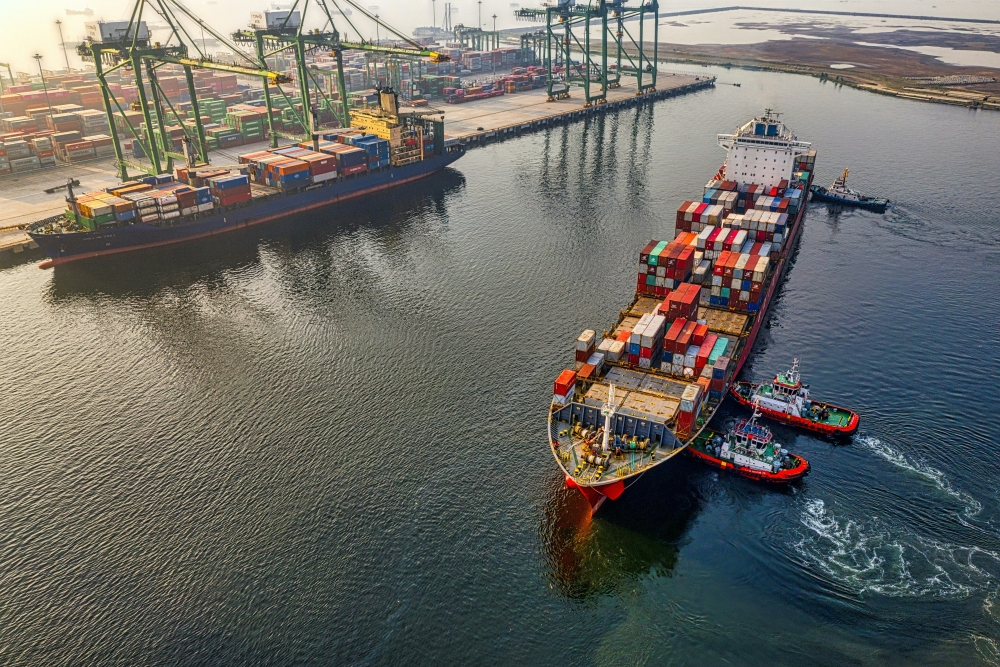
Billions in committed FDI from giants like Tesla, Infineon, and Google are not just capital injections; they are votes of confidence in our technical workforce and strategic positioning.
Furthermore, a long-overdue policy coherence is emerging under the Madani framework.
The National Energy Transition Roadmap (NETR) and the New Industrial Master Plan 2030 (NIMP 2030) provide a clearer directional signal.
They rightly pivot the economy towards sustainability, technological upgrading, and higher complexity in manufacturing. The push for renewable energy and carbon pricing, while nascent, aligns with global capital flows increasingly dictated by ESG principles.
However, these bright spots are overshadowed by profound policy challenges that threaten to cap our potential.
First, the subsidy and fiscal reform remains the Gordian knot. The government’s move toward targeted subsidies is economically rational but politically perilous.
The messaging must be flawless: this is not austerity, but a reallocation of national resources from blanket consumption to targeted investment in human capital and productivity.
Every ringgit saved from fuel subsidies must be visibly channeled into public transport, education, and cash transfers for the vulnerable. The success of this reform will define our fiscal sovereignty for a generation.
Second, the middle-income trap is not a cliché; it is our daily reality. We are struggling with stagnating wages, a mismatch between graduate skills and industry needs, and lagging productivity, especially among local SMEs.
Attracting high-tech FDI is one thing; creating the dense local ecosystem of suppliers, innovators, and skilled workers to maximize its spillover effects is another.
Our education system requires a revolution, not evolution, to produce critical thinkers and problem-solvers, not just memorizers.
Third, political stability is the unspoken prerequisite for all economic planning. The relative stability of the current unity government has been a key factor in restoring investor confidence.
However, the underlying political fragmentation necessitates a constant state of compromise, which can dilute reform momentum.
Long-term economic strategies require a bipartisan consensus on core national goals, something that has been elusive.
Finally, we cannot ignore the geopolitical tightrope. As a trading nation, we benefit from being a friendly neutral party.
But balancing relations between the US/West and China is becoming increasingly difficult.
Our economic dependence on Chinese investment and trade is deep, yet our security and technology partnerships lean westward.
Crafting a foreign economic policy that safeguards our sovereignty while securing access to markets and technology is perhaps the most delicate task of all.
Our outlook hinges on a few non-negotiable actions. We must stay the course on reform, communicating its benefits with empathy and transparency. We must double down on execution — be it building renewable energy plants, streamlining business regulations, or transforming schools.
Grand plans are meaningless without implementation teeth. We must also embrace a new form of inclusivity — one that is not just about income redistribution, but about empowering every
Malaysian to participate in the high-value economy.
This means radical digital access, lifelong learning accounts, and support for entrepreneurship across all communities.
Malaysia stands at a rare inflection point. Global trends – from the AI revolution to the green transition – are offering us a seat at the table. We have the fundamentals: strategic location, a multilingual workforce, and a recovering institutional credibility.
The question is whether we have the collective will to make the difficult choices. The economy of the future will be built not by the timid, but by those willing to reform today for the prosperity of tomorrow. Our moment is now.
* Ahmad Ibrahim is affiliated with the Tan Sri Omar Centre for STI Policy Studies at UCSI University and is an Adjunct Professor at the Ungku Aziz Centre for Development Studies, Universiti Malaya. He can be reached at [email protected].
** This is the personal opinion of the writer or publication and does not necessarily represent the views of Malay Mail.


