


MARCH 10 — The widening conflict between the United States, Israel, and Iran has created one of the most volatile security environments in the Middle East in decades.
While the war was initially framed as a confrontation between Washington, Tel Aviv, and Tehran, its consequences have increasingly spilled over into neighbouring states, particularly those of the Gulf Cooperation Council (GCC).
This reality has forced many countries to reconsider how best to prevent the conflict from spiralling further.
In this context, the decision by Australia and potentially other partners to provide defensive support to GCC countries is not an escalation of war.
Rather, it is a prudent step to stabilise a region that is already dangerously exposed to missile and drone attacks.
It is important to recognise that the GCC states were not the initiators of the present conflict.
Yet their territory, airspace, and civilian infrastructure are increasingly vulnerable to retaliatory strikes as the war intensifies.
Iranian missiles and drones have demonstrated the ability to reach deep into the Gulf region, threatening airports, oil facilities, and even desalination plants. This is why defensive assistance matters.
Australia’s decision to deploy surveillance and defensive assets to the region reflects a broader recognition that the protection of civilian infrastructure is now one of the most urgent priorities.
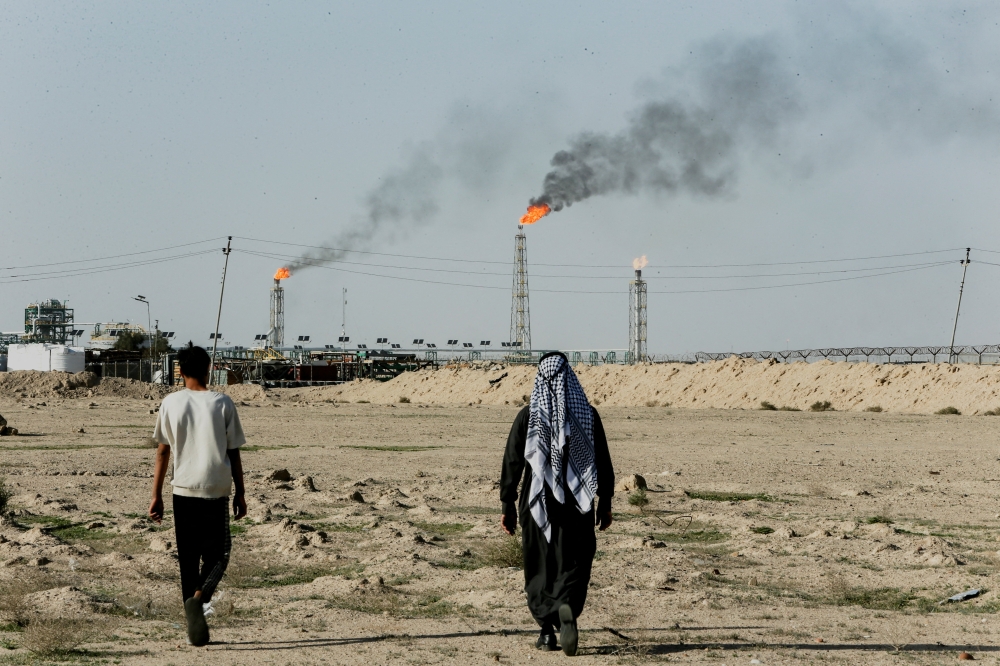
Early-warning systems, air surveillance platforms, and missile interception capabilities can help GCC countries detect incoming threats and respond before they reach populated areas. Such capabilities are defensive by nature.
They do not contribute to offensive bombing campaigns nor do they facilitate regime change operations. Instead, they help ensure that the civilian population and critical infrastructure of the Gulf are not left dangerously exposed during a rapidly expanding conflict.
The targeting of desalination plants in particular has alarmed many analysts.
The Gulf region is one of the most water-scarce regions in the world. As a result, desalination plants provide the majority of drinking water for many GCC countries.
In fact, the region accounts for a substantial portion of global desalination capacity.
An attack on these facilities therefore carries consequences far beyond conventional military damage. It risks depriving entire cities of potable water within days.
In countries such as Bahrain, Qatar, the United Arab Emirates, and Kuwait, desalinated seawater is the backbone of daily life.
Without these facilities functioning normally, millions of residents — including expatriate communities from across Asia — would face an immediate humanitarian crisis.
Defensive systems that intercept missiles or drones before they strike such installations are therefore not simply instruments of war. They are tools for preventing humanitarian disaster.
The global economy is equally vulnerable. The Gulf remains one of the most important energy hubs in the world.
Key shipping routes, including the Strait of Hormuz, are essential for the transport of oil and gas to markets across Asia, Europe, and beyond.
Any sustained disruption to Gulf energy infrastructure or maritime routes would send shockwaves through the global economy.
Oil prices would surge, inflation would intensify, and fragile economic recoveries in many countries could be derailed.
Already, global markets have begun to react nervously to the conflict.
Energy prices have risen, reflecting concerns that the war could disrupt one of the world’s most critical energy arteries.
From this perspective, defensive assistance to the GCC is not merely about regional security. It is also about safeguarding global economic stability.
Medium sized powers such as Australia are particularly well positioned to contribute to such efforts.
Although they are not superpowers, countries like Australia possess advanced capabilities in areas such as air surveillance, maritime monitoring, and defence coordination.
Their participation helps distribute the burden of maintaining stability without further militarising the conflict.
Moreover, the involvement of middle powers helps prevent the perception that the crisis is solely dominated by major power rivalry.
When countries such as Australia step forward to assist in defensive missions, they reinforce the idea that protecting civilian infrastructure and international trade routes is a shared global responsibility.
The humanitarian dimension of the conflict should not be overlooked either.
The GCC hosts millions of foreign workers and expatriates, many of whom come from Asia.
Countries such as India, Pakistan, Bangladesh, the Philippines, and Malaysia have large communities living and working across the Gulf.
Any escalation that damages water supply systems, power grids, or energy infrastructure could force massive evacuations.
Governments across Asia would suddenly find themselves scrambling to extract their citizens from a war-zone environment.
Preventing such a scenario should be a priority for the international community.
Defensive assistance therefore represents a measured and rational approach.
It strengthens the ability of GCC countries to protect themselves while avoiding further escalation of offensive military operations.
At a time when the Middle East risks descending into a wider regional war, stabilising measures are urgently needed.
Defensive support for the Gulf is one such measure.
By helping to protect civilian infrastructure, energy routes, and water supply systems, the international community can reduce the likelihood that this conflict will spiral into an even larger humanitarian and economic catastrophe.
In that sense, the provision of defensive equipment to the GCC is not merely justified. It is the right way forward.
* Phar Kim Beng is professor of Asean Studies and director of the Institute of International and Asean Studies, International Islamic University of Malaysia.
** This is the personal opinion of the writer or publication and does not necessarily represent the views of Malay Mail.


