


FEBRUARY 9 — When The Economist warned in its February 7 leader that “the world is involuntarily long US political risk — and has started charging a premium”, it was not speaking only to Washington. It was speaking to every economy that has learned, often the hard way, what it means to live beneath the dollar’s shadow.
Asean heard that line clearly.
That premium is no longer theoretical.
It shows up in higher hedging costs, more frequent foreign-exchange intervention, wider risk spreads on dollar funding, and central banks forced to move earlier and harder — not because domestic fundamentals demand it, but because Washington’s politics have wandered into global markets.
The dollar still dominates. There is no replacement waiting backstage.
But the comfort once attached to holding it has thinned.
When safe assets stop behaving safely
For decades, the deal was straightforward: the world absorbed America’s deficits in exchange for stability. When stress hit, US assets steadied the ship. Bonds rallied. The dollar held. Capital hid.
That choreography now misfires.
As The Economist notes, there are moments when US stocks, bonds, and the dollar fall together — a pattern once reserved for emerging markets, not the issuer of the world’s reserve currency.
That is not a market tantrum. It is a signal.
Political risk is no longer neatly separated from monetary credibility.
From Asean’s vantage point, this feels less like revelation than recognition.
A world South-east Asia already knows
Volatility is not an abstract concept in South-east Asia.
It is memory.
From the Asian Financial Crisis to the taper tantrum, from trade wars to pandemics, the region learned early that dependence on a single monetary centre comes with conditions attached.
So Asean adapted.
Trade diversified. Reserves were hoarded. Central banks prized credibility over bravado. Hedging became instinct.
What unsettles markets today is simply the centre beginning to experience what the periphery has long priced in.
Malaysia’s position: Open, but not owned
In this recalibrating world, Malaysia sits in a quietly enviable place.
It trades deeply with China, yes — but it is not pivoting east. It trades with the United States, Europe, Japan, and the Middle East too — without being defined by any of them. That is not indecision. It is strategic autonomy, practiced quietly and without slogans.
Malaysia’s advantage lies precisely here: open enough to matter, neutral enough to endure.
In a world where investors are growing allergic to alignment risk, that posture carries weight.
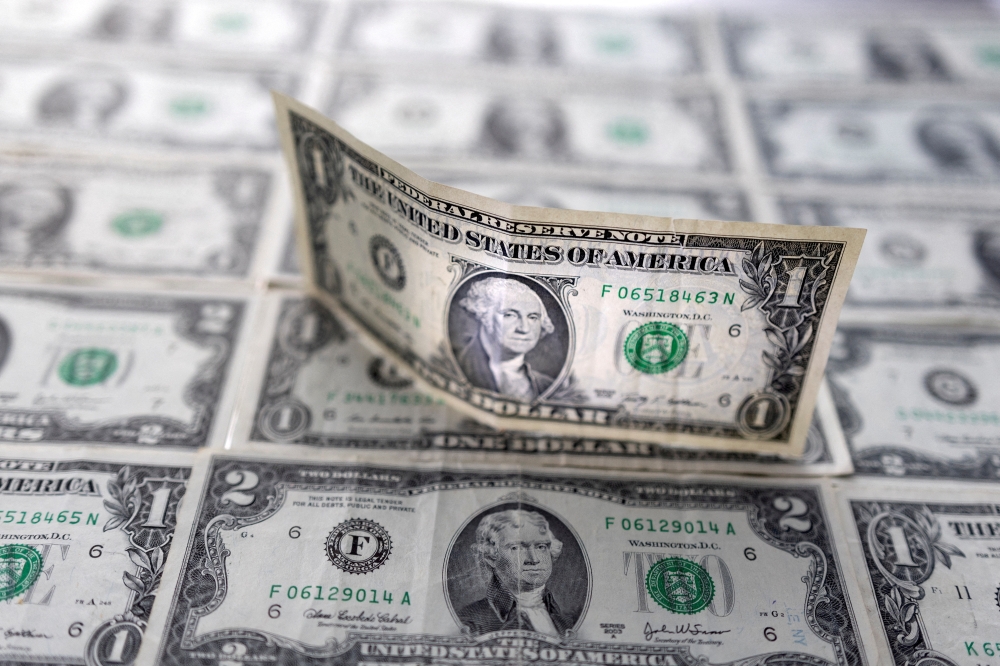
What a riskier dollar changes
A more volatile dollar doesn’t announce itself with sirens.
It works subtly.
- Capital becomes choosier.
- Supply chains continue drifting toward places that are dull but dependable.
- Local-currency markets with discipline become shock absorbers, not weak links.
- Trade invoicing diversification — already under way in Asean — edges forward.
Malaysia does not need to challenge dollar dominance to benefit.
It simply needs to remain legible, disciplined, and — yes — boring.
Asean’s quiet advantage
The real difference between Asean and the West right now is not intelligence or capital.
It is risk familiarity.
Asean economies assume volatility and plan around it. They hedge. They diversify. They distrust absolutes. Western systems were built on the assumption that the centre would always behave responsibly.
That assumption is now being tested.
For Malaysia, the prescription is unglamorous but powerful:
- protect institutional credibility,
- deepen regional financial plumbing,
- resist the temptation to politicise economics.
This is not the moment for grandstanding. It is the moment for restraint.
Not the end of the dollar — but the end of its innocence
The dollar will endure. The Economist is right: the absence of alternatives protects it from collapse. But dominance is no longer free of charge.
The world is now pricing US political risk explicitly — and sending the bill outward.
For Asean, this is not a warning siren. It is a quiet reminder that steadiness still commands value.
And if Malaysia plays this moment the way it usually does — calmly, competently, without theatrics — it may find that in a world growing louder by the week, its greatest asset is not ambition or alignment.
It is the rare luxury of being reliably unremarkable.
In today’s markets, that is not modest.
It is expensive.
* This is the personal opinion of the writer or publication and does not necessarily represent the views of Malay Mail.


