


OCTOBER 20 — The European Union is preparing to take a decisive — and perilous — step in its long struggle to enforce sanctions on Russia.
A classified European Commission proposal, revealed by Politico Europe, outlines plans to grant Brussels and member states sweeping powers to board and inspect ships suspected of being part of Moscow’s so-called “shadow fleet.”
This clandestine network of tankers has become the backbone of Russia’s oil export strategy since sanctions were imposed following the invasion of Ukraine. These vessels operate under false flags, obscure ownership, and outdated insurance — sailing through loopholes in international law to deliver oil to buyers willing to overlook Western restrictions. Now, the EU appears ready to take the battle directly to the high seas.
The rise of the shadow fleet
Since the start of the war, Russia has adapted with astonishing agility. Sanctions froze key banks, limited technology imports, and capped oil prices. But the Kremlin responded by building an entire parallel shipping ecosystem — older vessels purchased through front companies, re-registered under flags of convenience, and deliberately sailing in legal gray zones.
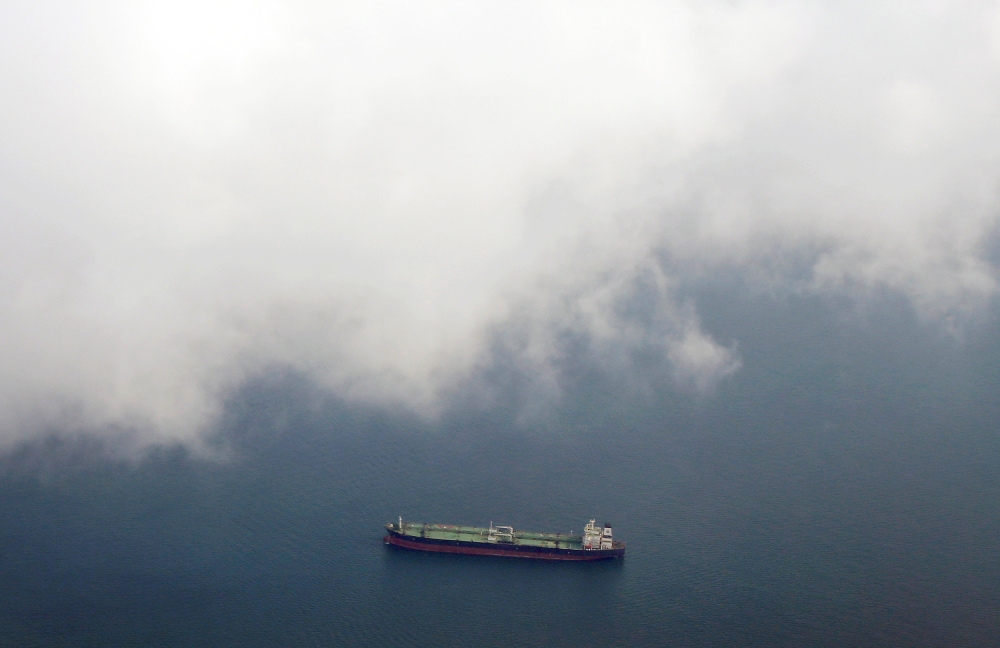
This “shadow fleet,” now numbering several hundred ships, moves Russian oil from Arctic ports to Asia, the Middle East, and Africa through ship-to-ship transfers that evade detection. Their transponders often go dark mid-journey. Their cargo documents are falsified. Their insurance is dubious or nonexistent. Yet they remain profitable precisely because they defy oversight.
The EU’s proposed authority to board such vessels within European waters or ports thus represents not only a technical enforcement measure but also a political escalation. It is a message that Europe intends to police its maritime domain with the same intensity it has applied to its economic sanctions regime.
A tightrope between law and escalation
Still, the implications of this move are profoundly complex. Under the United Nations Convention on the Law of the Sea (UNCLOS), freedom of navigation and the principle of “innocent passage” remain sacrosanct. Unilateral boarding of foreign-flag vessels risks violating these very rules that the EU has long championed.
In practical terms, the line between legitimate enforcement and unlawful interference is thin. A ship’s transponder going dark may indicate deceit — or simply malfunction. A suspected connection to Russia may be buried beneath layers of ownership. Without airtight legal justification, any misstep could be used by Moscow to accuse the EU of aggression or piracy.
Moreover, maritime interdictions carry real physical risks. A confrontation at sea, even a small one, can spiral into a diplomatic or military incident. The Mediterranean and Baltic are crowded, contested, and tense. Europe is, in effect, moving closer to a war footing at sea, even if the intent remains regulatory rather than military.
The strategic and environmental imperative
From a strategic standpoint, the EU’s reasoning is understandable. Every ship that slips through the sanctions net carries millions in revenue that bankrolls the war in Ukraine. And the shadow fleet poses more than just an economic threat — it endangers environmental safety. Many of these vessels are decades old, structurally compromised, and lacking proper insurance coverage. A single collision or spill in European waters could devastate marine ecosystems and coastal economies.
Thus, enforcement is not only about punishing Russia but also about protecting Europe’s environment and upholding the rule of law at sea.
Yet this is precisely where caution must temper conviction. Enforcement must remain subordinate to diplomacy, lest it deepen Europe’s entanglement in an already volatile confrontation. If the EU turns maritime enforcement into a show of strength rather than a calibrated act of law, it risks transforming the seas into the next theater of escalation.
A cautionary lesson in overreach
There is a larger lesson here for the rest of the world. Europe’s initiative may be well-intentioned, but it illustrates the dangers of blurring the line between sanction enforcement and maritime coercion. Once such powers are normalised, others may follow suit — claiming similar justifications to board foreign vessels in contested waters.
That path leads to instability, not order. The international community cannot afford a world where every major power polices the seas according to its own sanctions, suspicions, or rivalries.
Why diplomacy must remain the constant ethos
This is where Europe’s boldness contrasts with the cautious restraint that has characterized other regions. While the European Union now edges toward direct maritime confrontation, its actions remind smaller and more neutral regions of what to avoid.
For South-east Asia in particular, the lesson is not to emulate, but to understand. The European Union’s decision arises from a position of confrontation with Russia — a dangerous posture that Asean, by contrast, has always sought to avoid through consensus, dialogue, and diplomacy.
To follow such a path would be to abandon the very foundation of peacebuilding and preventive diplomacy that has anchored regional stability for decades. The EU’s emerging maritime assertiveness, though legally framed, carries the unmistakable undertone of confrontation. It is born of war.
Asean, and indeed all neutral actors, must recognise that while Europe enforces sanctions with ships and patrols, the safer course lies in diplomatic coherence and conflict avoidance. Just as Asean must not be trapped in a conundrum between the United States and China, it should remain equally vigilant not to be pulled into any rivalry involving the EU and Russia.
Neutrality, in a polarised world, is not weakness — it is wisdom.
The need for far-sighted statecraft
Europe’s maritime assertiveness exposes a sobering truth: when diplomacy fails, the seas become extensions of the battlefield. The West’s moral authority in upholding international law risks erosion if its actions are seen as selective or self-serving. The more Europe resorts to forceful enforcement, the more it mirrors the coercive behaviour it seeks to deter.
This is the moment, therefore, for far-sighted diplomacy — one that prioritises dialogue over dramatics, conciliation over confrontation. Every region must now rediscover the patience to negotiate, the humility to listen, and the foresight to defuse tensions before they crystallise into conflict.
The time for mature statecraft is now. The sharp elbows of geopolitics — whether in Europe, the Indo-Pacific, or elsewhere — must be softened by diplomacy’s steady hand.
For if history teaches anything, it is this: the road from boarding a vessel to provoking a war can be perilously short.
* Phar Kim Beng is Professor of Asean Studies and Director, Institute of Internationalisation and Asean Studies (IINTAS), International Islamic University Malaysia
** This is the personal opinion of the writer or publication and does not necessarily represent the views of Malay Mail.


