


OCT 15 — From Tsarist claims to protect the oppressed, through Soviet anti-colonialism, to today’s moral theater over Gaza, Russia is reviving an old script — and Southeast Asia must decide how to hear it.
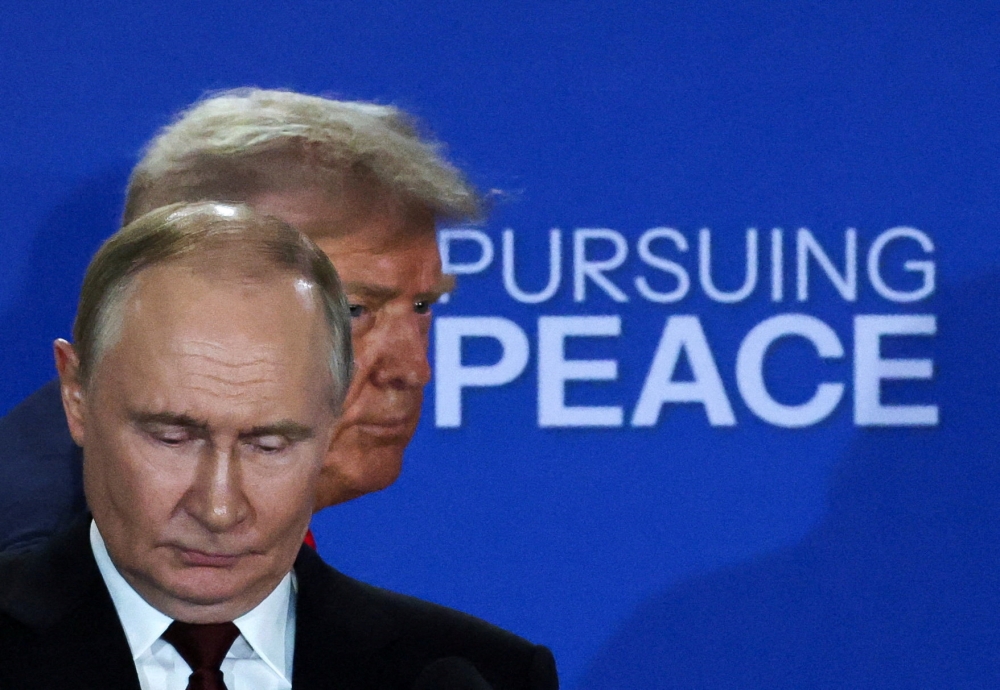
Donald Trump called it a “historic turning point.” Hours later, Vladimir Putin answered with a rebuke that felt older than both men: that the West was “using Gaza as a stage for self-promotion,” and that genuine peace begins with listening to Palestinian suffering.
Whether one reads his words as moral witness or geopolitical maneuver, they fit a deep Russian tradition: to challenge Western power not only with arms, but with empathy cast as statecraft. From Tsarist petitions for Orthodox Christians under Ottoman rule to Soviet banners over Suez and Damascus, Moscow has long weaponised the language of protection, grievance, and dignity. Gaza is simply the latest stage.
That tradition has roots in the 18th century. When the Russo-Turkish War ended in 1774 with the Treaty of Küçük Kaynarca, Russia did not merely win territory; it claimed a right to “protect” Orthodox Christians under Ottoman sovereignty and even to build a Russian church in Constantinople. In one stroke, humanitarian language entered the grammar of imperial competition. “Protection” licensed pressure; sympathy carried bayonets behind it. The move set a pattern: dress strategic encroachment in robes of conscience.
A century later, after Russia’s victory over the Ottomans in 1878, the Treaty of San Stefano promised a Greater Bulgaria under Russian sway; the Congress of Berlin promptly cut it down. The language was familiar: Russia posed as the liberator of Slavs, the guardian of national awakening; Britain and others as the custodians of “balance.” The clash was not only about frontiers but about who could claim the moral right to speak for the oppressed — who could “listen” on behalf of Europe. The settlement averted war but stoked resentments that would burn through the Balkans and into the 20th century.
In the Cold War, the script moved south. The Soviet Union positioned itself as the champion of anti-colonial independence movements; the Arab world became a principal theater. When Gamal Abdel Nasser nationalised the Suez Canal in 1956, Britain, France, and Israel invaded. Moscow, reading the winds of decolonisation, thundered against “imperialist aggression,” while Washington — eager to court post-colonial states — calculated that its European allies had overreached. Under twin U.S.–Soviet pressure, the invaders withdrew. Suez did not simply humble Europe; it enthroned the moral politics of the post-colonial moment, with the Soviets presenting themselves — often effectively — as the great power that “listened.”
Material followed the rhetoric. After Washington pulled its financing for the Aswan High Dam, Cairo turned to Moscow; Soviet engineers and capital raised concrete where Nasser had promised dignity. The dam was more than a hydro-project. It was proof that a counter-Western patron could underwrite development — and wrap it in anti-imperial symbolism.
The theater widened with Israel’s wars. In 1973, when Egyptian and Syrian forces surged across cease-fire lines, the superpowers rushed to their sides: the United States launched Operation Nickel Grass to airlift weaponry to Israel, while the Soviet Union resupplied its Arab partners and threatened escalation.
It was an age of shuttle diplomacy — and also of narrative combat: Washington framed deterrence and survival; Moscow, justice and redress. The moral framing mattered not just in Cairo and Damascus but in Delhi, Jakarta, Kuala Lumpur — everywhere newly sovereign states were deciding what kind of “order” they could live with.
Fast-forward to the 21st century. Putin’s Syria intervention in 2015 was cast as the stabilizing hand that would prevent state collapse and jihadist chaos. Analysts have parsed the calculations — Mediterranean access, regime survival, message discipline at home — but the public line was again moral: Russia would do the “hard listening” the West was allegedly too impatient to do, respecting the sovereignty of a long-time ally against a righteousness that arrived on cruise missiles.
It is a contested claim — Moscow’s air campaign caused extensive civilian suffering — but as a narrative, it was familiar and effective in parts of the Arab public sphere.
Which brings us back to Gaza. Putin’s criticism of Western “showmanship” does not emerge in a vacuum; it reprises the old confrontation over who gets to define empathy at scale. He is telling the region: we acknowledge your pain without lecturing your politics. In contrast, he implies, Washington instrumentalises compassion to sell a “deal.” One can reject the messenger while recognising the message’s resonance. For millions watching from Rabat to Riyadh — and, crucially, from Aceh to Sabah — the optics of listening versus lecturing are not trivial rhetoric; they are the soft geometry of alignment.
Southeast Asia has heard this music before. In 1955, the Bandung Conference gathered leaders from Asia and Africa to insist on strategic non-alignment and moral autonomy. Its communiqués were sparely written but thunderously ambitious: equal sovereignty, non-interference, mutual respect.
That vocabulary underwrote the Non-Aligned Movement and later infused Asean’s way of doing things — slowly, often frustratingly, but with real civilisational confidence. Bandung’s project was never to be neutral about injustice; it was to refuse being dragooned into someone else’s morality play.
Malaysia’s later “Look East” policy captured a different piece of wisdom: that dignity and development could be pursued by emulating success without importing sermons. It was a bid for agency in a world of clashing exemplars — Atlantic, Soviet, and rising East Asian. Today’s Asean hedging, from defense procurement to digital governance, is its modern cousin: diversify partners, guard sovereignty, narrate one’s own interests.
So what should Southeast Asia, “observer in the middle,” do with Putin’s Gaza posture? First, take the history seriously. Russia’s claim to listen to the grievances of the periphery is not ad hoc; it is the connective tissue of three centuries of strategy. It may be cynical, but it is coherent.
When Moscow shows up in Arab capitals as the power that doesn’t moralise, it is drawing from a deep well springing under Küçük Kaynarca, irrigated at Suez, and dammed at Aswan. Recognising the pattern gives Asean leaders the intellectual distance to exploit it without being captured by it.
Second, separate moral authority from moral monopoly. The West has too often mixed legitimate concern with performative diplomacy, and it has paid for that in credibility. But Russia’s record — from Grozny to Aleppo — hardly makes it a neutral arbiter of suffering. The lesson for Southeast Asia is not to pick a preacher; it is to defend a principle: that the language of empathy should not be annexed by any one empire. On Gaza specifically, that means asserting humanitarian leadership — aid corridors, hospital support, refugee relief — without being conscripted into a geopolitical morality play.
In practice, Indonesia and Malaysia can convene an Asean-OIC humanitarian task force; Singapore can operationalise logistics; Thailand can leverage medical diplomacy. That is not neutrality. It is agency.
Third, make narrative sovereignty a policy portfolio. The competition over Gaza is as much about who defines events as it is about outcomes on the ground. Asean should invest in public-interest information networks that can carry complex positions to domestic audiences: principled on civilian protection, pragmatic on security realities, allergic to performative posturing by any great power.
The region learned during the pandemic and supply-chain crises that dependency on external narratives can be as dangerous as dependency on external chips.
Fourth, hedge in the real economy where empathy meets leverage. Food and energy shocks radiating from Middle Eastern conflict hurt Southeast Asian households long before missiles touch the South China Sea. Strategic grain reserves, diversified LNG sourcing, and maritime security coalitions for the Strait of Malacca and the Sulu and Celebes Seas form the hard underside of soft-power listening.
If great powers want to audition their compassion in Gaza, they should be asked what they can do about fertilizer prices, shipping insurance, and humanitarian air bridges. That is how an “observer” becomes a consequential arbiter.
Finally, remember Bandung’s admonition: do not let other people’s tragedies turn your capitals into echo chambers. Putin’s remark about Western showmanship strikes a chord because it exposes a habit. But Southeast Asia cannot afford to replace one ventriloquist with another.
The region’s credibility rests on the stubborn insistence that empathy, like sovereignty, is not for hire. When empires “listen,” Asean should listen back — then answer in its own voice.
Gaza will not be the last stage. The narrative contest will move — to the Red Sea, to the Horn of Africa, perhaps even to the Bay of Bengal — where climate, migration, and blockade politics will fuse. The Russian tradition of imperial sympathy will travel, as will America’s attempt to reclaim moral leadership in a skeptical world.
China, too, will increasingly speak the language of restraint and “win-win” moderation in crises it did not script. Southeast Asia’s task is not to arbitrate theology but to convert sympathy into systems — corridors, codes, coalitions — that reduce human vulnerability whatever flag flies over the aid convoy.
Putin’s Gaza gambit is therefore both old and new. Old, because it reprises a centuries-long Russian habit of finding power in the grievances of others. New, because in a multipolar marketplace of empathy, no single empire can monopolize the story.
The region that taught the world how to be post-colonial must now teach it how to be post-performative: to listen without kneeling, to condemn without crusading, and to turn compassion into infrastructure. That is how an “observer” survives the drama — and quietly reshapes the stage.
* This is the personal opinion of the writer or publication and does not necessarily represent the views of Malay Mail.


