


OCTOBER 14 — When world leaders convened in Sharm el-Sheikh, Egypt, to sign the long-anticipated Gaza Peace Plan, the atmosphere was filled with cautious optimism.
The signing, framed as a new beginning, was in truth a modest step forward — a ceasefire born not of reconciliation, but of exhaustion. Yet, even in its imperfection, it offers lessons for regions like Asean, where the art of peacebuilding lies not in perfection but in persistence.
The Sharm Declaration, as it is called, established a phased ceasefire between warring parties, a mass exchange of hostages and prisoners, and a framework for humanitarian relief. It also launched an international monitoring mechanism involving Egypt, Qatar, Turkey, the United States, and the European Union to ensure the fragile agreement holds.
But beyond the headlines, the document reveals both the possibilities and the perils of modern peace diplomacy. It halts the guns but not the grievances. It opens borders but not hearts. It pauses war but does not yet restore justice.
A ceasefire, not redemption
The Sharm Declaration was not crafted to end the conflict permanently; it was designed to prevent further escalation. It promises the release of living Israeli hostages in exchange for 2,000 Palestinian prisoners, a gradual withdrawal of Israeli forces to designated lines inside Gaza, and a commitment to allow up to 600 trucks of aid daily into the territory.
These are vital humanitarian gestures, but they remain transactional, not transformational. The ceasefire addresses the symptoms of war, not its sources. It does not answer who will rebuild Gaza, who will guarantee accountability for civilian suffering, or who will ensure that peace, once declared, will not again dissolve into devastation.
The reality is sobering: ceasefires are fragile, and peace imposed without justice can reignite at any moment. Yet, even within such fragility lies a moral truth — that stopping the killing, even temporarily, is better than letting it continue.
The missing element: justice
The Sharm el-Sheikh plan carries the language of “durable arrangements,” but not yet the spirit of equity. It provides for security assurances, demilitarization, and external supervision, all necessary to maintain calm.
What it lacks is a reckoning with the deeper roots of dispossession — the denial of political agency, the displacement of families, and the destruction of livelihoods.
Without justice, peace becomes procedural. It is negotiated through protocols rather than empathy. It can create the appearance of stability, but not the substance of reconciliation. The people of Gaza need more than humanitarian aid; they need dignity, recognition, and the freedom to build their own future.
A peace plan that fails to address those foundations risks repeating the mistakes of previous accords — from Oslo to Camp David — where diplomacy produced documents but not deliverance.
Why some peace is still better than none
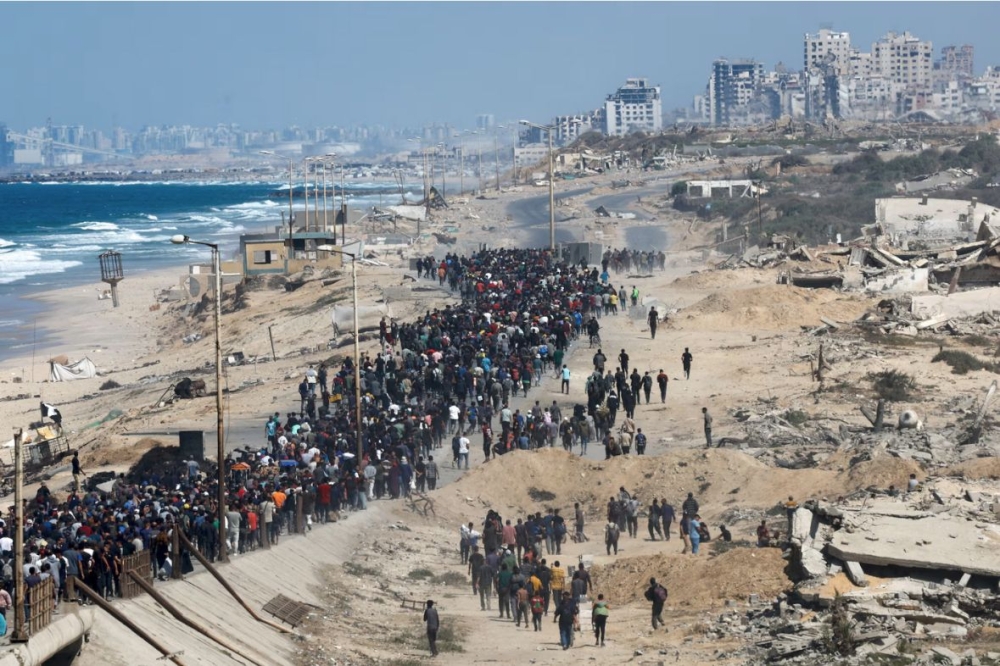
Despite its limitations, the Sharm Declaration must be acknowledged as a humanitarian necessity. The situation in Gaza has been catastrophic: hospitals flattened, schools turned to rubble, entire neighbourhoods erased.
A temporary cessation of violence, however imperfect, allows humanitarian corridors to open, food to reach the starving, and the displaced to return home, even briefly.
In such dire circumstances, any peace is a moral victory over indifference. A truce, even if temporary, restores the value of human life — something wars are designed to destroy. It creates space for dialogue, diplomacy, and reflection, offering the faint but vital hope that conflict can eventually yield to cooperation.
Peace is never born perfect. It must evolve through the slow, often painful process of human learning. What matters is not whether the first step is flawless, but whether it leads to a second.
The lessons for Asean
Asean, as a regional organization grounded in consensus and non-interference, has long prized stability over confrontation.
Yet the Gaza experience reminds us that stability without justice is illusionary, and peace without empathy is brittle.
In Southeast Asia, where conflicts persist — from Myanmar’s internal war to border tensions between Thailand and Cambodia, and maritime disputes in the South China Sea — the region must learn to cultivate peace beyond rhetoric. Asean can no longer rely solely on habitual restraint; it must pair diplomacy with moral clarity, balancing neutrality with compassion.
The Sharm Declaration demonstrates that even imperfect peace frameworks can provide the scaffolding for future reconciliation. Asean should take note. Whether in Myanmar’s Rakhine State or in southern Thailand’s Patani region, incremental peace efforts — monitored by neutral facilitators and driven by humanitarian imperatives — can create openings for dialogue where outright settlements remain elusive.
Just as Egypt, Qatar, and Turkey came together to stabilize Gaza, Asean too can forge its own coalitions of conscience. Malaysia, Indonesia, and the Philippines, each with historical and cultural legitimacy in mediating conflicts, can lead Track 1.5 and Track 2 initiatives that complement official diplomacy.
Perfection should never be the prerequisite for progress. What matters most is the courage to begin.
The moral of Sharm el-Sheikh
The Gaza Peace Plan is a reminder that diplomacy often succeeds in fragments. It cannot undo the past, but it can interrupt the cycle of vengeance. It shows that imperfect peace, if nurtured, can mature into something lasting.
For Asean, the challenge is to perfect peace in due course — not by imitating others, but by anchoring its diplomacy in regional empathy, inclusivity, and sustained commitment. The Gaza experience shows that political courage and humanitarian urgency can coexist, even amid despair.
If peace is to endure, it must rest on two foundations: dignity and continuity. Dignity gives peace its moral force; continuity gives it resilience. The Sharm Declaration may not have brought justice, but it has bought time — and time, if used wisely, can still lead the world toward healing.
That is the enduring lesson for Asean: to never abandon the pursuit of peace, even when the peace we achieve today remains painfully incomplete.
* Dr Phar Kim Beng is a professor of Asean Studies and director of the Institute of Internationalization and Asean Studies (IINTAS) at the International Islamic University Malaysia.
** This is the personal opinion of the writer or publication and does not necessarily represent the views of Malay Mail.


