










OCTOBER 9 — When the Five Power Defence Arrangements (FPDA) was born in 1971, it was a pragmatic response to Britain’s withdrawal “east of Suez”.
The intent was straightforward: ensure that Malaysia and Singapore would not be left defenceless in a turbulent Southeast Asia.
As Malaysia marks its 70th anniversary of its relationship with Australia, more reinforcement is needed. But in which direction?
For what it is worth, the FPDA has matured into the region’s longest-standing defence pact, proving its adaptability in a world where threats are no longer only about tanks, frigates, or fighter jets, but also pandemics, typhoons, and cyber incursions.
The recently concluded Exercise Bersama Lima 2025 (BL25), hosted in Malaysia and the South China Sea, observed by Australian High Commissioner Danielle Heineke based in Kuala Lumpur, was a case in point.
With contingents from Australia, Malaysia, New Zealand, Singapore, and the United Kingdom, the exercise reaffirmed the importance of interoperability — a technical term that in reality means life-or-death coordination when crises strike.
In Kuantan, various military and non-military figures witnessed joint manoeuvres across air, land, sea, and cyber domains, supported by Australia’s fifth-generation F-35 Lightning II jets and the UK’s Carrier Strike Group, led by HMS Prince of Wales.
But beyond the hardware, what stood out was the increasing practicality of FPDA as a platform for Humanitarian Aid and Disaster Relief (HADR); an exercise which is preferred by Indonesia too.
FPDA, in this vein, is laden with latent potential given the designation of Indonesia as a Pan Indo Pacific power that covers the width of Indian Ocean all the way to the Pacific.
From war games to saving lives
Climate change has made South-east Asia the epicentre of climate-related disasters. Typhoons batter the Philippines, Vietnam and Thailand.
While tsunamis threaten Indonesia, haze smothers Malaysia and Singapore, and floods ravage the Mekong basin, more civilian lives are obviously impacted negatively.
In this context, FPDA’s exercises are no longer about hypothetical invasions, but about real-time disaster responses that save civilian lives.
The capacity to deploy frigates, airlift supplies with C-17 Globemasters, and coordinate cyber-enabled communications is precisely the toolkit required for HADR missions.
Indeed, as General Tan Sri Nizam Jaffar the chief of Malaysian Armed Forces stressed, the value of Bersama Lima is interoperability — not just in warfighting, but in communication, doctrine, and coordination across borders.
In practical terms, this means the FPDA is evolving from an “insurance policy” for Malaysia and Singapore into a regional emergency services force multiplier.
Why Asean needs FPDA’s example
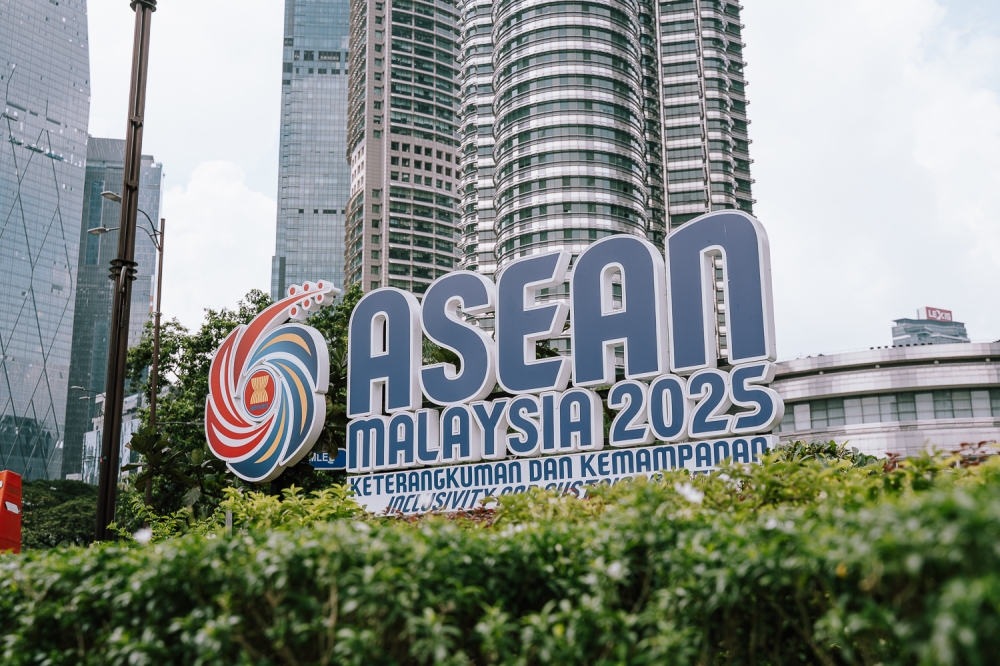
The timing could not be more crucial. As Malaysia chairs Asean in 2025, the conversation on strengthening regional resilience is accelerating.
Asean’s traditional reluctance to engage in collective defence has left security cooperation underdeveloped compared to economic and diplomatic integration.
Yet, the crises of recent years — from Myanmar’s coup to cyber scams across borders, and the persistent East and South China Sea tensions — make clear that Asean centrality without capability risks irrelevance.
The FPDA, in this sense, provides a template. While not a mutual defence pact like Nato, its regular combined training, political assurances, and ability to project joint capacity exemplify how small and middle powers can collectively deter threats while responding to disasters.
Toward Asean Defence Plus
Here lies the next horizon: an Asean Defence Plus arrangement. This would not mean Asean morphing into a Nato-like alliance. Rather, it would involve Asean member states creating modular, opt-in frameworks for cooperation in areas like maritime domain awareness, cyber defence, and especially HADR.
By drawing on the FPDA’s habits of interoperability, Asean Defence Plus could expand participation beyond the five powers to include dialogue partners such as Japan, India, and the GCC, alongside Australia and the UK.
Such an arrangement would reinforce Asean’s credibility at a time when the Indo-Pacific is increasingly polarised.
It would also dovetail with Malaysia’s Kuala Lumpur Declaration on Asean 2045, which emphasizes sustainability, innovation, and security resilience.
The FPDA’s second life
The genius of FPDA has always been its quiet durability. While critics dismissed it as an anachronism after the Cold War, the fact that it endures — and indeed grows in scale with every Bersama Lima exercise — shows its relevance.
In 2025, that relevance is not in preparing for a mythical armoured invasion, but in rehearsing for the very real contingencies of our era: disaster relief, pandemic response, and cyber resilience.
By aligning FPDA’s tested interoperability with Asean’s search for a stronger collective security footing, the region has the chance to move beyond rhetoric toward real capacity.
The time has come to recognise that in an age of transboundary threats, defence is no longer just about deterrence; it is also about resilience, relief, and renewal.
FPDA has shown the way. Asean Defence Plus must be the next step. A promising one especially when HADR can be honed into a better military and civilian backed endeavour.
* Phar Kim Beng, PhD, is professor of Asean Studies at the International Islamic University of Malaysia and director of the Institute of International and Asean Studies (IINTAS).
** This is the personal opinion of the writer or publication and does not necessarily represent the views of Malay Mail.