


OCTOBER 6 — The international community must temper its expectations.
Neither Asean nor the broader world can realistically expect all captives in Gaza — or the remains of the dead — to be released immediately. The terrain, the destruction, and the fragile state of ceasefire arrangements make such hopes not only premature but also dangerously misleading.
Geography and control
Gaza is no longer a single, continuous space of governance.
The captives are scattered across a war-torn labyrinth: some in northern enclaves now controlled by Israeli forces, others in central or southern pockets still under varying degrees of Palestinian control.
The once-integrated underground tunnel network has been fractured by months of bombardment.
For any transfer or release to occur, the parties involved — Hamas, other factions, and the Israeli military — must first locate, verify, and coordinate across fragmented zones of control. In practice, that means each step must be negotiated, often with external mediation and local ground guarantees.
Even the International Committee of the Red Cross (ICRC), which is expected to oversee humanitarian coordination, cannot operate without explicit consent from both sides and the assurance of safe passage.
Infrastructure in ruins
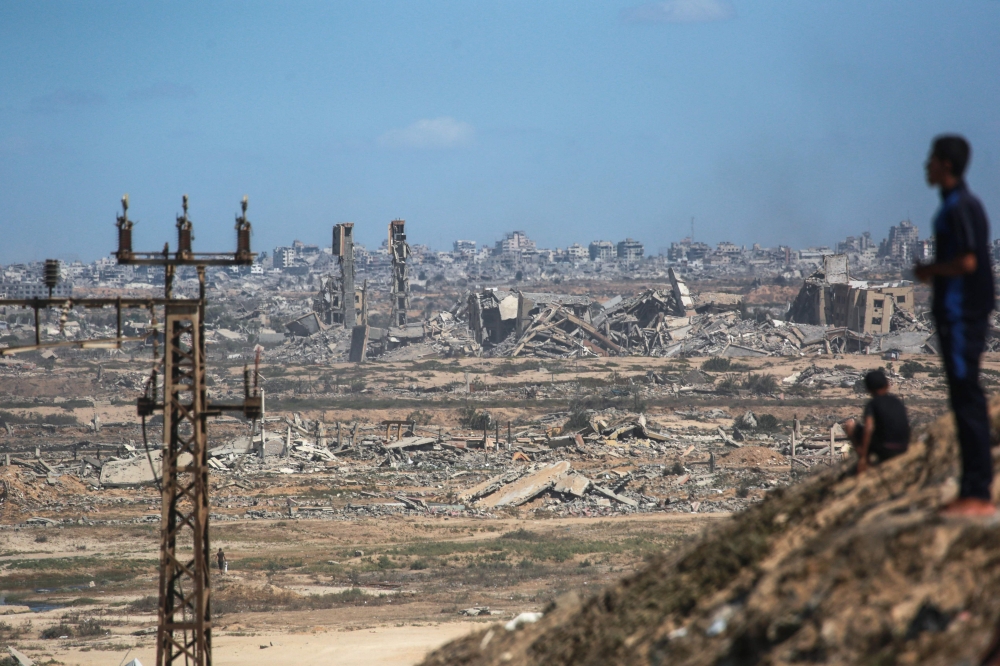
The second obstacle lies in the sheer physical destruction. Gaza’s infrastructure has collapsed.
Roads are cratered, bridges are gone, and communications are unreliable. Many tunnels and safe houses have caved in.
Retrieving captives or remains from beneath the debris requires heavy machinery that is scarce inside the enclave. Fuel shortages compound the challenge, preventing cranes, excavators, and even ambulances from functioning consistently.
Without the equipment to lift concrete slabs or stabilise collapsing shafts, even the best intelligence cannot convert knowledge of a captive’s location into an actionable rescue or retrieval. This is not a matter of willingness but of capability.
Broken command and communication
A third factor is the breakdown of command. What had once been a disciplined network of guards and intermediaries has been disrupted by the loss of communications infrastructure. Many units responsible for detaining or safeguarding captives have lost direct links to their superiors.
Others operate autonomously in areas where Israeli surveillance and drone presence make radio or satellite contact perilous.
Negotiators attempting to broker a comprehensive exchange face a patchwork of actors, each with its own conditions and local risks.
The resulting fragmentation makes any synchronized release impossible without a methodical sequencing plan — one that unfolds region by region, and often captive by captive.
The toll of casualties
The continuing casualties among both captors and captives add yet another layer of complexity. Some guards, designated as “martyrs” by their factions, have died in the bombardments.
Their deaths leave confusion over who now controls particular sites or knows the identities and conditions of the detainees.
There are credible reports that some captives themselves have perished in strikes or tunnel collapses. Each such case requires careful verification — through forensic examination, identification, and documentation—to prevent misinformation from derailing delicate negotiations.
A single false report could trigger renewed fighting or collapse what little trust exists between the parties.
The security imperative
No release — whether of the living or the dead — can proceed without solid security guarantees.
A ceasefire must not only be declared but also sustained. The withdrawal of troops from contested areas is indispensable. If armed incursions or airstrikes continue during the handover process, no convoy — be it medical, humanitarian, or international — can safely move.
Verification mechanisms must be credible and preferably multilateral.
Asean, in particular, could advocate for a neutral monitoring mission under the auspices of the United Nations. Having a trusted regional bloc involved in oversight would reinforce confidence that both sides will uphold their commitments.
Lessons for Asean and the wider world
For Asean, the Gaza tragedy is a sober reminder of the limits of moral outrage without logistical realism.
The association has consistently supported humanitarian access and a two-state solution, yet it must also recognise that the region’s experience in peacekeeping — such as in Cambodia and Aceh — offers transferable lessons: conflict resolution depends on phased implementation and credible verification, not political declarations.
Asean’s call for restraint and humanitarian corridors is thus not symbolic; it reflects hard-earned wisdom from decades of mediating complex conflicts.
Just as the Cambodian peace process required years of ceasefires, disarmament verification, and civilian monitoring, Gaza’s stabilisation will demand a long-term framework of compliance and rebuilding.
The role of mediators
Regional and global mediators — from Qatar and Egypt to the United Nations — must avoid the temptation to promise instant breakthroughs. Overpromising leads to disappointment, and disappointment breeds renewed hostility.
The smarter course is to structure a sequenced release: beginning with vulnerable civilians and medical cases, followed by women and children, then uniformed personnel, and finally the remains of those confirmed dead.
Each phase must be accompanied by tangible gestures — such as prisoner exchanges, humanitarian deliveries, or international reconstruction pledges — to sustain momentum and mutual confidence.
Asean can contribute diplomatically by supporting these phased efforts through its dialogue partnerships and the East Asia Summit framework, emphasising the indivisibility of peace, security, and humanitarian law.
Why patience is strategic
The moral urgency to free captives is undeniable. Yet strategy must temper compassion. Hastily executed exchanges in a volatile environment risk reigniting conflict, jeopardising both captives and rescuers.
Only a sequenced process — under sustained ceasefire conditions and verifiable third-party monitoring — can ensure that humanitarian goals are met without plunging the region into renewed chaos.
This is why Asean and the rest of the international community should prepare for an incremental rather than instantaneous outcome.
True stability in Gaza will emerge not from a single dramatic gesture but from a durable framework of accountability and reconstruction.
The captives’ freedom, and the dignified recovery of the dead, must form part of a broader peace architecture anchored in realism.
Toward a verified peace
The road ahead requires coordination between multiple layers: political, logistical, and moral. Political agreements must set the parameters of release.
Logistical arrangements — transport, communication, safety zones — must be engineered with precision. Moral commitment from all sides must underwrite the process to prevent backsliding into violence.
Asean’s voice, grounded in neutrality and experience, can remind global powers that no peace is self-executing.
It is built, brick by brick, through trust, verification, and sustained engagement. The release of captives in Gaza will therefore be not a moment of spectacle but a measure of humanity’s capacity to repair what war has destroyed.
* Phar Kim Beng, PhD, is professor of Asean Studies at the International Islamic University of Malaysia and director of the Institute of International and Asean Studies (IINTAS).
** This is the personal opinion of the writer or publication and does not necessarily represent the views of Malay Mail.


