


OCTOBER 4 — Hamas’ latest statement has revived a fragile but real sense of hope.
The group has declared its readiness to release all Israeli hostages—both the living and the dead—if the conditions in President Donald Trump’s peace proposal are met. For families who have waited in anguish for months, this is the breakthrough they have longed for, even if it comes hedged with uncertainty.
Trump’s formula is stark in its simplicity. He proposes an immediate end to fighting, followed within 72 hours by the release of all hostages held in Gaza. This would include not only the living but also the remains of those who perished.
In return, Israel would release hundreds of Palestinian detainees. Such a move would not end the wider conflict, but it would shift the immediate focus from carnage to compassion.
Prisoner swaps are not unfamiliar terrain. Israel has agreed to them before, most famously in 2011 when Gilad Shalit was freed after five years in Hamas captivity in exchange for over 1,000 Palestinian prisoners. Yet this moment feels different.
The scale of Hamas’ demand, the accelerated timeline, and the fact that the plan is being pushed directly by Washington create a new diplomatic moment.
For Israel, the pendulum has swung back decisively. The government must now decide whether to take this opportunity or reject it.
According to Israeli estimates, there are 48 hostages in Gaza, with only 20 believed to be alive.
The he moral weight of saving them presses heavily on Prime Minister Benjamin Netanyahu, even as he faces political turbulence at home.
Every day of indecision erodes trust among the families of the hostages and deepens the sense that Israel’s political leadership is paralyzed.
Israel’s historic tradition has been clear: the life of one citizen is worth extraordinary concessions.
This principle has underpinned Israeli politics and military ethos since its founding. But the stakes today are higher.
Releasing hundreds of Palestinian detainees carries risks—not only of strengthening Hamas but also of sending many former fighters back into the cycle of violence. The calculus now pits hard security concerns against humanitarian imperatives, and the choice is excruciating.
Hamas, too, has chosen its words carefully. Its statement hinges on the condition that “field circumstances” must be met before any exchange can occur.
What exactly this means is open to interpretation. It may signal a demand for guarantees that Israel will halt military operations entirely.
It may point to security assurances for Hamas’ own leaders. Or it may be a way to buy time. The ambiguity is deliberate.
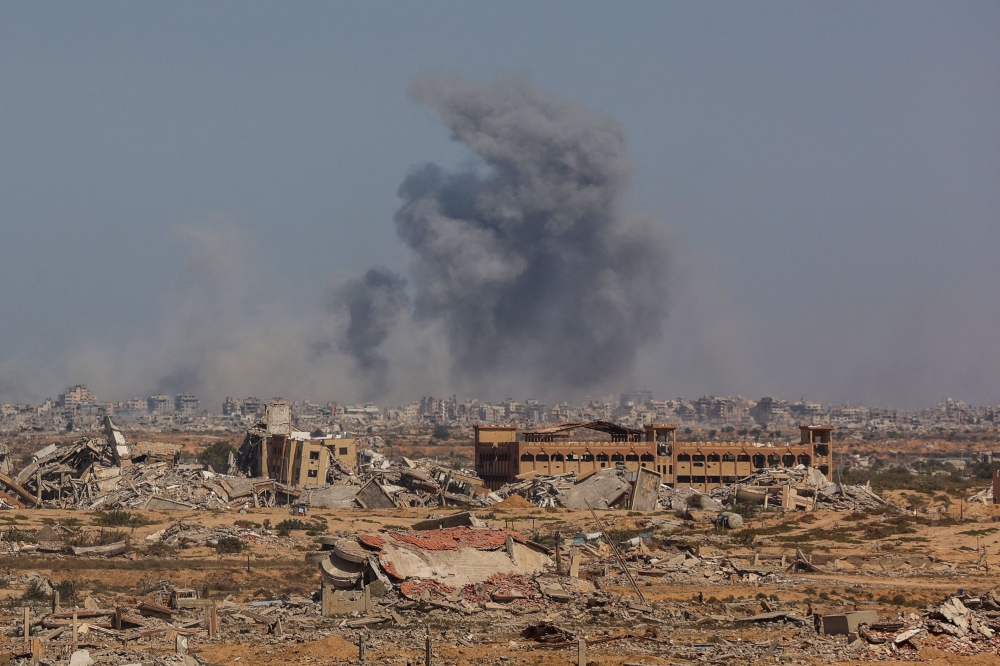
Still, Hamas’ conditional acceptance suggests a shift in its own calculus. Sustained battlefield losses, the deepening humanitarian disaster in Gaza, and pressure from regional actors who no longer want to shoulder the costs of indefinite war have likely influenced its decision.
The very fact that Hamas is publicly referencing Trump’s proposal shows a rare, if temporary, convergence with Washington. This is no small shift.
For Trump, the proposal is as much a political maneuver as it is a diplomatic one.
It reinforces his claim that the United States remains the indispensable power in brokering Middle East peace. Critics may dismiss it as theatrics, but for the families of hostages, it represents something tangible: a chance to end their torment.
The proposal also places Washington squarely back at the center of negotiations, reminding allies and adversaries alike that America cannot be sidelined in matters of war and peace in the region.
This is precisely where the Asean Summit and the East Asia Summit enter the picture, even if their role is often underestimated. At first glance, Southeast Asia seems far removed from the battlefield of Gaza.
Yet history shows that conflicts in the Middle East spill over quickly—whether through refugee flows, radicalization risks, or disruptions to energy supplies.
For Southeast Asia, which depends heavily on Middle Eastern oil and gas, instability in Gaza is not a distant problem. It is a regional concern.
Asean itself has long relied on quiet diplomacy, but in the East Asia Summit, which includes the United States, China, Russia, Japan, India, and the Asean ten, there is a unique platform where global and regional powers sit together.
This makes it one of the few multilateral venues where the Gaza conflict can be raised in ways that reinforce international concern.
By framing the issue as one of humanitarian urgency rather than ideological division, Asean and its partners can sustain momentum for peace without being accused of bias.
Malaysia’s Asean Chairmanship in 2025 further amplifies this potential.
Aa the Group Chair, Prime Minister Anwar Ibrahim has consistently positioned Malaysia as a moral voice in global affairs, calling for fairness, justice, and mediation in conflicts beyond Southeast Asia.
For Kuala Lumpur, pushing the hostages’ release and highlighting Trump’s peace formula is not interference but an affirmation of Asean’s own values, enshrined in the Treaty of Amity and Cooperation: the peaceful settlement of disputes and the renunciation of force.
The East Asia Summit, scheduled in Kuala Lumpur later this year, could serve as a critical venue for building consensus.
While no Southeast Asian country has the leverage of Washington or Doha in negotiating with Hamas, ASEAN can amplify the call for humanitarian corridors, emphasize the sanctity of human life, and remind major powers that Gaza is not only a Middle Eastern tragedy but also a global one.
The pendulum of peace must swing across regions, not remain trapped in silos.
Accepting the deal could bring relief to anguished families and open a narrow but vital door to further negotiations.
Rejecting it risks reinforcing the perception that Israel prioritizes military dominance over the return of its own people. More dangerously, it would strengthen the cynicism of those who already believe peace in the Middle East is impossible.
Hamas has moved, cautiously but decisively. The United States has set out the framework. ASEAN and the East Asia Summit can amplify and extend this momentum, reminding the world that peace anywhere is tied to stability everywhere.
Israel must now decide whether it has the resolve to seize this moment—or allow it to slip, once again, into the tragic cycle of war and reprisal.
* Phar Kim Beng, PhD, is professor of Asean Studies at the International Islamic University of Malaysia and director of the Institute of International and Asean Studies (IINTAS).
** This is the personal opinion of the writer or publication and does not necessarily represent the views of Malay Mail.


