


OCTOBER 8 — Founded in 1972 after a United Nations (UN) General Assembly resolution (2997 XXVII) and created shortly after the UN Conference on the Human Environment in Stockholm, Sweden, the United Nations Environment Programme (UNEP) is now the leading global authority on the environment.
UNEP’s mission is to inspire, inform, and enable nations and peoples to improve their quality of life without compromising that of future generations.
UNEP works closely with the UN’s 193 Member States and representatives from civil society, businesses, and other major groups and stakeholders to address environmental challenges through the UN Environment Assembly, the world’s highest-level decision-making body on the environment, in an effort to find solutions to climate change, nature and biodiversity loss, and pollution and waste, collectively known as the triple planetary crisis.
UNEP’s convening power, rigorous scientific research and public advocacy have helped to boldly advance the global environmental agenda leading, among others, to the UN recognising clean air as a human right.
Yes, the right to clean air is a human right. The haze, which essentially is pollution of the air, is therefore not just an environmental issue but a human right issue as well.
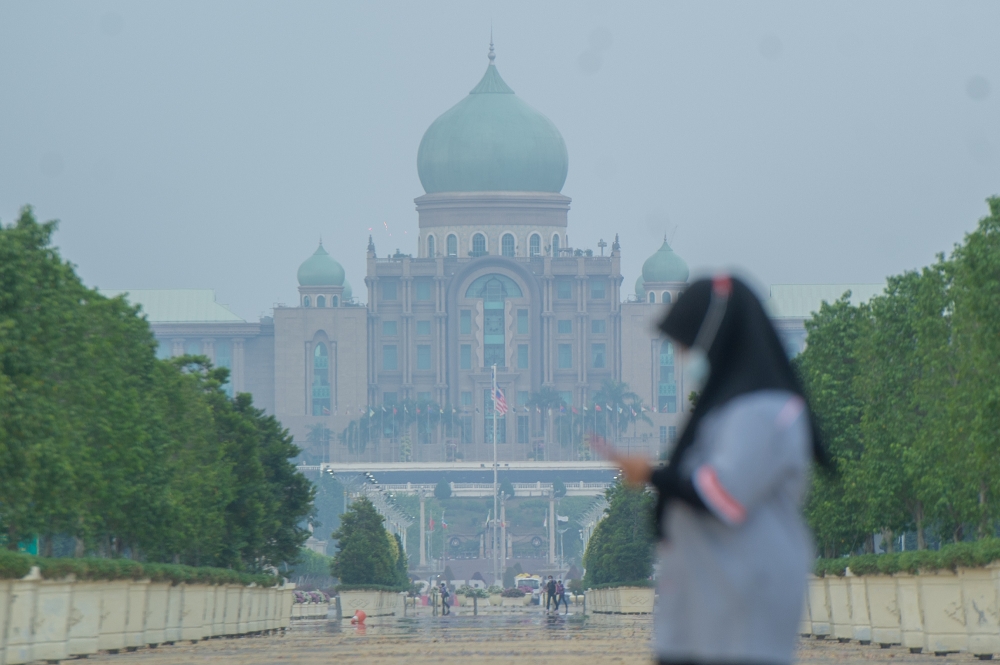
The World Health Organization (WHO) in 2016 has stated that air pollution represents the biggest environmental risk to health, killing approximately three million people annually with South-east Asia as one of the most affected regions.
Researchers from Harvard and Columbia have found that the 2015 haze disaster has caused an estimated 100,300 premature deaths: 91,600 (24,000 – 159,200) in Indonesia, 6,500 (1,700 – 11,300) in Malaysia, and 2,200 (600–3,800) in Singapore. (See Shannon N. Koplitz et al., “Public health impacts of the severe haze in Equatorial Asia in September–October 2015: demonstration of a new framework for informing fire management strategies to reduce downwind smoke exposure,” Environmental Research Letters 11 (2016): 6-7, doi: 10.1088/1748- 9326/11/9/094023)
Mention must now be made of little known CERAH, a civil society organisation which was formed in 2015 and comprised a group of individuals that came together in response to the chronic and persistent transboundary haze pollution affecting the Malaysian masses.
CERAH’s slogan is “Clear Skies for All”. It seeks to end transboundary haze and address air pollution issues across Malaysia and the Asean region. CERAH’s mission as stated is to “eliminate transboundary haze and achieve clear, pollution-free skies in Malaysia, for current and future generations.”
It should also be mentioned that CERAH commendably filed a complaint in December 2021 with the Malaysian Human Rights Commission (Suhakam) on how the chronic and persistent haze pollution in Malaysia is a violation of the people’s right to clean air.
Acknowledging the complaint, Suhakam hosted a nationwide, two-day Roundtable Discussion in March 2022 to gather the perspectives of subject matter experts, legal advisers, and key stakeholders on fundamental gaps in the haze legal framework.
The Discussion was hoped to be the basis of recommendations to the government on improving Malaysian and regional governance and legislation related to air pollution, specifically haze. (See Helena Varkkey, “Right to Clean Air: The People v. Haze across Southeast Asia”, The Heinrich Böll Stiftung 2022)
Rights groups in Malaysia should get connected with the CERAH network. Human rights have been adversely affected by the transboundary haze.
The right to clean air is as much a human right as the right to life and liberty, freedom from slavery and torture, freedom of opinion and expression, the right to work and education, and many more.
*This is the personal opinion of the writer or publication and does not necessarily represent the views of Malay Mail.


